



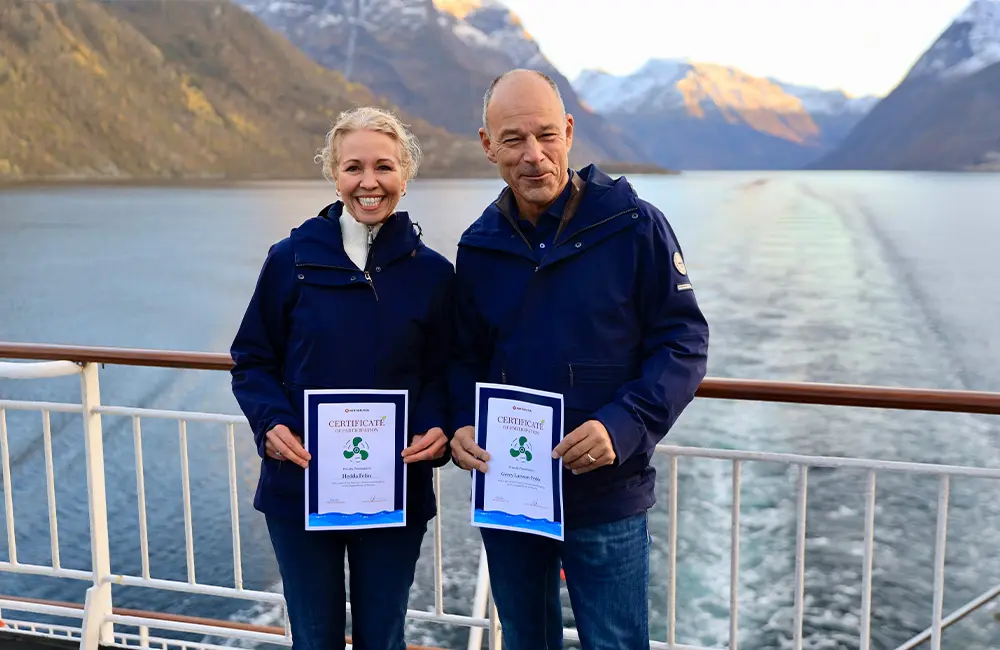
Hurtigruten has set its tradition-rich coastal voyage on a greener course, setting sail on 29 October on its first fully climate-neutral trip along Norway’s coast.
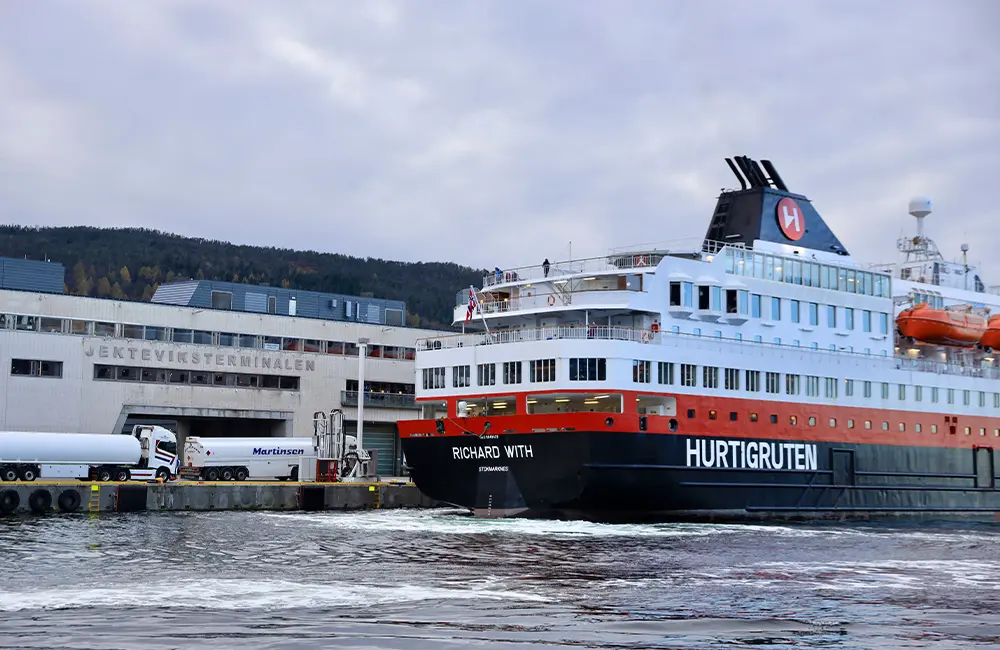
Hurtigruten’s battery-hybrid ship MS Richard With departed from Bergen on 29 October on its landmark voyage along the iconic Bergen–Kirkenes route, carrying passengers, cargo and tourists, and will cover a 4,000 to 5,000-kilometre round trip.
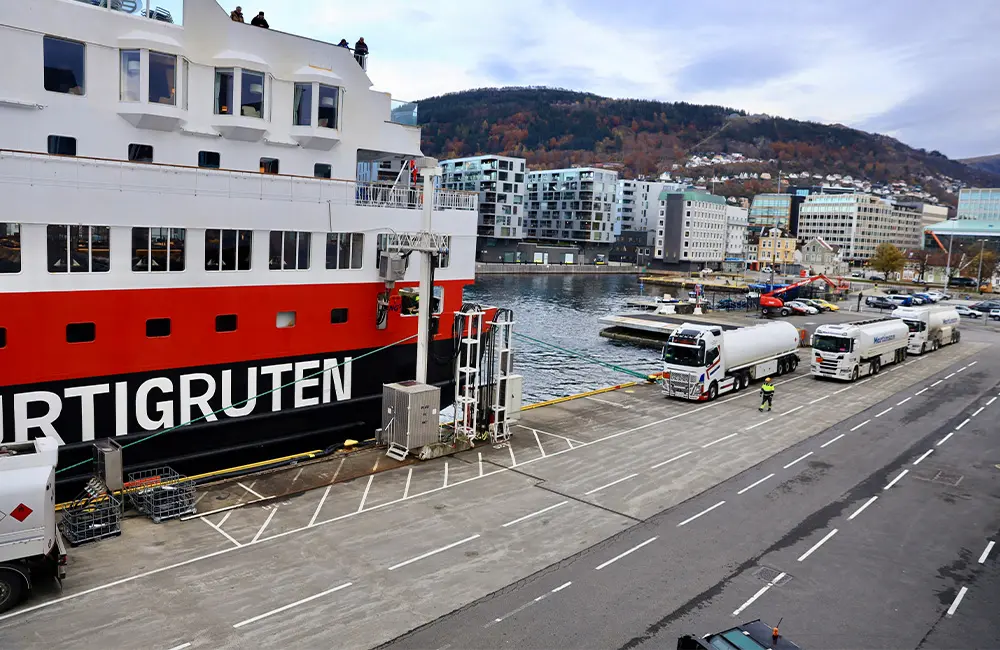
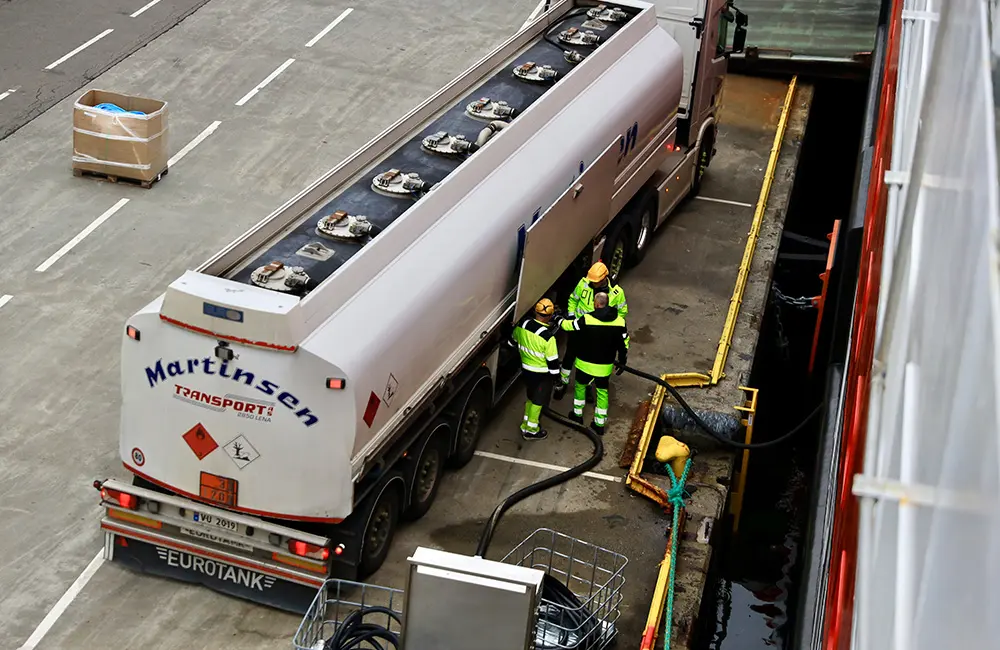
For this special sailing, the ship’s tanks are filled with 100 per cent advanced biofuel (HVO100 – hydrotreated vegetable oil) produced from waste and residual materials, such as used cooking oil and fat waste, supplied by energy company St1.
Over the past four years, Hurtigruten has invested around €100 million (around AU$177 million) in technical upgrades, one of the most extensive environmental upgrade programs of its kind in Europe.
MS Richard With is one of the vessels equipped with battery packs and new engines, significantly improving energy efficiency. Furthermore, advanced sewage treatment systems and purification units have reduced NOx emissions by more than 80%. Additionally, all ships in the fleet are now equipped with shore power connections.
“Lifecycle analyses show that this fuel can reduce greenhouse gas emissions by up to 90% compared with fossil alternatives,” said Lea Rankinen, Managing Director of St1 Norway, Hurtigruten’s fuel supplier.
“This voyage demonstrates how circular solutions can deliver real emission reductions today. Hurtigruten is showing decisive leadership, and for us at St1, this is about using technology and resources more intelligently. We turn waste into fuel and show that the energy transition is possible now,” said Rankinen.
What distinguishes this initiative?
While many cruise lines discuss zero-emission ships in the future, Hurtigruten is delivering a climate-neutral voyage now, utilising its existing vessel infrastructure.
According to Hurtigruten CEO Hedda Felin: “This marks a historic moment in Hurtigruten’s more than 130-year legacy along the Norwegian coast. Most importantly, it’s further proof that emission cuts are possible today by using sustainable biodiesel, without the need to invest billions in new ships or infrastructure.”
The supplier’s lifecycle analysis shows that HVO100 can reduce greenhouse gas emissions by up to 90 per cent compared to fossil alternatives.
So the story becomes not just “we’re greener” but “we’re proving a scalable step forward.”
What are the industry and benchmarking implications?
This voyage presents a live case study on how legacy fleet operators can achieve substantial emission reductions without waiting for next-generation zero-emission ships. It sets a standard that other coastal and regional operators can reference.
It also underscores that biofuels and battery-hybrid systems are established technologies with real-world deployment, potentially accelerating narratives in the travel industry around sustainable shipping and expedition cruising.
How does this help travel advisors and their clients?
Firstly, it gives travel sellers a strong sustainability story to communicate. Promoting a heritage brand like Hurtigruten, taking a real climate step along one of the world’s classic voyages. Agents can highlight this offering to environmentally conscious clients seeking authentic experiences with measurable green credentials.
Secondly, the fact that this is not a future promise but a “voyage happening now” creates urgency and helps with bookings and differentiation. The route remains the legendary Bergen–Kirkenes coastal express, allowing clients to experience the scenery, culture, and authenticity of Norway’s coast, along with the sustainability angle.
Thirdly, for agents specialising in premium, expedition, or cruise-adjacent products, it provides a benchmark for what sustainable travel can look like today. You can position the trip as both timeless (historic route) and timely (climate-neutral).
Finally, it opens up opportunities for upselling and storytelling: clients can ask about the biofuel, the battery-hybrid technology, the ship’s heritage, and the communities this service supports, all of which enhance the perceived value beyond “just a cruise.”
What’s next for the brand?
Hurtigruten emphasises that while this voyage is a milestone, its longer-term vision remains building ships that can sail entirely emission-free in normal operation. Through its R&D programme, “Sea Zero”, the company plans future vessels that will cut total energy demand by 40–50 per cent and utilise battery power, sails, or other innovations.
“Hurtigruten believes that sustainable biofuel is the fastest and most cost-effective way to cut emissions. This is especially true for shipping, where zero-emission technology for larger vessels is still a few years away,” says Felin.