


Cruising the uncrowded, wildlife-rich Galapagos islands is a dream trip, one that suits adventurous, nature-loving travellers of all ages. Here’s a look at what to expect from six top operators.
Lying some 970 kilometres off the coast of Ecuador, the Galapagos Islands are part of a vast marine reserve – a region David Attenborough described as “the most spectacular explosion of biological diversity in the world”.
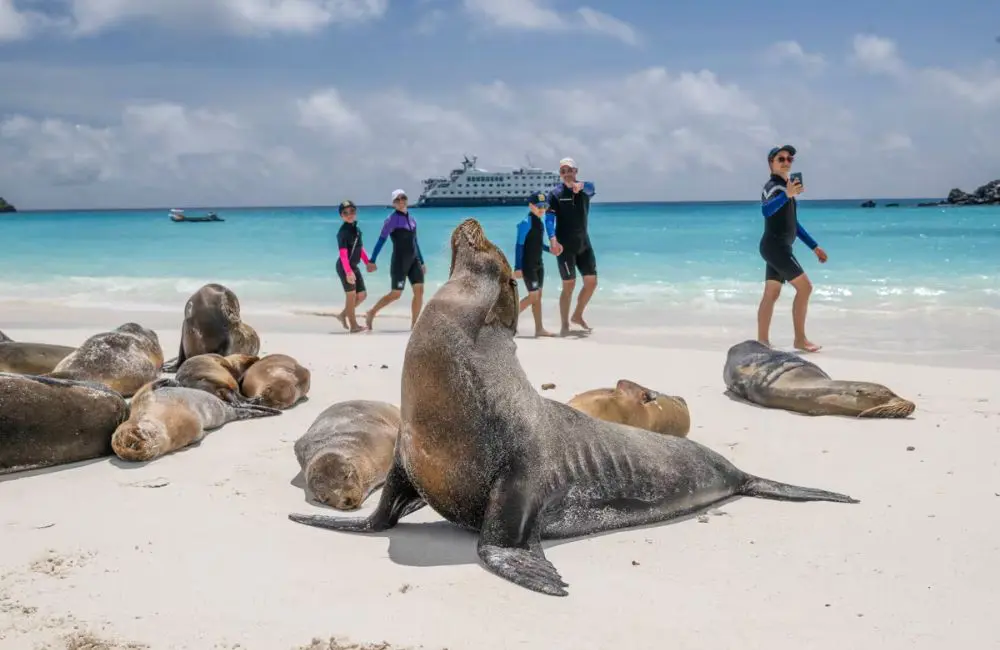
The extraordinary wildlife you see, at very close quarters on land or in the ocean, is famously unafraid of humans because the archipelago was isolated from the rest of the world for so long.
The reserve is strictly managed and is a living lesson in environmental conservation – and why today it is a paradise for animal and bird lovers, hikers, divers and photographers.
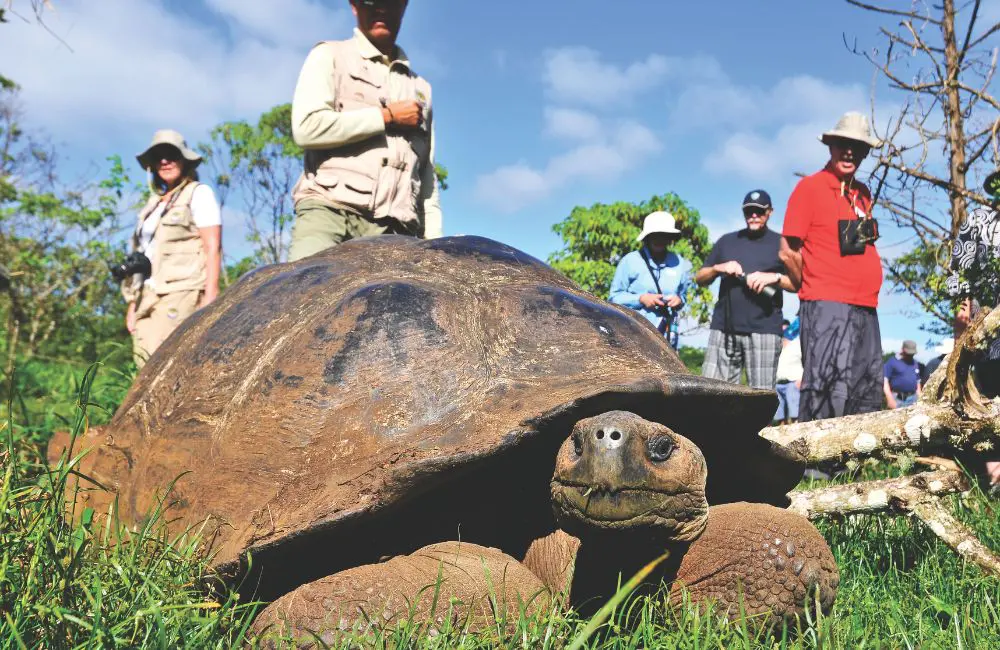
Close encounters with giant Galapagos tortoises, marine iguanas, flame-coloured Sally Lightfoot crabs and exotic birds such as blue- and red-footed boobies, flamingos and frigates are pretty much guaranteed on the islands visited on a typical seven- to 10-day cruise.
Overcrowding is not a problem in the Galapagos. To help protect wildlife and minimise the impact on the environment, ships are limited by marine reserve authorities to a maximum 100-guest capacity, and every group of 16 people going ashore or snorkelling must be led by a local naturalist guide.
Many of the guides are Ecuadorians, and their knowledge and love of the region is another reason why a Galapagos cruise is so memorable.
When and where to go
Although ships operate year-round, the most popular time to visit the Galápagos Islands is in the wet season from January to May. Temperatures range between 21°C and 30°C, and it is breeding season, so birdwatching and turtle nesting are at their peak.
For the dry season between June to December, the average temperature is about 25°C. It’s cooler and windier but still sunny, and the colder water’s increased nutrient levels attract more wildlife.
Having visited the islands in March and June, I can say that the snorkelling was out of this world on both trips, with abundant sightings of sea lions, turtles, rays, reef sharks and billions of tropical fish – and hiking is a little easier in cooler weather.
Ships generally follow two main routes, or loops, around the Western or Northern/Central Islands over seven days or combine the routes over up to 14 days.
Marine reserve regulations mean that each island can only be visited once within 14 days. The islands vary according to geological features and the different types of wildlife that inhabit them, and itineraries vary with different operators.
Best for families
The three largest ships in our Galapagos selection are particularly appealing to multi-gen groups who are travelling with children and teenagers.
School holiday programs, interconnecting staterooms, science centres and water sports equipment such as kayaks and standup paddleboards keep adventurous travellers of all ages busy and engaged.
HX Expeditions’ 90-guest MS Santa Cruz II, which was fully refurbished in 2021, offers departures ranging from seven-day Western or Northern routes to nine- to 12-day Eastern routes, and 12- to 16-day Galapagos plus Machu Picchu itineraries. The ship has 50 cabins and suites that accommodate couples, solo travellers and family groups and is a carbon-neutral operation.
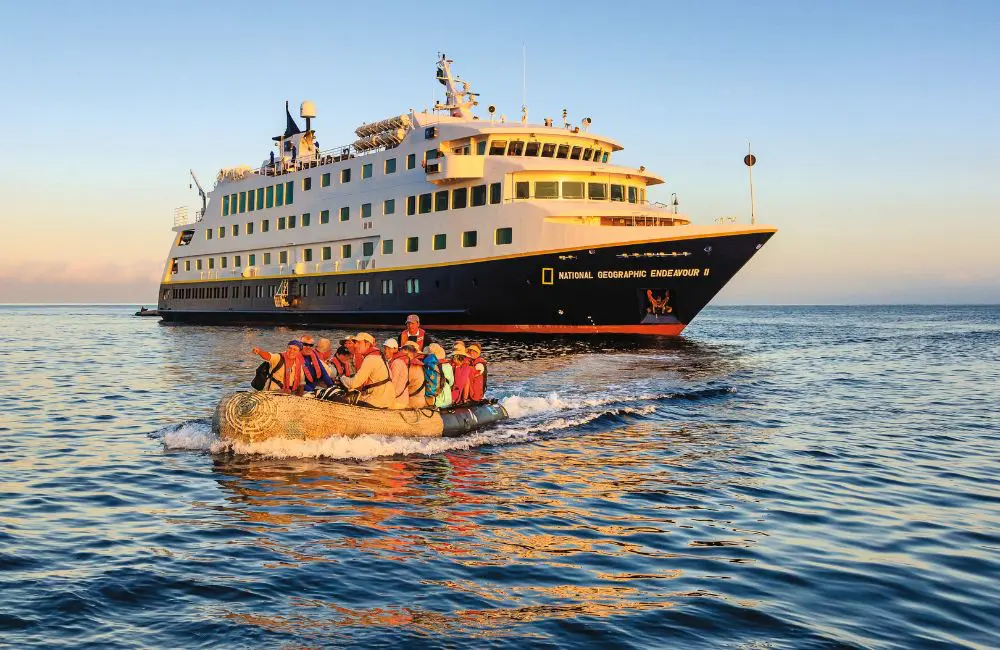
Lindblad Expeditions’ National Geographic Endeavour II accommodates 96 guests in 52 staterooms and is equipped with state-of-the-art tools for exploration, including a glass-bottom boat, underwater cameras and video microscope. The ship sails 10-day Galapagos and 16-day Galapagos and Machu Picchu itineraries year-round.
Celebrity Cruises’ 100-guest Celebrity Flora is the newest and most glamorous of the larger Galapagos ships. All staterooms and suites have verandas or “infinite verandas”, and public spaces include the Discovery Lounge, science Lab and a stargazing platform.
The ship was built with the latest environmental technologies and sails seven-night Inner and Outer Loop itineraries, plus longer combinations that include Quito and Machu Picchu.
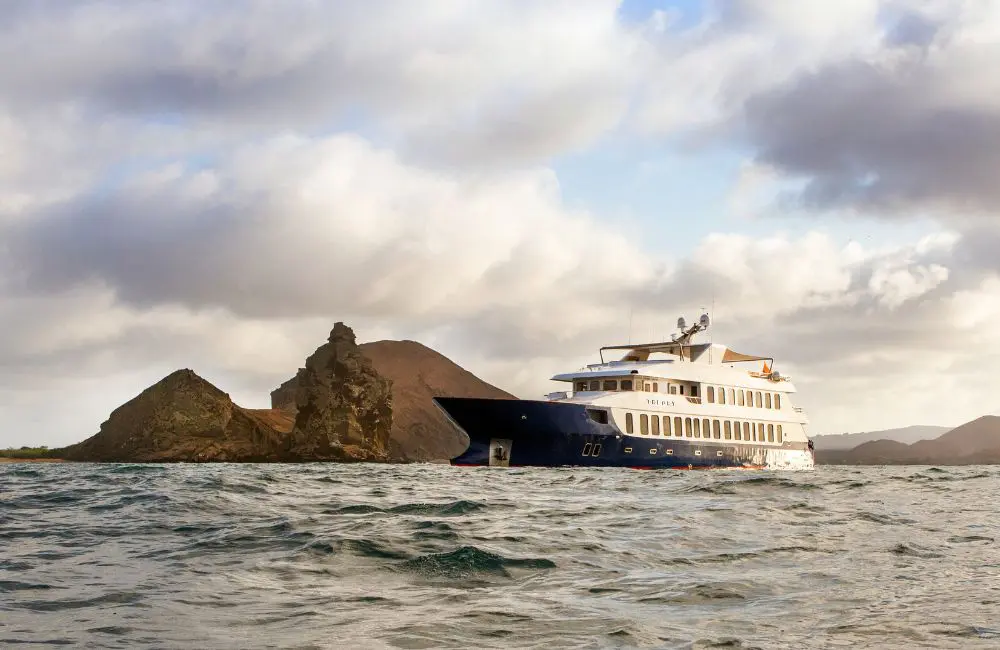
Superyacht lifestyle
Ecoventura has been operating in the Galapagos since 1989, and the family-run company is now part of A&K Travel Group.
Its three boutique yachts, Origin, Theory and Evolve, built between 2016 and 2023, accommodate 20 guests and are the only Galápagos vessels that belong to the prestigious Relais & Chateaux collection.
A&K’s most popular Ecoventura itineraries are nine days, including a night in Quito, and the 12-day Galapagos and Machu Picchu combination.
Aqua Expeditions’ 16-guest Aqua Mare is also renowned for its cuisine, sleek design and high guide-to-guest and crew-to-guest ratios. Built in 1998 and expensively – exquisitely – refurbished in 2021, the super-sophisticated Aqua Mare sails seven- and 14-day itineraries year-round.
Lindblad operates four ships in the Galapagos; the world-renowned expedition line’s most intimate vessel, the 16-guest catamaran National Geographic Delfina, joined the fleet in 2025.
NG Delfina operates 10-day itineraries that include overnight stays in Quito or Guayaquil and 16-day Galapagos and Machu Picchu combinations. Lindblad’s other two vessels in the region are the 48-guest NG Islander II and 2025’s 48-guest NG Gemini, operating similar itineraries.
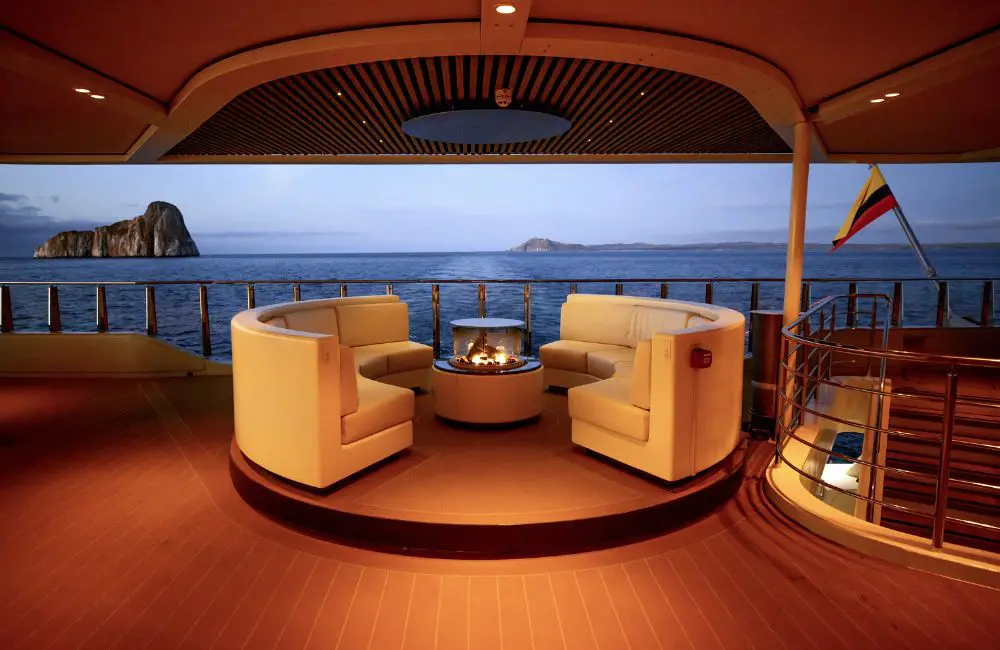
Ultra-luxe exploration
Silversea’s 100-guest Silver Origin is the first destination-specific ship the line has built – and its most environmentally conscious, deploying a dynamic positioning system that protects the delicate seabed and an advanced propulsion system.
Silver Origin, which entered service in 2021, also offers all the luxury accoutrements that Silversea guests expect, including butler service for every suite, a 90-strong crew and refined dining in its two signature restaurants, The Grill and The Restaurant.
The ship’s exploration spaces include Basecamp, the “knowledge lounge” located by the marina where its eight Zodiacs are launched, and the indoor-outdoor Explorer Lounge. Silver Origin’s seven- and 14-day sailings include two pre-cruise nights in Quito.
For more information, visit A&K, Aqua Expeditions, Celebrity Cruises, HX Expeditions, Lindblad, Silversea.