



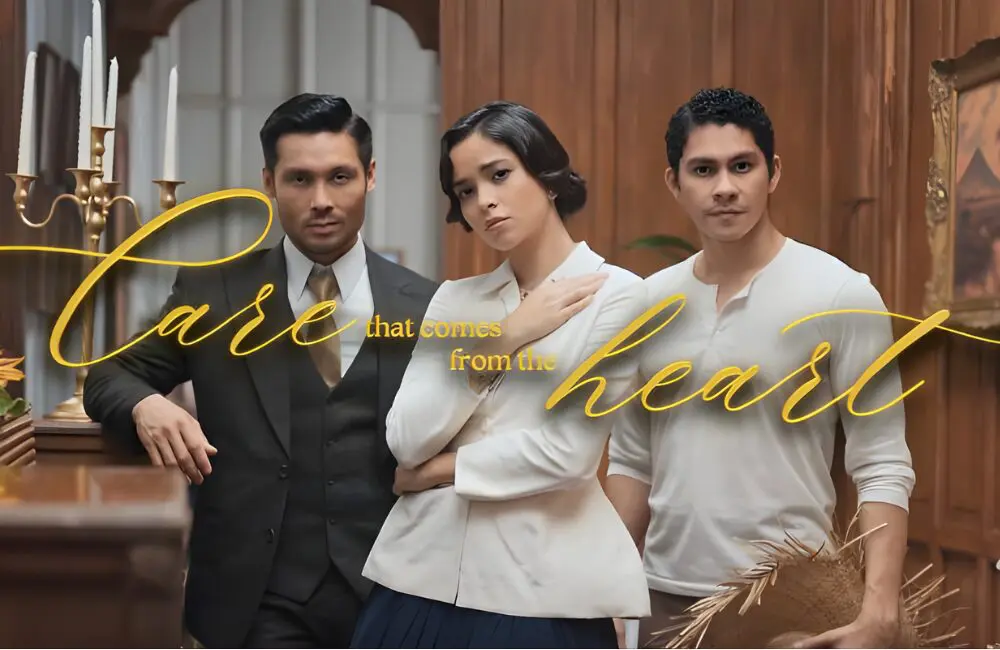
At the time of publishing, the new safety video from Philippines Airlines has had over 13 million views on YouTube. It runs for over six minutes, and to me, it is perfection**.
And it is oh so cringe.
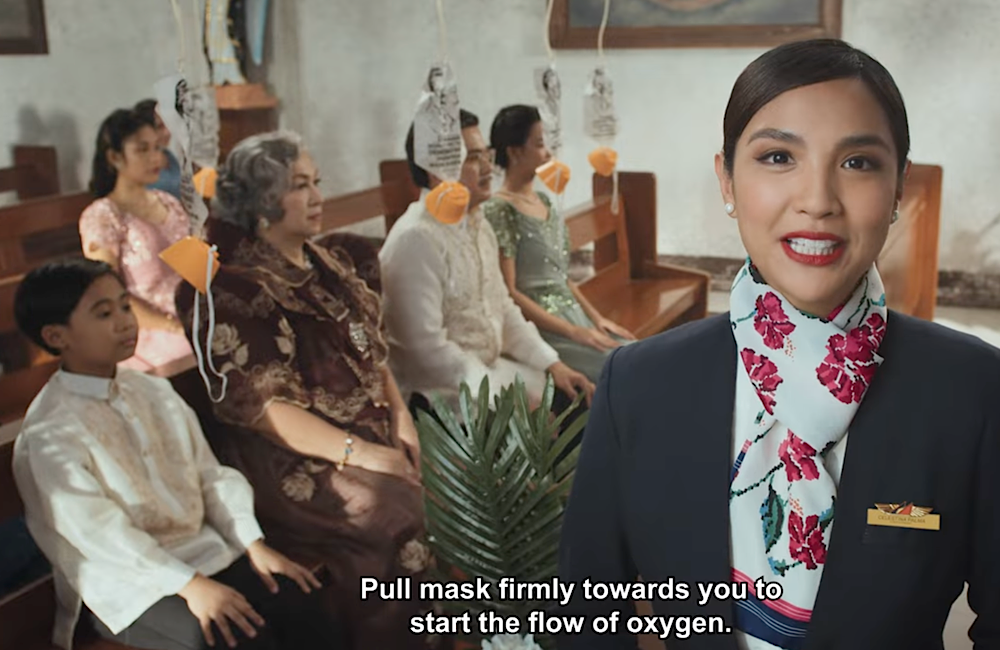
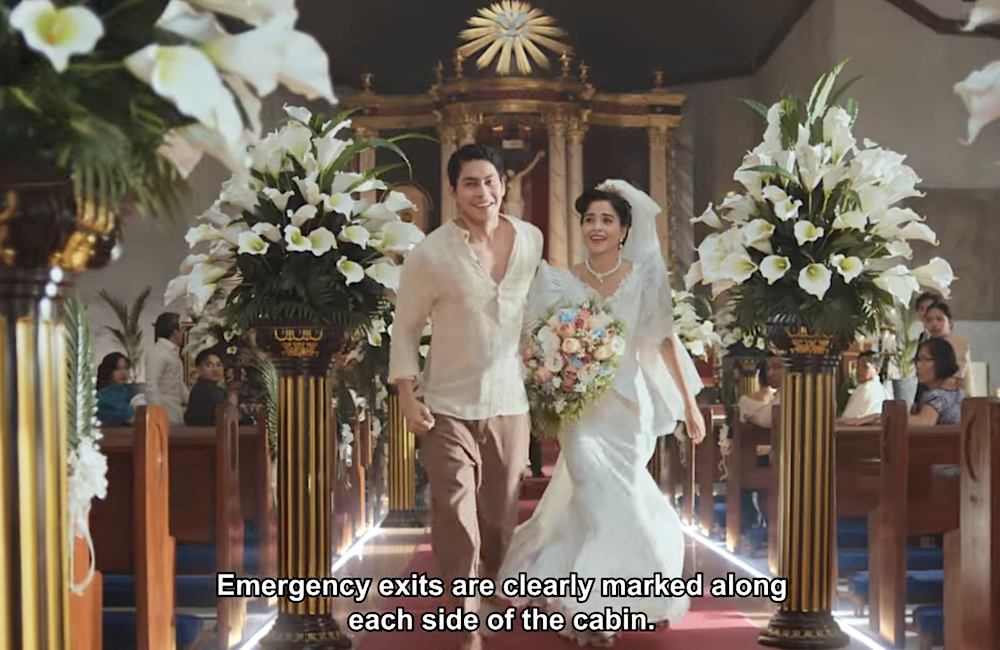
When Anton arrives at the church to break up the wedding between Luisa and Diego and the congregation is so shocked that oxygen masks fall from the ceiling? So good!
Or when Luisa’s phone rings while she’s with her mum, who clocks the name on the screen ‘Anton’ and they both reach for the phone, but it falls (slow motion of course) between the seats, and they have to break the fourth wall to ask the narrating cabin crew member to retrieve it? Chef’s kiss.
I don’t want to give it all away because: spoilers. But I will say I have never before been so invested in the fastening of a seat belt on a plane as when I was watching Care that comes from the heart. Which is what this inflight safety video/soapie is called. Cue the violins and the cursive show title.
It, of course, ties in with Philippine Airlines’ tagline: the heart of the Filipino. It’s ironic cringe at its best.
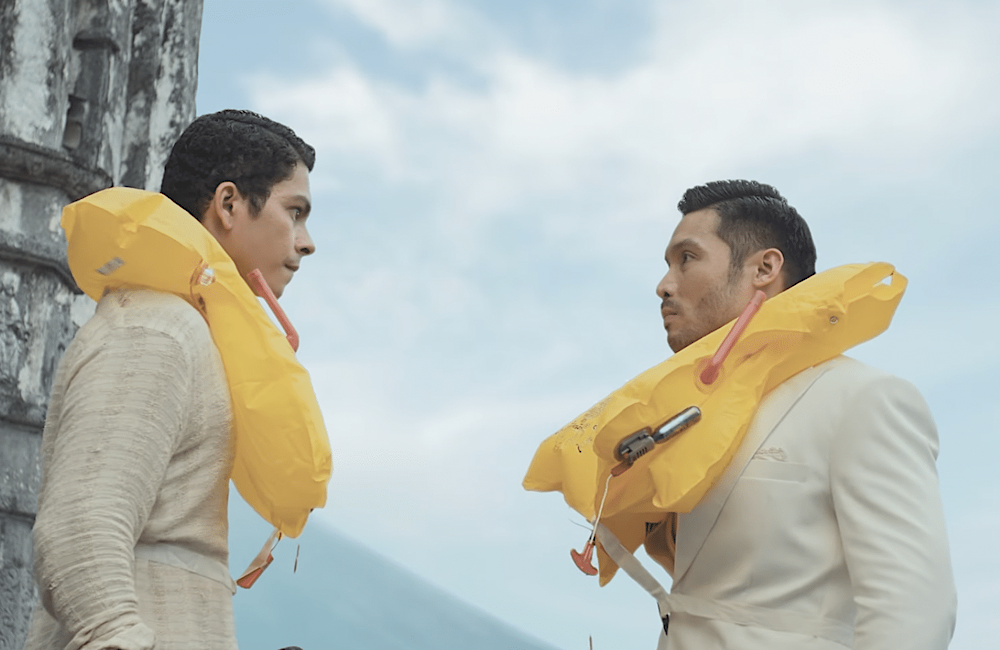
Like when (okay, one more spoiler) a tear falls from Diego’s eye onto his lifevest and the light comes on because it’s been submerged in the water of his tears? Who comes up with this brilliance?! That said, I don’t know why the cast are suddenly wearing their lifevests when they’re on land. I mean, the Philippines is literally over 7,000 islands, they could have easily introduced a water scene)…
**I admit, this half-Filipino is probably biased. Philippine Airlines featured in our family’s annual pilgrimage to the homeland. We rarely travelled beyond Manila. Not really beyond the suburb. So mixed into my memories of street games with neighbourhood kids are the teleseryes I watched with my lola and lolo (grandmother and grandfather). Big feelings. High drama. Much of it quite literally beyond my comprehension.
But, I am hanging for the next episode. Will Luisa’s parents ever accept Anton? How long are they going to stay on the island? If I were them, I would stay until I bring home a baby. Filos are suckers for kids.
Karryon caught up with Philippine Airlines Australia country manager Krystle Ramirez-Gastrock to get the behind the scenes goss.
The old safety video was a clear ad for the beauty of the Philippines. This one is a little more subtle on that front. Do you think ‘Care that comes from the heart‘ will still sell the Philippines to your Aussie flyers? Why?
Where the old safety video was an overt showcase of the Philippines’ natural beauty (beaches, landscapes and tourism visuals) the new video speaks to why people choose to fly Philippine Airlines in the first place: the people, the culture, and the emotional connection. It’s a more subtle approach, but arguably a more powerful and evolved one.

For many Australian travellers, particularly repeat flyers travelling for VFR (visiting friends and relatives), business, or culture-rich leisure, this message resonates more deeply than scenery alone. ‘Care that comes from the heart’ reinforces our service identity: warm, genuine and personal. That emotional value proposition does sell the Philippines — not just as a destination, but as an experience embodied by our people. It positions PAL as more than transport; it makes flying with us part of the Philippine experience itself.
In many ways, the video feels almost telenovela-like, and that’s not accidental. Storytelling, emotion, family and human connection are deeply embedded in Philippine culture, and the video leans into that narrative style. It’s warm, familiar and emotionally engaging, which is what makes it resonate. You may not see as many beaches, but you feel the Philippines, and that feeling stays with you far longer.
Watching it as a passenger, what do you think this video does better than a traditional safety briefing?
This video succeeds where a traditional safety briefing often only informs, this makes you care enough to pay attention. Rather than a transactional, instructional approach, it humanises safety by drawing passengers in through story and emotion, which is very Filipino.
You see real people, hear Filipino voices and language, and feel the warmth behind the message. You’re not just being lectured on what to do; you’re being guided by people who clearly care about you. By using narrative and cultural cues instead of generic safety visuals, the video holds attention far better, and as a result, passengers are more likely to watch, absorb, and remember the safety information. That emotional connection is ultimately what makes the briefing effective.
From your perspective, how well does this video reflect the perception of the Philippines today? There weren’t a tonne of island shots, there was more Filipino being spoken… Are Aussies looking to go deeper and look further than our islands?
I think the video reflects the Philippines very well, and very intentionally. There are fewer island shots, and that’s by design.
Today, the perception of the Philippines goes beyond beaches and resorts. Australian travellers are increasingly curious about culture, community, food, language and authentic, lived experiences. The use of more Filipino language, faces and everyday human interactions signals a deeper, more authentic portrayal of the country.
From an Australian market perspective, this mirrors what we’re seeing on the ground. Travellers want to move beyond the postcard version of the Philippines, they want stories, personality of the people, heritage and connection. The video taps into that shift and presents the country as it really is: expressive, emotional, humorous and people-driven, very much like a good telenovela where relationships and heart sit at the centre of the story.
So yes, this video mirrors the evolving way Aussies perceive the Philippines: not just as a beautiful holiday destination, but as a vibrant, warm, and hospitable culture worth experiencing.
Is there talk of a Part 2??
As for a Part 2 — nothing I can officially confirm yet, but the concept certainly lends itself to a series. The storytelling approach works extremely well and could be expanded across different regions, communities and everyday Filipino moments; from Mindanao, Visayas and Luzon, to our PAL people on the ground and in the air, and even passenger stories across VFR, cultural and business travel. Given the positive reception and the strategic shift toward authentic storytelling, a continuation (or even a broader campaign) makes a lot of sense. If there’s momentum internally, it’s a direction I’d be excited to see evolve.
KARRYON UNPACKS: Philippine Airlines breaks the pattern by earning attention first, then delivering the message. By using narrative as the entry point, it flips the safety briefing from obligation to engagement.