



With an expected 9.5 billion passenger trips during the 40-day Spring Festival travel rush, Chinese New Year 2026 is shaping up to be the largest annual human migration in recorded history. And for Australian travel operators, airlines and tourism boards, it’s a moment that deserves far more attention than it typically gets.
If you think Australia’s Christmas holiday travel rush always feels chaotic, compared to what’s happening in China right now, it’s a mere blip on the radar.
Chinese New Year 2026 is shaping up to be the largest annual human migration in recorded history, with an astounding 9.5 billion passenger trips expected during the 40-day Spring Festival travel rush, known as Chunyun, up from 9.02 billion last year.
Rail alone is forecast at 540 million journeys. Aviation around 95 million. The rest by road and waterway. And for the first time, the official public holiday at the heart of those 40 days has been extended to nine days to help stimulate further economic growth.
Let that sink in for a moment.
What’s really behind the numbers?
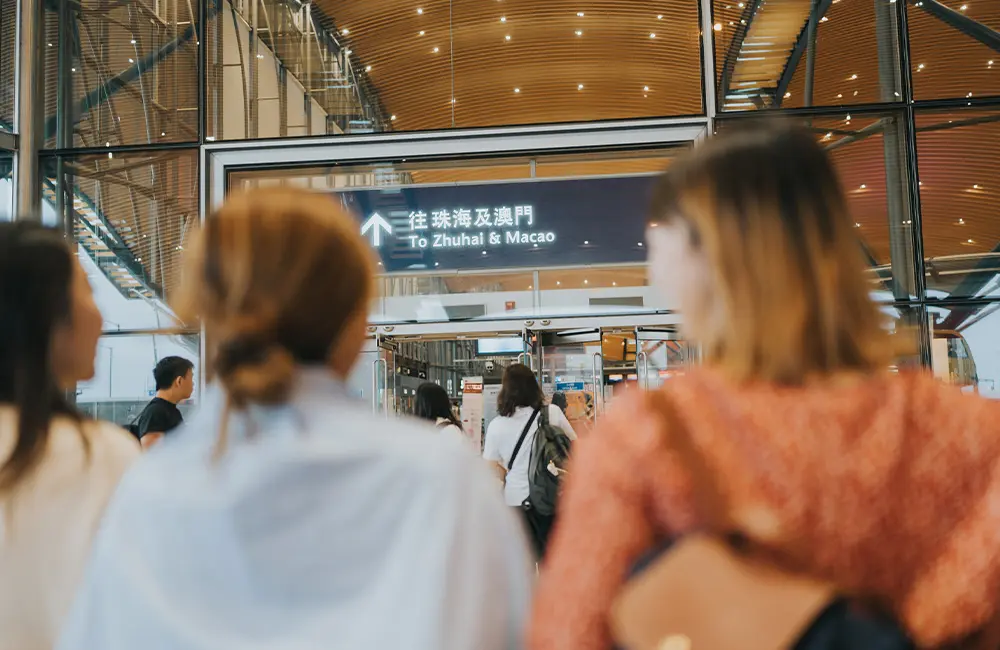
Strip away the insane statistics, and what’s actually happening during Chunyun is something that anyone who works in travel understands immediately: reunion. Lunar New Year’s Eve dinner is the most important meal of the year in China. Millions of migrant workers travel back to their hometowns and rural provinces. Students cross the country. Grandparents excitedly wait at railway stations. For many, it is the only guaranteed journey home all year.
Sound familiar?
For us in Australia, the closest comparison is Christmas. Airports swell. Highways clog. Camp sites book out. Sydney Airport handles several million passengers across December and early January, and nationally, major airports combined move roughly 10 to 12 million domestic travellers over the peak. That feels busy. Until context arrives.
Thanksgiving in the U.S. sees roughly 55 million Americans travel over five days. The Hajj in Saudi Arabia draws around two million pilgrims to Mecca, one of the most extraordinary concentrations of humanity on Earth. Even the Kumbh Mela, India’s great religious gathering and arguably the only event in the same conversation as Chunyun, pulls hundreds of millions towards a single point.
Chunyun does the opposite. It disperses hundreds of millions simultaneously, in every direction, across an entire nation and beyond. That is what makes it unlike anything else.
Australia has a population of just over 27 million people. China has more than 1.4 billion, more than 50 times our population. When 9.5 billion passenger journeys are recorded in 40 days, that’s roughly 6 to 7 trips per person. Christmas and Lunar New Year share the same heartbeat: ritual, reunion, renewal. But China’s internal migration patterns amplify the scale beyond anything else on Earth. Spring Festival becomes a nationwide return, year after year, and at its core, one of the most human things that happens on this planet: billions of people moving towards the people they love.
How has Chunyun changed?
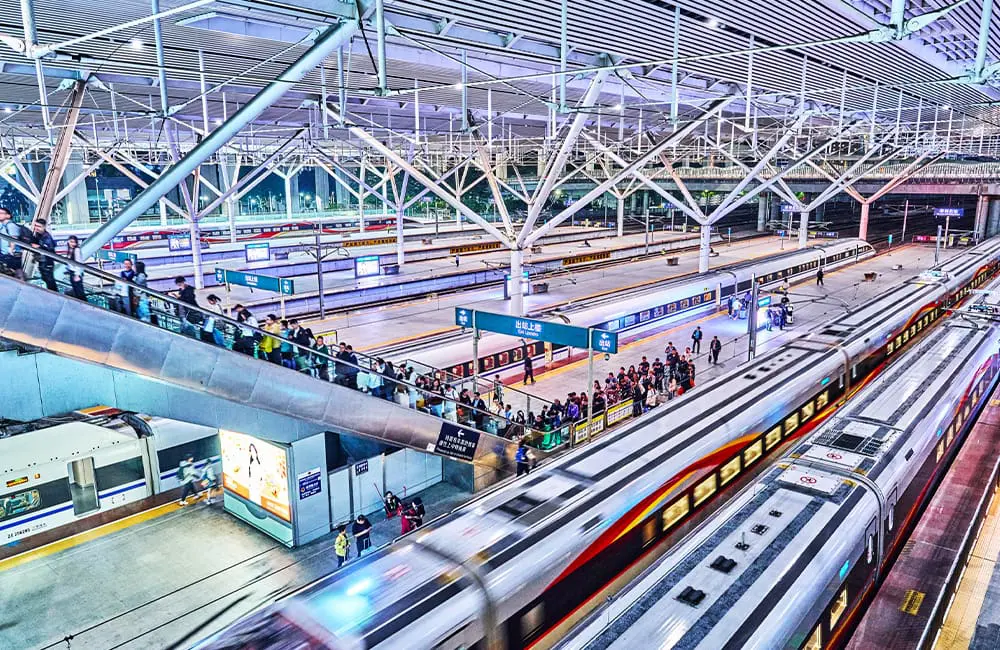
Once synonymous with crowded trains, endless waits and days-long journeys, Chunyun today tells a very different story. China’s high-speed rail network now connects major cities to remote provinces in hours, not days. Expanding aviation absorbs tens of millions of flyers. And on the roads, electric vehicles stream along expressways in their millions, many filled via DiDi, China’s dominant rideshare app, where long-distance carpooling features match strangers making the same journey home.
The extended nine-day public holiday is also more than cultural generosity. It’s economic strategy. Authorities are deliberately using the Spring Festival period to stimulate consumer confidence, domestic tourism and spending across retail and hospitality. Outbound travel is strengthening too. Australia, alongside destinations across Southeast Asia and parts of Europe, is already feeling concentrated demand from Chinese travellers. When China moves at this scale, global travel patterns move with it.
What is the Year of the Fire Horse and why does it matter?
Overlaying all of this in 2026 is something that doesn’t come around often: the Year of the Fire Horse.
The Fire Horse appears only once every 60 years. The last occurrence was 1966, a year that marked the beginning of the Cultural Revolution, one of the most turbulent periods in modern Chinese history. Sixty years before that, 1906 saw political fragility and devastating floods that took 25 million lives at the tail end of the Qing Dynasty.
There’s no empirical evidence linking zodiac cycles to real-world events. But symbolism shapes mood, and mood influences behaviour, something anyone in travel understands intuitively. In Chinese astrology, the Horse represents speed, independence and bold movement. Fire intensifies those qualities: energy, volatility, transformation. It can renew. But it can also destroy.
Discussion about the Fire Horse’s return has been building across Chinese social media, a mix of curiosity, cultural pride and quiet reflection. For older generations, 1966 is a lived memory. For younger Chinese, the zodiac is a tradition more than prophecy. Either way, in 2026, a year associated with speed and bold movement, coincides with the largest coordinated movement of humanity on Earth.
That’s quite the combination.
What does Chinese New Year 2026 mean for Australian travel?
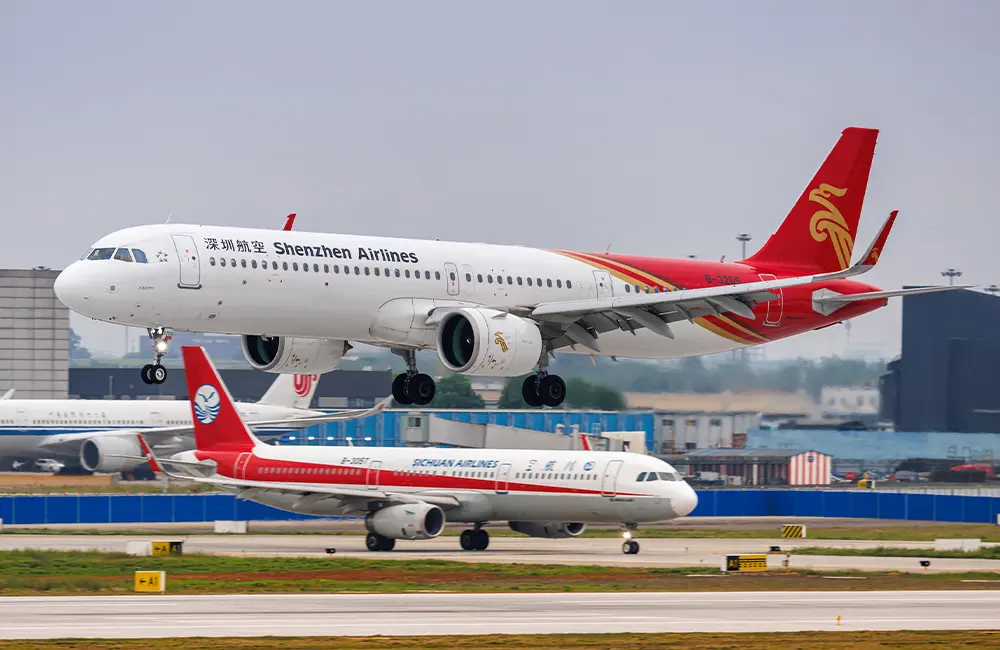
For operators, advisors, airlines and tourism boards, understanding the Lunar New Year is not about festive campaigns or red lantern imagery. It’s about scale, timing and emotional context. Spring Festival is China’s defining annual rhythm, its emotional and logistical peak combined. It explains why air capacity tightens in early February, why pricing volatility increases, and why culturally attuned engagement cuts through in ways generic promotions simply don’t.
The advisors and operators who genuinely understand this are better positioned commercially and better equipped to serve Chinese travellers with the care and insight that builds lasting relationships. Those relationships, built on genuine curiosity about where people come from and what matters to them, are what travel at its best has always been about.
If Christmas defines Australia’s travel crescendo, Chunyun defines China’s. Just at a planetary scale.
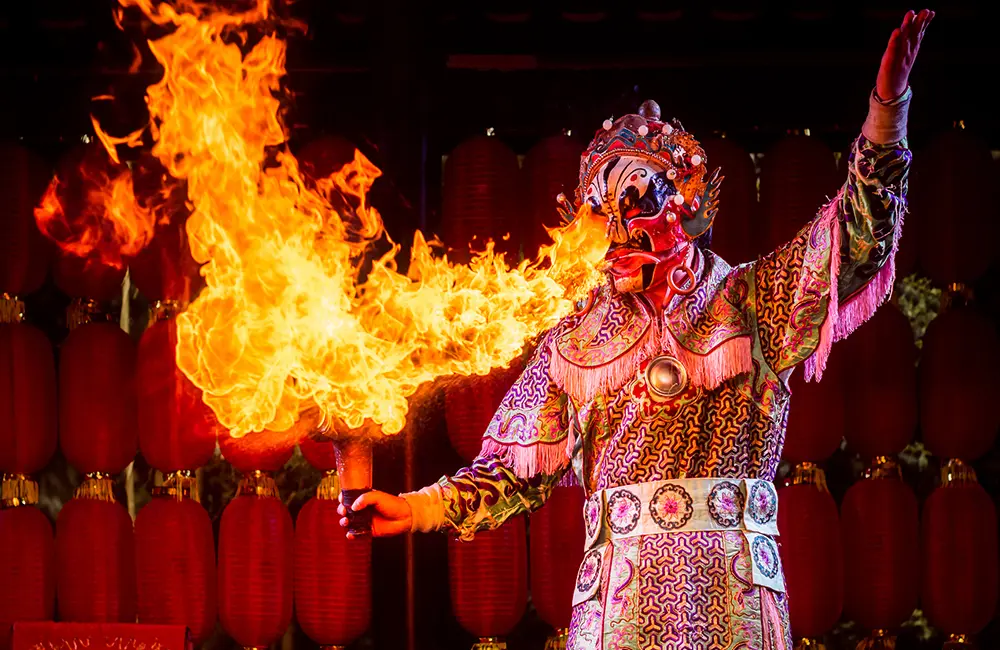
In 2026, as the Fire Horse returns, families will reunite. Cities will glow red with lanterns. Fireworks will crack through the night, scaring away Nian, the fearsome dragon-lion who legend says attacked villagers and sometimes ate children. Trains will carry hundreds of millions home across provinces, mountains and coastlines. The numbers are extraordinary, the symbolism runs deep, and the movement is unstoppable. But beneath all of it, it’s the same story; it’s always been that way.
Someone walking through a door. Someone waiting on the other side.
Read: One of the world’s biggest airlines to debut new year-round Sydney-China route