




While tens of thousands of travellers remain grounded across the Gulf, the UAE (United Arab Emirates) has stepped in to cover the costs. The country’s General Civil Aviation Authority (GCAA) says it has provided temporary accommodation, meals and rebooking support for approximately 20,200 affected passengers, with the state bearing all costs.
This welcome news is a significant intervention and stands in stark contrast to the legal reality facing many stranded travellers.
Gulf-based carriers operate in jurisdictions with no passenger protection framework equivalent to Europe’s EU261, meaning there is no legal obligation for airlines like Emirates or Etihad to provide hotels, meals or transfers. Any assistance from the carriers is at their discretion.
The GCAA says the support forms part of pre-approved operational plans activated in response to regional airspace closures following the US-Israeli strikes on Iran and Tehran’s retaliatory attacks on the UAE and Qatar.
What exactly is the UAE providing?
According to the GCAA, affected passengers have received temporary accommodation, meals and refreshments, with rebooking procedures facilitated in line with the authority’s operational plans.
In Abu Dhabi, the Department of Culture and Tourism (DCT) confirmed it would cover the cost of extended hotel stays for tourists and transit passengers unable to depart, directing hotels to extend bookings and avoid asking guests to vacate.
Dubai authorities issued a similar directive, requiring hotels to prioritise guest welfare and keep rooms available for stranded travellers.
Beyond the government response, nearly 250 holiday home hosts in Dubai offered free accommodation to those affected, according to reports. Developer Danube Properties also made a public offer of free housing, with priority given to the elderly and families travelling with young children.
What are the airlines offering?

Emirates, which has suspended all operations to and from Dubai, is allowing passengers to rebook within 20 days or claim a full refund.
Etihad is offering free rebooking until 15 March 2026 for travellers who booked before 28 February with travel dates up to 2 March.
Qatar Airways remains grounded pending a safety clearance from the Qatar Civil Aviation Authority, with the airline saying it would provide an update by Tuesday, 3 March.
Virgin Australia confirmed that seven of its Qatar Airways-operated flights were cancelled on Sunday and a further five on Monday, 2 March.
Qantas said its services, including the Singapore-to-London route, were unaffected. Travellers looking at alternative routings may also want to consider Asian carriers or Turkish Airlines as options to bypass the Gulf.
Why does this matter for Australian travellers?
The UAE’s decision to foot the bill is notable because it fills a gap that neither airlines nor insurers are required to cover. The Insurance Council of Australia has confirmed that most standard travel insurance policies exclude losses arising from armed conflict, leaving travellers exposed to out-of-pocket accommodation and meal costs that could run into thousands of dollars during an extended grounding.
The GCAA’s 20,200 figure represents passengers who received direct support, but the true number of affected travellers across the region is far higher.
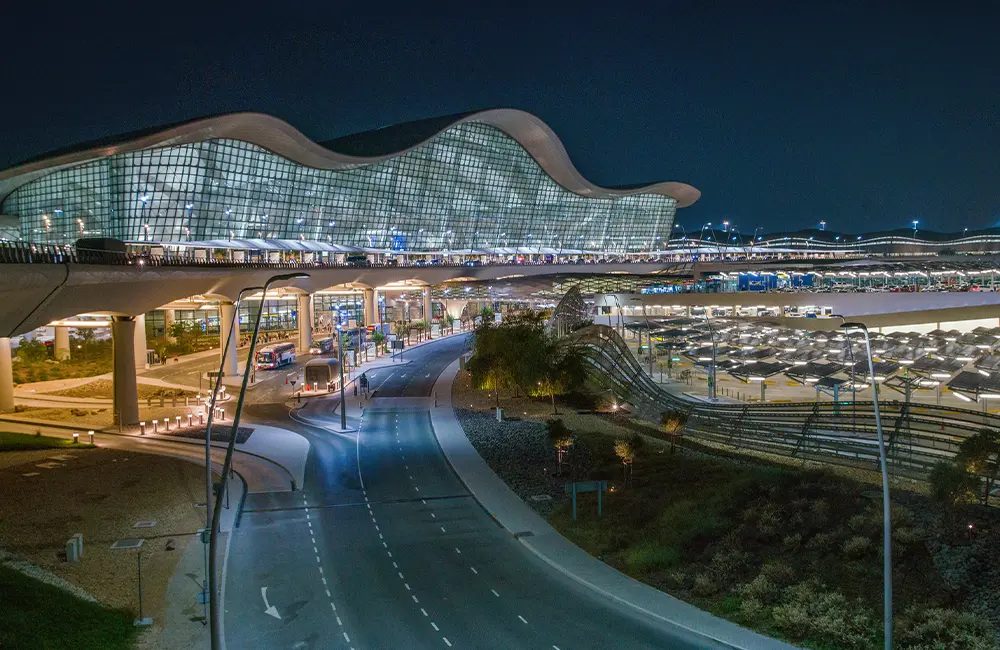
Dubai International Airport, usually the world’s busiest for international traffic, sustained damage in the Iranian strikes, as did Abu Dhabi’s Zayed International Airport, where one person died from falling debris after a drone interception.
DFAT has issued its highest-level “do not travel” advisory for the UAE, Qatar and Israel.
Regarding flights resuming, the situation remains fluid. Emirates and Etihad have flagged that schedules may change at short notice, and travel advisors should be prepared for rolling disruptions over the coming days.
It is also a timely reminder of the value of booking with a travel advisor, particularly when disruptions of this scale require rapid rebooking and on-the-ground support.
KARRYON UNPACKS: The UAE stepping in to cover accommodation and meals for stranded passengers is a welcome move, but advisors should not assume every affected client will receive support automatically. The 20,200 figure suggests a managed process, not a blanket guarantee. With no EU261-style protections in the Gulf and most travel insurance policies excluding war, the practical advice for advisors is clear: help clients access airline rebooking options, flag the DFAT advisory, and set expectations that out-of-pocket costs may still arise for those outside the UAE’s direct support net.