



Singapore jet fuel hit an all-time high, Qantas has rerouted Perth to London via Singapore, and Air New Zealand has cancelled 1,100 flights through May. For travel advisors and operators, the question is no longer whether airfares climb further — it’s how to keep clients moving.
There’s an old English saying that “today’s news is tomorrow’s fish and chip paper.”
Right now, even for the most seasoned of ‘aviation experts’, that’s exactly what attempting to predict global airfare volatility must feel like.
Over the past two weeks, airlines have been scrambling to respond to the escalating conflict in the Middle East, trimming schedules, rerouting aircraft and stranded passengers and crews as the crisis deepens and edges towards a chaotic third week. And consequently, raising airfares in response to a heady mix of spiking fuel prices and increased demand for alternative routes.
In a clear sign that the situation had gone gaga earlier in the week, Cathay Pacific was listing business-class return flights from Sydney to London via Hong Kong at roughly AU$39,500 for April travel.
Air India announced a phased fuel surcharge from 12 March, rising to a steep US$200 (AU$280) on Australia routes from 18 March, the airline said.
Air New Zealand has raised economy fares by NZ$10 (AU$8) on domestic routes, NZ$20 (AU$16) on short-haul international, including Trans-Tasman flights and NZ$90 ($74) on long-haul. In an ASX announcement, it said it had also suspended its FY2026 earnings guidance.
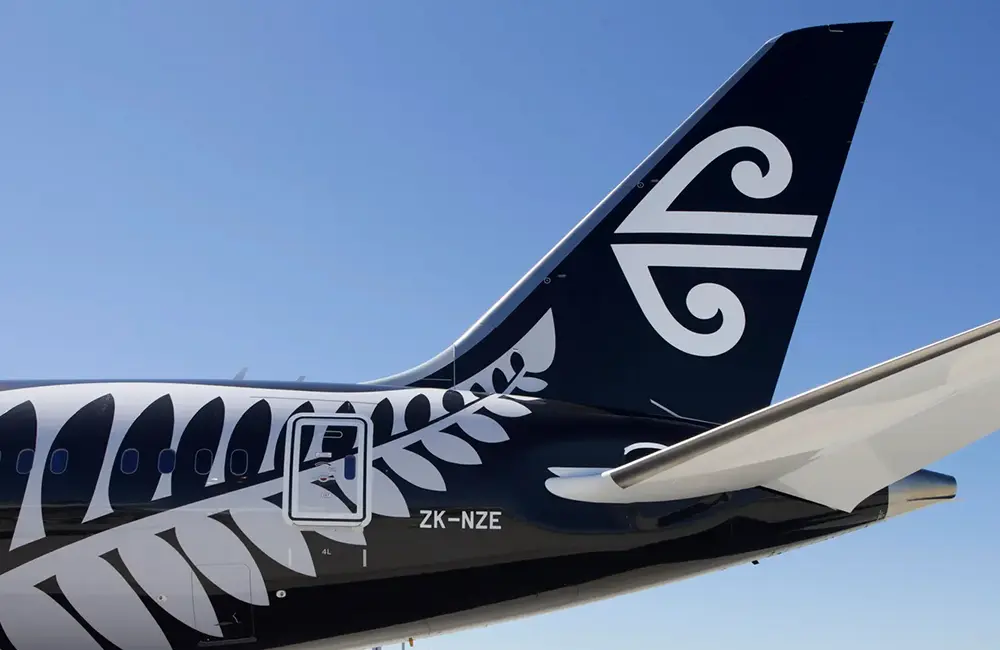
On Thursday, it went further, cancelling around 1,100 flights through early May, affecting 44,000 passengers — a 5 per cent schedule cut across off-peak domestic services.
And a Qantas spokesperson told Karryon the airline is increasing international fares this week in response to the fuel spike, with Jetstar also lifting prices across its network. Qantas’s European routes were running more than 90 per cent full in March, roughly 15 points above typical levels.
However, for many operators, contingency plans are already in place. Brett Mitchell, Managing Director of Intrepid Travel ANZ, told Karryon: “Like many industries, we’re seeing some impact from higher fuel costs as airlines adjust routes around the Middle East.
“It’s something we plan for as part of running a global travel business. Where costs shift, we take a measured approach and avoid reacting to short-term volatility,” he noted.
The fuel picture
Singapore jet kerosene, the benchmark for Asia-Pacific carriers, hit an all-time high of US$231 per barrel on 5 March. That’s roughly double January levels.
The world’s most sensitive shipping chokepoint, the Strait of Hormuz, which normally carries around 20 per cent of global oil supply, is effectively impassable. As I write, two tankers in the Strait of Hormuz are ablaze after being attacked by Iranian boats laden with explosives. Oil refineries in Oman, Bahrain, Kuwait and Iraq have also been hit.
The crisis has also reignited the case for domestic sustainable aviation fuel (SAF). “The current conflict in the Middle East highlights the importance of mandates that attract global investment and secure a domestic fuel supply,” Sydney Airport CEO Scott Charlton said, pointing to the federal government’s $1.1 billion investment in low-carbon liquid fuels. He’s not wrong, but that’s a story that doesn’t help the current situation.
What capacity is actually available?

Gulf carriers have been largely offline since the end of February. Today, normalisation and safety still remain uncertain as the conflict rages on.
Emirates said it was operating at roughly 60 per cent capacity, with plans to return to full capacity in the “coming days,”, while Etihad resumed limited flights from 6–19 March between Abu Dhabi and key destinations, including Sydney and Melbourne.
Qatar Airways is operating a very limited number of commercial flights as Qatari airspace remains closed. Services between Qatar and Australia for 13 and 16 March include Doha–Perth, while Perth–Doha services are scheduled for 14 and 17 March.
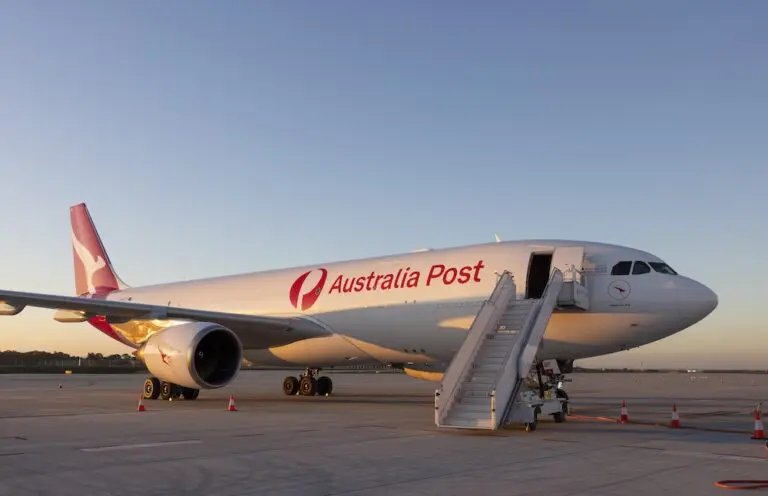
Qantas has suspended its non-stop Perth to London service (QF9) and began rerouting via Singapore from 9 March. The fuel stop enables up to 60 additional customers per northbound flight, a Qantas spokesperson said.
For all the latest Middle East travel news, head to Karryon’s dedicated updates here.
The rerouting scramble

Passenger volumes through Asian hubs jumped 17 per cent in the first week of March, with China up 86 per cent, according to Flight Centre’s corporate arms.
Melissa Elf, Global COO of FCM Travel and Corporate Traveller, said the response reflects what the corporate travel sector has long been known for. “Business travel is known for its resilience and flexibility, with companies looking at alternative routes that are safe to travel through, rather than cancelling,” Elf said.
“Global economies don’t stop, and our latest data show that corporates continue to find ways through alternative routes to get deals done.”
Meanwhile, on the leisure side, Australian Travel Industry Association CEO Dean Long told the ABC, “The most popular route at the moment is Singapore, by far, but we’re also seeing some increase in sales for Hong Kong,” adding, “North America is being used as an entirely different way to get to Europe.”
Luxury travel advisor David Brandon of Savenio Signature Travel Experiences echoed the sentiment, saying his team had already been rerouting clients who were already in transit.
“Operationally, we have been actively managing itineraries and supporting clients already in transit through rerouting and schedule adjustments, often via alternative hubs such as Singapore, Hong Kong, Japan and Malaysia,” Brandon said.

From a touring perspective, Managing Director of Intrepid Travel ANZ, Brett Mitchell, told Karryon, “While interest in the Middle East has slowed in the short term, we’re still seeing customers continuing to book across many other regions.
“Over the past week, we’ve seen increased interest in destinations closer to home, including Australia, particularly Uluru, South Australia and Alice Springs, as well as New Zealand.”
“For those who had planned trips to the Middle East, many are choosing to rebook for later in the year or switch to destinations in Asia or closer to home,” Mitchell said.
Where do airfares go from here?
Day to day, for now. The “war surcharge” flagged by experts a fortnight ago is real, and it is already filtering through to everyday costs. Where it settles is anyone’s guess.
More uncertainty. The one word all of us dislike.
Qantas’s hedging covers 81 per cent of fuel needs through June, giving it a buffer most carriers lack. If crude stays elevated, formal surcharge revisions are expected from April.
But Gulf capacity remains the wildcard. Emirates, Qatar and Etihad normally carry more than half of all passengers between Australia and Europe.
Until those schedules normalise, airfare pressure is predicted to hold.
Advice for managing the volatility? Jo Kennedy of Kennedy and Turner Travel Associates said: “Keep the communication flowing, and be calm and informative about all options.”
“My clients are so very appreciative — they honestly could never have managed this on their own,” Kennedy told Karryon.
KARRYON UNPACKS: The volatility does not look like ending anytime soon. Book Europe-bound clients now for the months ahead, where possible, as the fare window is narrowing fast. Flag rebooking risk on any Gulf connection and prepare clients for fuel surcharges from April. Air New Zealand’s 1,100 flight cuts add complexity to trans-Tasman routes, so check NZ availability before confirming packages.