

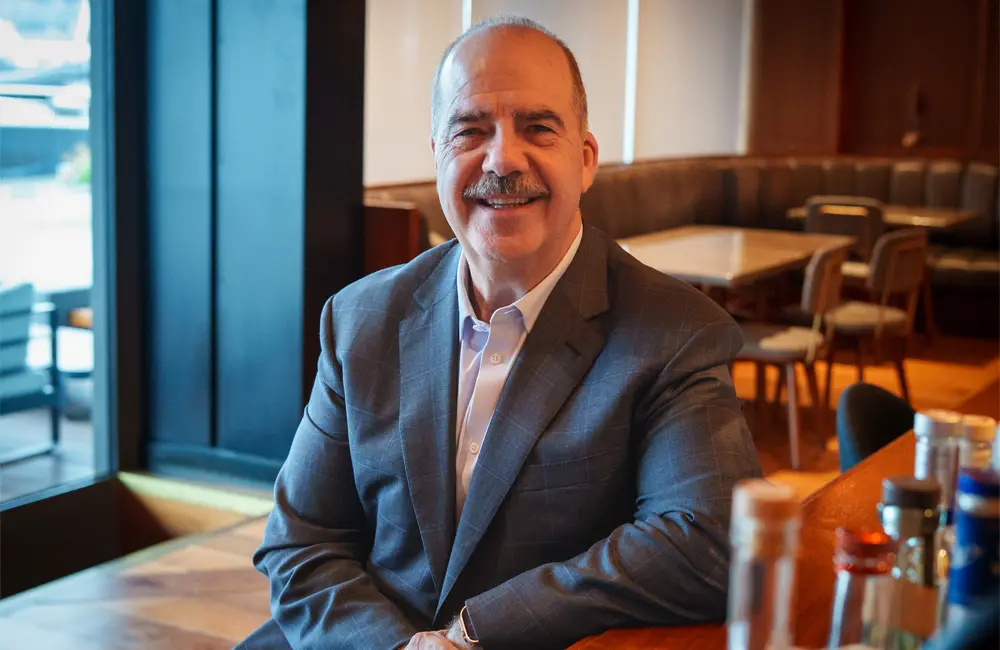
Virtuoso’s Co-founder, CEO and Chair Matthew Upchurch has spent four decades building a US$35 billion (AU$55b) luxury travel network on one conviction: technology should free advisors to be more human, not less. He sat down with Karryon’s Matt Leedham at this year’s Virtuoso ANZ Forum in Auckland to explain what has shaped that belief.
I’ll be honest. I could listen to Matthew Upchurch for hours. And across three days at the 2026 Virtuoso Forum, at the Park Hyatt Auckland, I pretty much did.
His appeal (for me in particular) is that, unlike many CEOs, Upchurch would rather surround himself with innovative, well-travelled thinkers than with dust-collecting accolades. Over 40 years as chairman and CEO of Virtuoso, the luxury travel network co-founded with his late father Jesse in 1986, he has brought on stage the likes of vulnerability researcher Brené Brown, leadership author Simon Sinek, and entrepreneur Steven Bartlett to continually evolve his and the network’s perspectives.
Last year, it was Will Guidara, author of Unreasonable Hospitality. This August, Brown will return for the famed Virtuoso Travel Week in Las Vegas, 15 years after she first addressed the network.
The pattern isn’t random. For the man who is the Virtuoso, it’s a thesis.
“I’ve always believed that clarity about your principles is key to adaptability,” Upchurch says.
“But clarity without capability is just a dream.”
The people who proved the point
Brené Brown spoke at Virtuoso Travel Week two and a half decades ago, long before the Netflix specials, and before she became a household name. Her message then: as technology deepens its hold on daily life, people won’t just desire human connection. They’ll crave it.
“She said that 15 years ago,” Upchurch says. “And quite frankly, look at us today.”
In 2023, Bartlett, author and founder of one of the world’s biggest podcasts, The Diary of a CEO, sat opposite Upchurch at Travel Week for a fireside chat on skill-stacking and compounding effort.
Sinek, whose Start with Why Upchurch credits with reshaping his thinking in the early 2000s, became a long-term mentor. Guidara validated the network’s entire value proposition at last year’s ANZ forum.
Each thinker brought something different. All pointed in the same direction: the human stuff is the hard stuff. And it’s the stuff that compounds.
Automate the predictable, humanise the exceptional
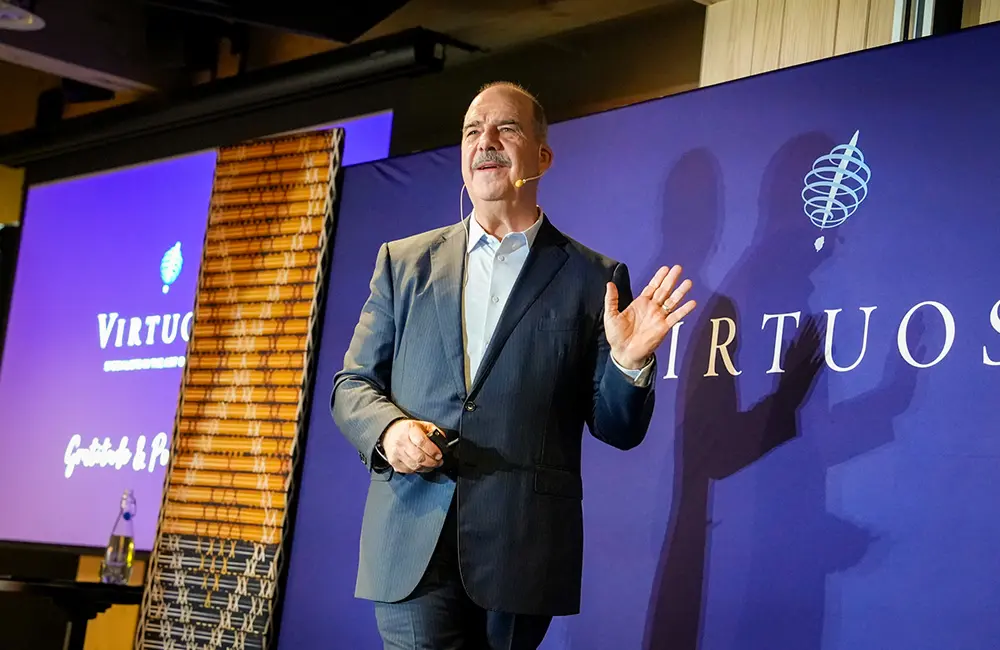
“Technology can automate the predictable, make us more efficient,” he says. “But what is really, really exciting is to go deeper into what it really means to humanise the exceptional.”
It’s a line he and the network have used for years. But Upchurch believes the moment has finally caught up with the message. As AI reshapes how people assess trust, the instinct for what’s real is sharpening, not dulling.
“Travel and meals together are foundational to maintaining your humanity,” he tells me. “It’s fundamental.”
Crowdsourcing since the 1950s
Virtuoso’s roots stretch further than most of us working in the travel trade probably realise. In 1951, sixteen pioneering travel agents, mostly from the American Midwest, pooled resources to open a shared office in New York. Together, they bought a telex machine, batched payments to overseas suppliers and built a cooperative called Allied Travel International.
Three decades later, Jesse Upchurch and his son Matthew merged their family business, Percival Tours, with Allied, and Virtuoso as we know it was born.
“I told this story at Cornell Hospitality School,” Upchurch says, laughing. “I said, for the record, you did not invent crowdsourcing or crowdfunding. These people were doing it in 1950!”
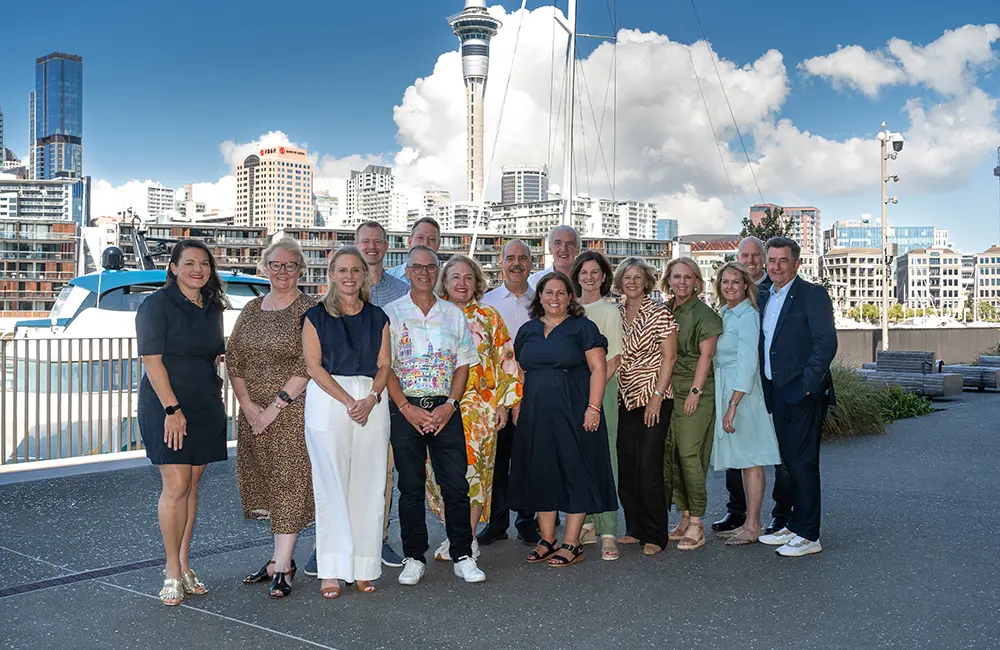
That collaborative DNA still runs through the organisation. The Australia and New Zealand (ANZ) region, for example, which grew from seven founding agencies in 2004 to 62 members and 1,600 advisors today, pioneered the member advisory board model that is now used across the global network.
Simple, not easy
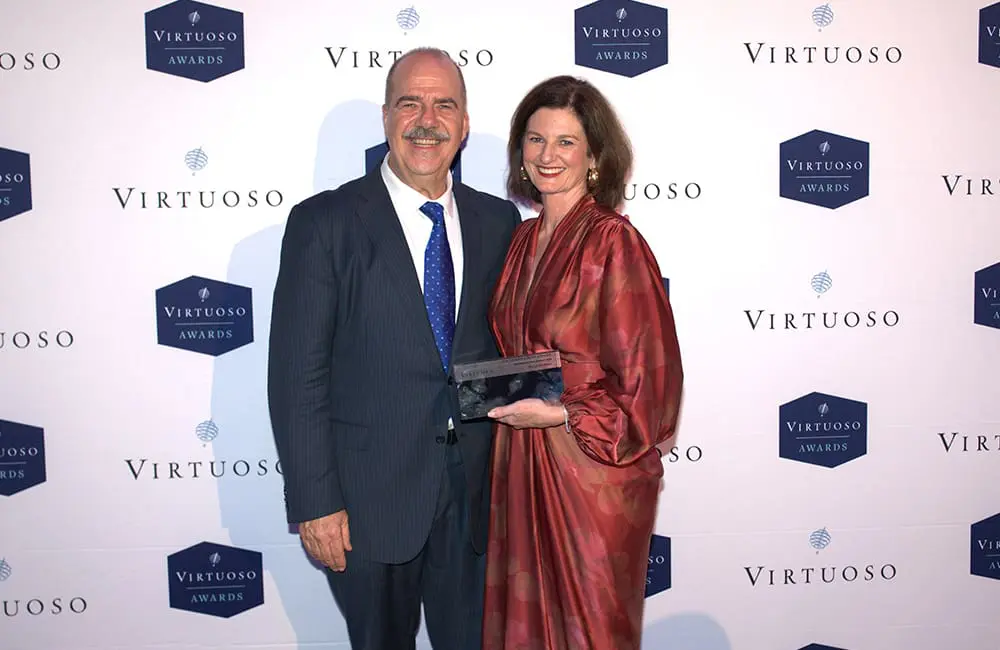
For someone with Lifetime Achievement Awards, Hall of Fame inductions and an Italian cultural honour from Altagamma, Upchurch is remarkably uninterested in legacy. Spending time with him, the focus is always forward. And he thinks the future is deceptively straightforward.
The question is always “How do you make people feel?” he tells me. “The power of culture, how your team members feel, how they work together, is going to become infinitely more important, because how your team feels is going to directly impact how the customer feels.”
Forty years in, the man who once wanted to run out the back door aged 22 when someone suggested he’d spend his life in travel has never been more certain about where it’s heading.
“Some of the simplest things are going to become the most valuable,” he says. “But just because something is simple doesn’t mean it’s easy.”
At the Forum’s closing awards dinner, Upchurch shared an exchange with a friend back home in Texas who had told him he “lives in a bubble.”
“I said, if living in a bubble means I get to spend time with people that want to know each other, want to share ideas, want to understand culture,” he said. “I’ll live in my bubble, and you live in your bubble.”
Upchurch, who turned 64 during the ANZ forum week, said he’s never had more energy. And 40 years on, the conviction hasn’t wavered.
“This has never been a business,” he told the room. “This has been a calling, this has been a privilege, and this has been a responsibility.”
Catch up on all of Karryon‘s coverage from the Virtuoso ANZ Forum 2026 in Auckland.
- Virtuoso wraps ANZ Forum with human connection front and centre as Upchurch marks 40 years
- Virtuoso reveals 2026 ANZ award winners at Auckland Forum
- Virtuoso ANZ Forum 2026: Only 7% of clients cancelling travel despite Middle East crisis
- ‘Beware the threat of sameness’: Virtuoso opens Auckland ANZ Forum with timely reminder
KARRYON UNPACKS: Upchurch’s “automate the predictable, humanise the exceptional” isn’t just philosophy. It’s a signal about where Virtuoso is continuing to invest. The network is building tools to handle the routine so advisors can go deeper on what technology can’t replicate: relationships, trust and the personal moments that drive lifetime value. For Australian advisors in the network, the message is clear: the competitive edge isn’t efficiency. It’s humanity, applied deliberately.