


Fuel surcharges are climbing sharply, regional aviation gas suppliers are tightening exports and redirecting supply, and airlines are adjusting capacity, trimming routes and rerouting aircraft. Five weeks into the Middle East crisis, the temperature check is still rising. And yet, by some measure, demand for travel hasn’t broken.
As the US/Israel war on Iran lurches disconcertingly towards a sixth week with no end in sight, the travel industry’s latest save-the-day rerouting story has already become another defining hero moment for travel advisors everywhere.
What’s shifting now is the supply picture underneath it, and it’s moving fast.
The fallout from the global energy crisis is now a national conversation. In a rare address to the nation this week, Prime Minister Albanese halved the fuel excise and urged Australians to switch to public transport where possible amid nationwide fuel shortages. “The months ahead may not be easy,” he said. “I want to be upfront about that.”
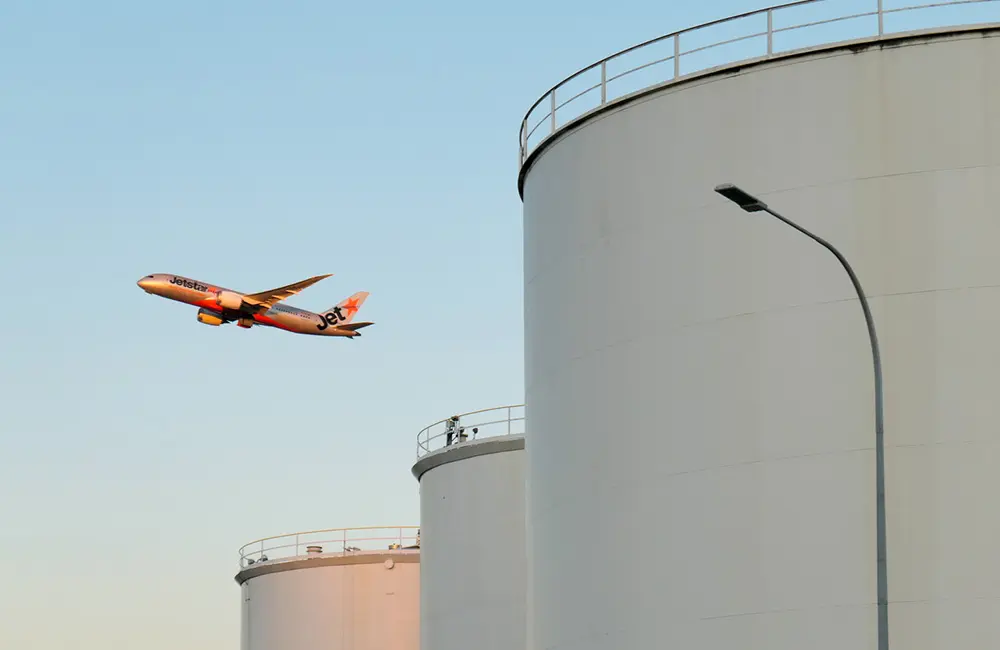
The war in the Middle East has triggered one of the sharpest fuel price spikes on record. While a 26c-per-litre saving at the bowser may nudge the needle a little for motorists and transport, airlines see none of that benefit, with aviation fuel exempt, prompting carriers to push through sharp surcharge increases on key routes.
Jet fuel prices have skyrocketed since late February, jumping from roughly US$85–$95 a barrel to around US$190–$200 last week, more than doubling in a matter of weeks as supply shocks ripple through global markets.
The response? Like many airlines globally, Qantas has flagged more frequent fare reviews as it moves to protect margins, while carriers such as United Airlines and JetBlue have hiked checked bag fees amid rising costs. Many others are likely to come under similar pressure.
It’s important to note that US carriers don’t hedge fuel, meaning every price spike hits in real time, with the potential to add billions to annual costs if it holds.
The supply chain Australia can’t control
What many of us have never considered until now is how exposed Australia is to global supply chains. We import more than 80 per cent of our jet fuel from Asian refineries, and when those flows tighten, the impact is immediate. China has already significantly curbed fuel exports, while key suppliers like South Korea are facing their own supply pressures.
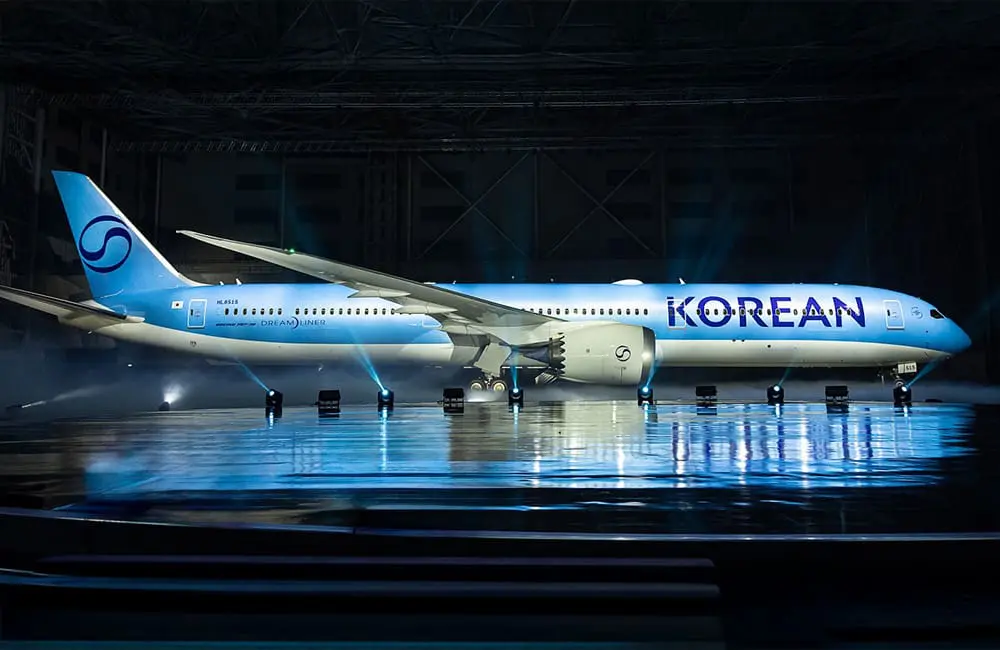
Korean Air has entered emergency management mode, with Asiana and T’way already there. South Korean airlines have asked their government to redirect fuel domestically, further squeezing Australian supply. With the Hormuz Strait still closed and Australia holding just 29 to 32 days of reserves, May is anticipated to be when that pressure could build.
Air capacity continues to shapeshift
Here in Australia, Virgin Australia has confirmed its Doha services are cancelled until at least mid-June, a disruption to a relatively new route launched last year using wet-leased aircraft from Qatar Airways, and a reminder of just how quickly global instability is reshaping airline networks.
Jetstar has cut roughly 12 per cent of its trans-Tasman flights for May, and Air New Zealand has axed around 1,100 flights through early May, affecting 44,000 passengers, and raised fares 10 to 15 per cent.
Passenger volumes through key Asian hubs have surged following the initial disruption, as airlines reroute traffic and consolidate capacity. Those hubs have finite capacity, and Australia is exposed to many of them.
Thankfully, though, it’s not all contraction. Emirates is back to roughly three-quarters of its pre-crisis capacity and climbing. Qatar Airways says it will serve more than 90 destinations by mid-April, rising to around 120 by mid-May, against a normal network of more than 160. Etihad Airways is flying to around 80 destinations, close to its typical footprint.
After a devastating March, the Middle Eastern hubs are starting to rebuild, albeit on shifting schedules, and that matters greatly for advisors selling Europe and beyond, with the Northern Hemisphere summer just around the corner. But the question remains: how long will it take for people to feel confident enough to fly via the Middle East again? And how does travel insurance (or the lack of it if any war-related disruption occurs) play into that?
In a recent interview, Helloworld Travel chief operating officer and executive director Cinzia Burnes told me that, based on their historical data, confidence in travel after a major global event typically returns within 90 days of a resolution. As it stands, that probably takes us to July.
Why ‘amend, don’t cancel’ matters more now
Amongst the ongoing uncertainty, in an open letter this week on the company’s UK consumer website, Flight Centre global managing director Andrew Stark urged travellers to hold their nerve.
“Cancelling early often forfeits your refund entitlement, and airlines can take up to 12 weeks to return funds, leaving you without the money to rebook,” he said.
Middle East carriers are, on average, flagging refund processing times of up to 28 days, Stark noted. Travellers are pivoting to shorter-haul packages and rail, but demand itself has not wavered.
Praising his team’s response since the crisis began, Stark said, “I owe gratitude to our 3,316 people (Flighties) around the world who act as the travel industry’s first responders when a crisis hits. It takes skill, ingenuity, a calm temperament and a fair bit of grit to get the job done.”

FCTG global leisure CEO James Kavanagh echoed Stark’s sentiment, recently telling Karryon that DIY online bookers are flooding back to advisors, reinforcing a pattern the industry sees in every major disruption. People still want to go. They just want help getting there.
Cruise is telling the same story. A Virtuoso ANZ poll found that just 7 per cent of clients had cancelled their travel outright, while 71 per cent had been rerouted to alternative destinations.
Luxury line leaders told me at Virtuoso’s ANZ Forum in Auckland last week that cancellation rates remain “very low”, with demand shifting to Asia, Alaska and closer-to-home itineraries. Most cruise lines have not yet passed on fuel surcharges, and aren’t predicted to at this stage, even though contracts allow it.
Stark’s own outlook was simple. “The world is open. If you’re asking whether to go? Go,” he said, adding, “You’re better off having an agent on your side.”
Absolutely. The supply chain may be strained, surcharges are rising, and the capacity squeeze is real. But the appetite to travel from Down Under has not broken.
That said, the trillion-dollar question remains. When will the conflict end? And how long will the domino-effect disruption continue afterwards?
KARRYON UNPACKS: The story has moved beyond rerouting. Fuel surcharges are still climbing, and bag fees are following suit, while Australia’s two biggest jet fuel suppliers are either cutting exports or redirecting supply domestically. Meanwhile, the PM’s national address offered a fuel excise cut but little that touches the cost pressure hitting travellers at the airport.