


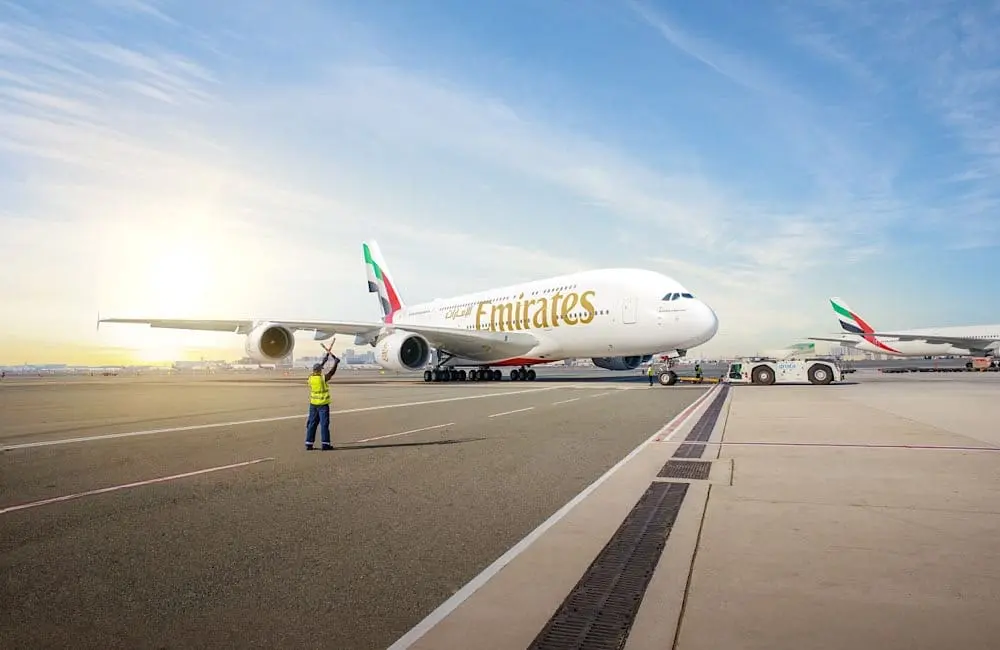
Emirates has reported the strongest result in its history, saying it remains the world’s most profitable airline after military activity disrupted Gulf air traffic in the final month of its financial year.
The Dubai carrier reported a record AED 22.8 billion (around AU$8.6 billion) profit before tax for the year to 31 March 2026. Profit after tax rose to AED 19.7 billion (around AU$7.5 billion), with a net profit margin of 15.0 per cent.
These results came in a year when Emirates’ passenger numbers and seat capacity both fell one per cent, and when the airline was hit late in the year by major disruption in the Gulf.
The wider Emirates Group, which includes Emirates and dnata, reported record profit before tax of AED 24.4 billion (around AU$9.2 billion), up seven per cent, on record revenue of AED 150.5 billion (around AU$57.0 billion). Its cash assets rose 12 per cent to AED 59.6 billion (around AU$22.5 billion).
The Group also posted earnings before interest, taxes, depreciation and amortisation of AED 41.1 billion (around AU$15.6 billion) and declared a dividend of AED 3.5 billion (around AU$1.4 billion) to its owner, the Investment Corporation of Dubai.
After tax, Group profit rose 3 per cent to AED 21.0 billion (around AU$7.9 billion), despite the UAE corporate tax rate applied to the Emirates Group increasing from nine per cent to 15 per cent this year.
Fewer seats, more money
Emirates carried 53.2 million passengers in the 2025–26 financial year, down one per cent on the previous year, while seat capacity also fell one per cent. Passenger seat factor eased from 78.9 per cent to 78.4 per cent.
Despite that, passenger yield rose four per cent, meaning Emirates earned more for every passenger flown one kilometre. Airline revenue rose two per cent to AED 130.9 billion (around AU$49.6 billion), while total passenger and cargo capacity grew one per cent to 60.6 billion available tonne kilometres.
Emirates did not need a large capacity increase to produce a record profit. It earned more from the passengers it carried, supported by strong premium demand, a broad long-haul network and limited global widebody capacity.
For aviation watchers, the yield figure carries more weight than the passenger count. It shows Emirates still had pricing power, even with lower capacity and a slightly softer seat factor.
The Gulf disruption changed the final month
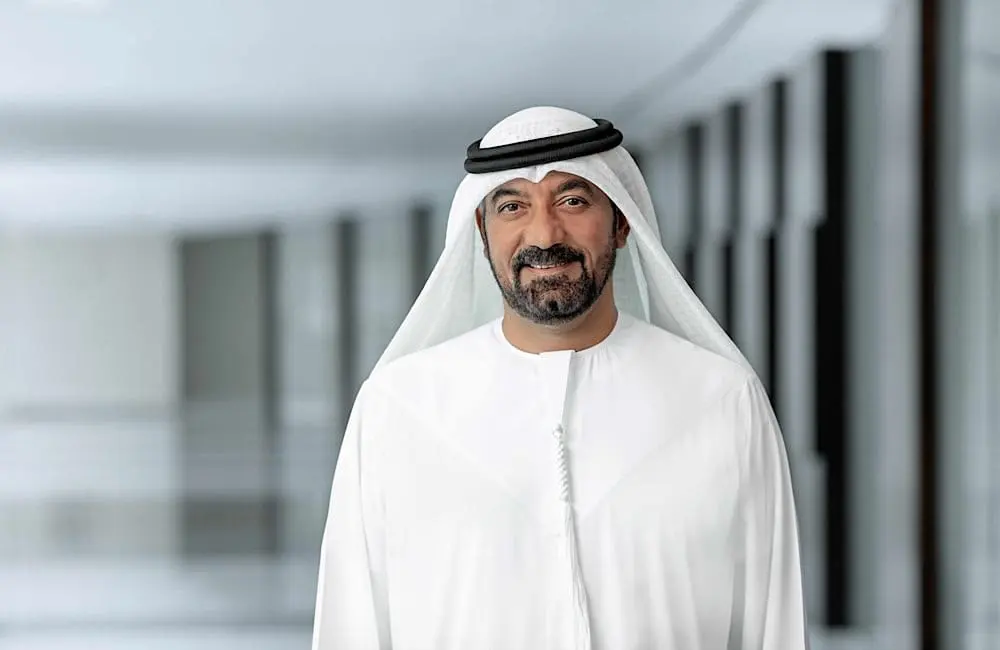
Sheikh Ahmed bin Saeed Al Maktoum, Chairman and Chief Executive of Emirates airline and Group, said the first 11 months of the year were tracking strongly before military activity disrupted global commercial air traffic in the Gulf region on 28 February.
“Strong demand for our products and services was driving revenue, and we were achieving healthy margins thanks to our sustained investments in product, people, technology and brand,” Sheikh Ahmed said.
“Month after month, we were surpassing our targets.”
After military activity disrupted Gulf commercial air traffic on 28 February, Sheikh Ahmed said Emirates and dnata moved quickly to support affected customers and staff, protect assets and maintain business continuity.
“We are fortunate to be based in Dubai, where years of infrastructure investments and a cohesive aviation ecosystem has enabled the government to quickly secure safe corridors for commercial flights,” he said.
Emirates and dnata have gradually restored operations at DXB, although passenger capacity remains below pre-disruption levels.
Fuel helped, but hedging matters more
Fuel remained Emirates’ biggest cost, accounting for 29 per cent of operating costs, down from 31 per cent the previous year.
The airline’s fuel bill fell to AED 31.2 billion (around AU$11.8 billion), compared with AED 32.6 billion (around AU$12.4 billion) the previous year. A 7 per cent fall in average fuel price offset a 1 per cent increase in fuel uplift from additional flying.
“From a fuel perspective, Emirates is well-hedged until 2028-29; and we have worked with our suppliers to secure the volumes required to support our current operations and our scaling up to pre-disruption levels,” Sheikh Ahmed said.
“At dnata and across the Group, our business streams, scale, portfolio mix, and years of investments give us the resilience and agility to address any near-term challenges.”
The fleet plan
Emirates ended the year with 277 aircraft and an average fleet age of 10.8 years.
The airline took delivery of 15 Airbus A350s during the year, giving it 19 A350s in the fleet by 31 March. Those aircraft were flying to 21 destinations.
The A350 gives Emirates more flexibility than its larger A380s and Boeing 777s. It can open or strengthen routes where an A380 would be too much aircraft, while still carrying Emirates’ newer cabin products, including Premium Economy and a new-generation inflight entertainment system.
The order book is now 367 aircraft: 54 A350s, 270 Boeing 777Xs, 35 787s and eight 777 freighters, with deliveries scheduled through to 2038.
At the 2025 Dubai Airshow, Emirates announced further fleet commitments worth around AU$57.5 billion at list prices, covering 65 more Boeing 777-9s and eight more A350-900s.
That order book gives Emirates long-term growth options, but it also keeps the airline exposed to the timing of the delayed 777X program. In the meantime, Emirates is using retrofits to protect its product.
Its around AU$7.0 billion retrofit program has now refreshed 91 of the 215 aircraft earmarked for full cabin upgrades. The program is adding the airline’s latest cabins, including Premium Economy, across older aircraft.
The retrofit work allows Emirates to keep older A380s and 777s competitive while it waits for new aircraft, and it gives the airline more premium inventory to sell on long-haul routes.
Cash gives Emirates options
Emirates generated operating cash flow of AED 32.0 billion (around AU$12.1 billion) in 2025–26.
At airline level, cash reserves reached AED 54.9 billion (around AU$20.9 billion) at 31 March. That gives Emirates room to continue aircraft payments, cabin upgrades and fleet financing without immediate pressure to cut costs sharply.
During the year, Emirates bought out 29 A380s and five Boeing 777s at the end of their leases. It also raised AED 10 billion in aircraft financing through local and international markets, including Japanese operating leases, insurance-backed financing, French Tax Lease and Export Credit Agency-backed structures.
For passengers, these decisions show up as newer cabins and more consistent product. For Emirates, they help keep the fleet plan moving at a time when aircraft delivery delays remain a major issue across global aviation.
Premium Economy adds another revenue lever
The airline has now refreshed 91 aircraft under its retrofit program, with Premium Economy being added as part of the work. It is also offered on the A350.
Premium Economy gives Emirates another way to earn more from long-haul passengers who want a better cabin than Economy but are not buying Business Class. That is valuable in a market where leisure travellers are still willing to trade up on long sectors, and where corporate travel budgets remain more closely watched.
The airline also announced a deal with Starlink to equip its fleet with high-speed Wi-Fi. By 31 March, 21 aircraft had been fitted.
Together, the cabin upgrades, connectivity investment and Premium Economy rollout support the same commercial strategy: keep Emirates’ onboard product strong enough to justify a fare premium.
Why this result matters
Emirates is structurally different from many of the airlines it is compared with.
It has little to no domestic market. Its model depends on Dubai remaining a major global connection point. Its fleet is built around large long-haul aircraft. Its earnings rely heavily on international demand, premium cabins, cargo flows and the strength of Dubai as a hub.
The airline still has major risks. The Gulf remains exposed to geopolitical disruption. The 777X delay still matters. Retrofitting older aircraft is expensive and operationally complex. Cargo yields are under pressure.
Even with those pressures, Emirates enters 2026–27 with a very large cash balance, a growing A350 fleet, a massive long-term order book and a premium product strategy that is still producing strong returns.
“The Emirates Group has navigated crises and disruptions before,” Sheikh Ahmed said.
“Each time, we placed our focus on our customers and our people, and each time, we have bounced back stronger.”