

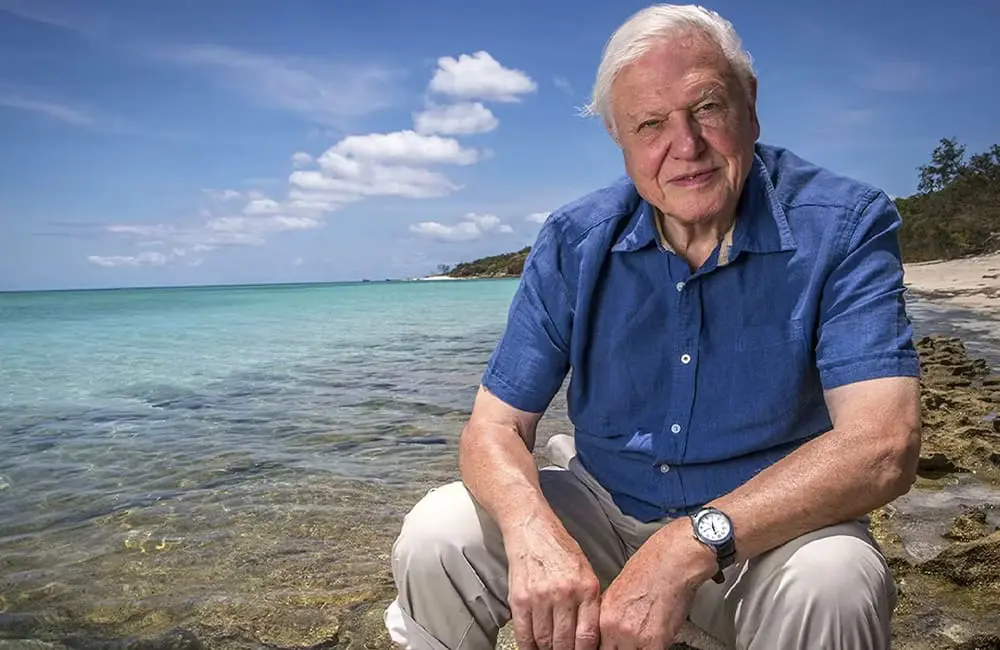
Sir David Attenborough turns 100 today. Seven decades of broadcasting have made him the most travelled man of his generation, the most curious, and the most urgent and loved voice we have ever had for protecting our planet home.
If you think today’s travel influencers have seen the world, consider the man who actually has seen more of it than any other living human.
Long before “influencer” was a word, before the internet, before YouTube and the curated grid, there was an excited young broadcaster with a microphone, an analogue film crew and a serious case of curiosity.
Born (pre-Second World War) on 8 May 1926 in the UK, he has spent seventy-plus years exploring remote corners of the world most of us will never have the privilege of experiencing.
He has truly lived a life on our planet: From filming in ocean trenches deeper than Everest is tall, standing on Antarctic ice older than written history, diving reefs you can see from orbit and walking untouched forests high above the cloud line.
Regardless of your age, this is the legendary centenarian whose unmistakable, hushed voice has been with us our whole lives.
The gorillas changed everything
Rwanda, 1979. Life on Earth. Once the camera started rolling, the script was abandoned. Instead, Attenborough sat in the jungle undergrowth with a family of mountain gorillas as they played around him, climbed over him, and looked into the lens.
The scene became iconic because the gorillas accepted him completely, which was almost unheard of at the time, and helped transform public empathy toward great apes and conservation worldwide.
Describing it as “One of the most poignant experiences of my life,” It was the moment a career that had begun in black and white opened fully into colour, and into something far more intimate.
It also became the defining image of his work and, arguably, of the medium of documentary making itself.
Where he went, the world followed
When Attenborough first started filming Zoo Quest for the BBC in 1954, reaching the far-flung places he went took weeks. Propeller aircraft. Cargo ships. Long, arduous overland journeys to destinations including Sierra Leone, Guyana, Indonesia, Paraguay and Madagascar with numerous crates of equipment. Most of the world was still effectively closed to ordinary travellers at that point.
Across his lifetime, of course, that has changed completely.
The 707 ushered in the jet age. The 747 made mass long-haul travel possible. Concorde shrank the Atlantic to three and a half hours. The A380 carried 500 people across oceans at a time. Antarctica became an expedition cruise category. The Amazon, a river itinerary. The Galápagos, a guidebook.
And space, where no human had ever been when he started filming, now sells seats to get there.
Place after place that he reached first, alone, with a crew and a generator, is now sold by travel advisors the world over and visited by travellers of all ages.
While that access is the gift of his century for humanity. It has also become a pressure cooker in every place he has ever filmed.
The witness has been keeping score
For all his journeys, Sir David didn’t just go everywhere. Through the magic of television, he invited us along and took us with him to share his discoveries and learnings.
Growing up, I remember being glued to the screen, watching intensely with my family as female humpback whales desperately fended off Orcas to protect their young, or migrating herds of Wildebeest ran the gauntlet across Crocodile-infested rivers.
The Blue Planet II’s hatchling marine iguana-versus-snakes scene from 2016 is one of the most stress-inducing chase scenes ever. Forget James Bond or Tom Cruise’s Mission Impossible. This is high-stakes drama of the natural kind, and oh, how we loved it. 22 million of us alone on YouTube and counting.
Everyone has their Attenborough moment. A creature, a chase, a line of his that stayed with you.
But despite his more recent focus on climate activism, for decades, he had held back from preaching the need to protect the planet, wanting to show the wonder first and entertain viewers. Let people fall in love with the planet before you ask them to defend it was his modus operandi.
Even as recently as 2018, he called dwelling on environmental threats a “turn-off” for audiences. Then in 2020, he decided it was time to change tack.
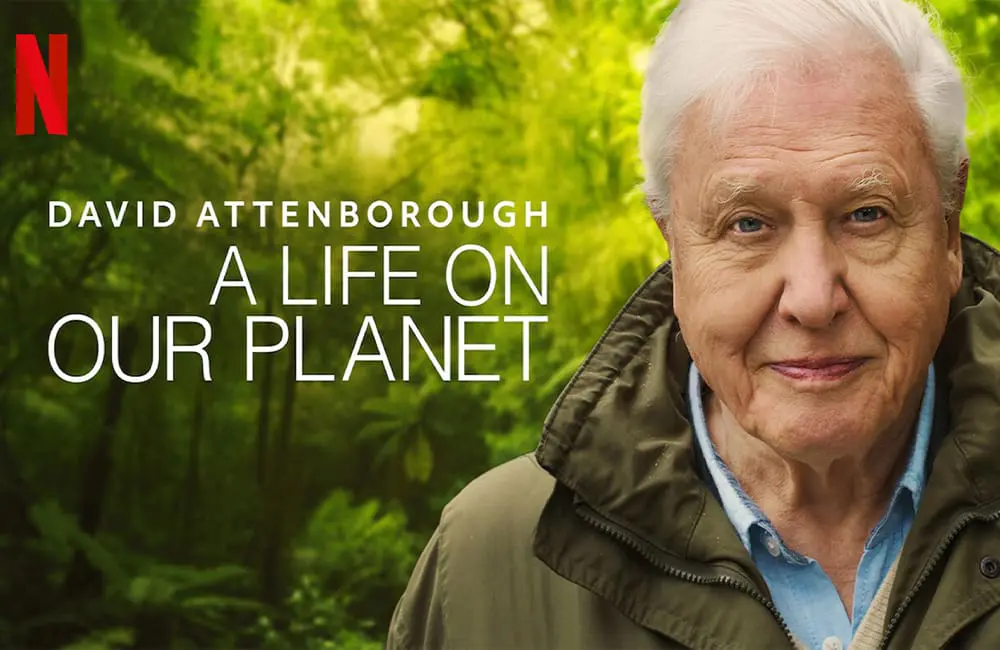
A Life on Our Planet was the most direct thing he had ever made. He had realised that the wild places he had filmed across a lifetime were shrinking. The reefs were bleaching. The forests were thinning. Species he had introduced to the world were quietly vanishing from it.
He called it humanity’s greatest mistake. Characteristically, though, he didn’t stop there. He told us how to fix it.
Since then, the films for positive change have kept coming. Extinction: The Facts. Breaking Boundaries. Wild Isles. Planet Earth III. Asia. Ocean. The throughline purposely isn’t subtle.
Instead, he has spent his late nineties not narrating wonder, but ringing alarm bells from the platform he spent eighty years building.
It’s up to us now
For all of us, especially those who work in travel, this isn’t background. It’s the brief.
We influence or sell experiences in some of the most fragile places on Earth. The Reef. The Amazon. Antarctica. The Kimberley coast. Pacific archipelagos and their communities sit on the edge of climate risk. The itinerary the trade puts together often involves a place Attenborough or someone like him has filmed, warned about, or both.
That makes protecting these places a job description and a responsibility, not a marketing angle.
The lesson of his hundred years is simple. If you love a place enough to send people there, you owe it to that place to make sure it’s still there for generations to come.
The OG travel influencer wasn’t selling anything. He was simply asking us to pay attention. And he was asking the rest of us to do the same on our own travels. To simply pay attention. The definition of mindfulness.
In his own words: “It seems to me that the natural world is the greatest source of excitement, the greatest source of visual beauty, the greatest source of intellectual interest. It is the greatest source of so much in life that makes life worth living.”
100 years. Seven continents. One planet, watched closely, recorded carefully, defended fiercely.
He has more than done his part. Now it’s our turn.
Happy birthday, Sir David.
KARRYON UNPACKS: Attenborough’s hundred years sit on top of the most explosive century of human movement in history. The 707, the 747, the A380, expedition ships into Antarctica, and civilian rockets into orbit. He has watched the access expand and the cost rise. What’s striking on his centenary is how much of the responsibility for what comes next will sit with the people now selling the places he opened up. What role will you play in protecting our planet?