



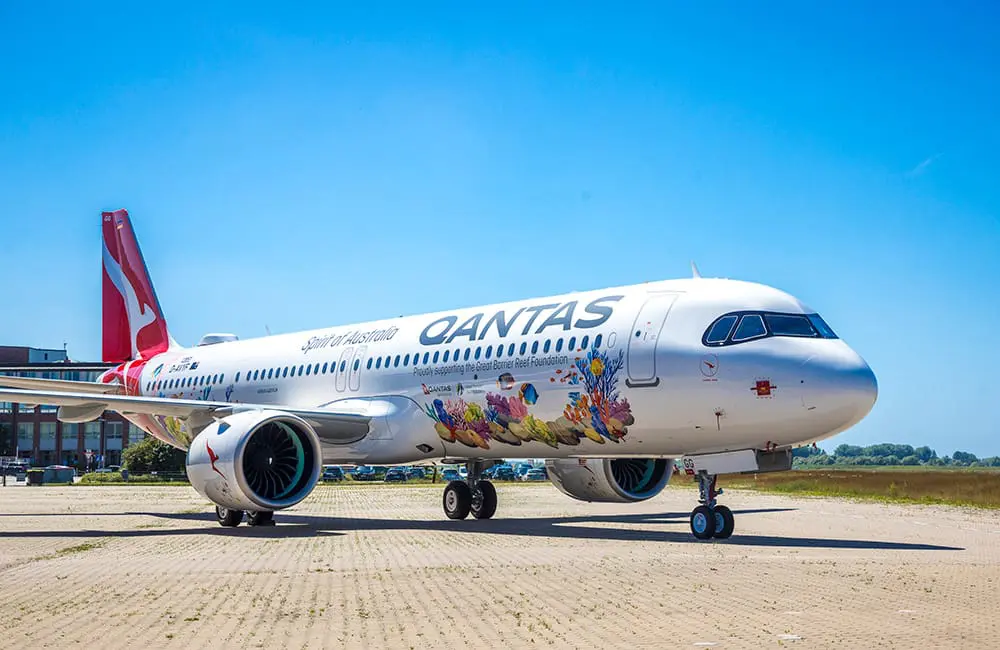
Qantas has revealed a Great Barrier Reef-inspired Airbus A321XLR plane with striking livery that depicts the UNESCO World Heritage Site – a natural wonder synonymous with Australia and one of our iconic tourism drawcards.
The Aussie carrier’s newest aircraft, named ‘Coral Sea’, has rolled out of Airbus’ Hamburg paint shop with the vibrant and eye-catching livery covering both sides of the 44m-long aircraft.
It’s the seventh of 48 next-gen A321XLRs on order and the new aircraft will be flown home to Australia by Qantas pilots in June 2026.
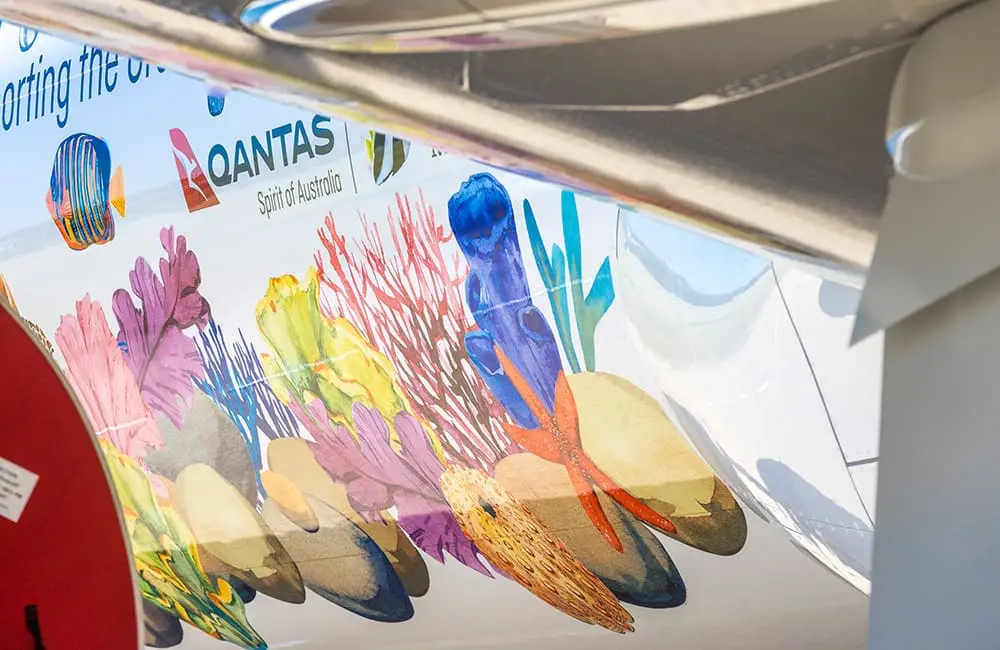
The Qantas Coral Sea A321XLR features sea turtles, clownfish and coral from the reef, rendered in bold, bright colours across the fuselage.
The design is a collaborative effort that celebrates Qantas’ long-standing partnership with the Great Barrier Reef Foundation.
Since 2009, Qantas’ Reef Restoration Fund has committed $10 million over 10 years to help support scientists, Traditional Owners and local tourism operators restore corals across the Great Barrier Reef and other Australian reefs.
The Great Barrier Reef is one of Australia’s most iconic tourism destinations, welcoming more than 2.3 million visitors in 2025 and benefiting businesses and communities across Queensland.
The Qantas Group connects visitors to the reef and wider Queensland, operating more than 1,600 domestic and international return services in and out of the state every week, including deploying the A321XLR on the Brisbane-Sydney route.
Great Barrier Reef Foundation Managing Director Anna Marsden said: “Few places on Earth capture the imagination quite like the Great Barrier Reef – its colours, its creatures, its sheer scale.”
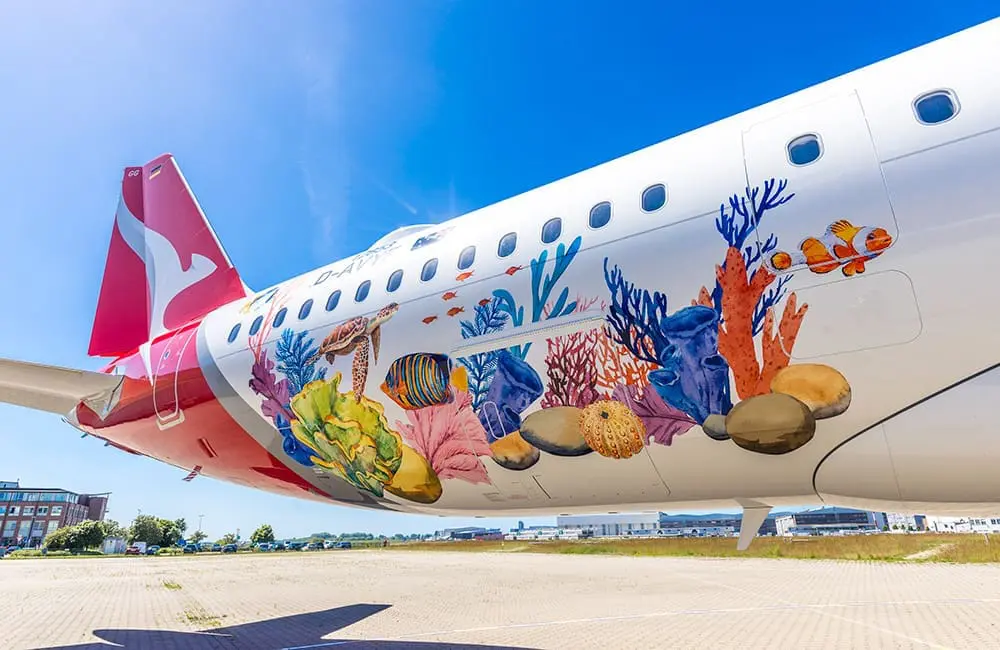
“This aircraft will carry that story to millions of people every year, including those who are lucky enough to fly on her and the many more who will see it on the ground.
“We hope it inspires people to not just visit the reef but to care about its future,” she said.
KARRYON UNPACKS: The Qantas Coral Sea A321XLR turns an aircraft into a flying destination story, using bold design to spotlight reef conservation while keeping Australia and Queensland’s visitor economy front of mind.