



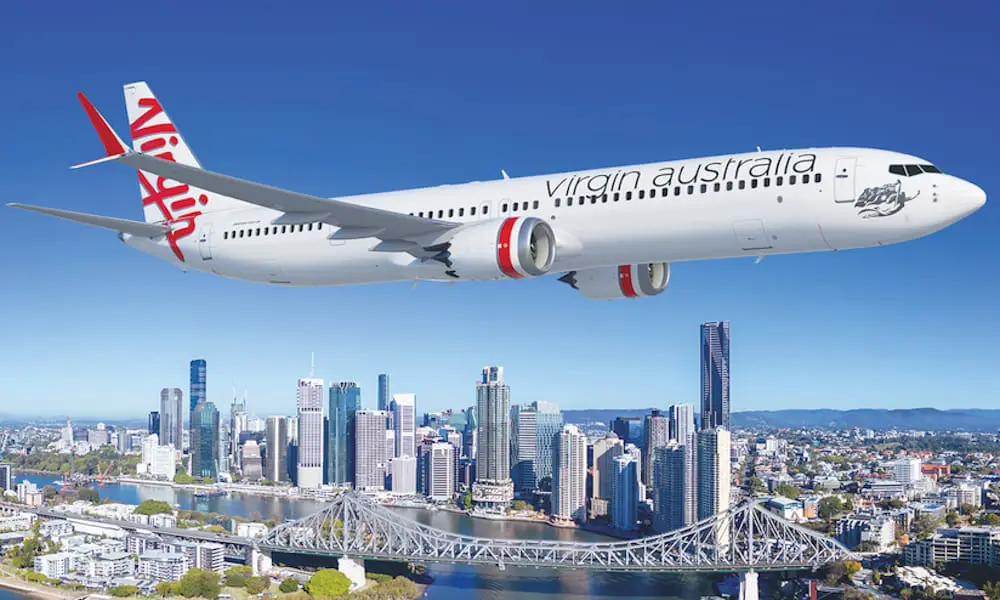
Virgin Australia has confirmed it will take delivery of its first Boeing 737-10 in late 2027, a jet seating between 188 and 204 passengers in a typical two-class layout that will give the carrier more capacity on its busiest domestic and short-haul international routes.
The airline holds 10 firm orders for the type, with the delivery timeline tied to Boeing’s progress with US regulatory approvals.
With a range of 5,740 kilometres, the 737-10 can operate every route currently in Virgin Australia’s network, with its larger cabin best suited to high-demand sectors.
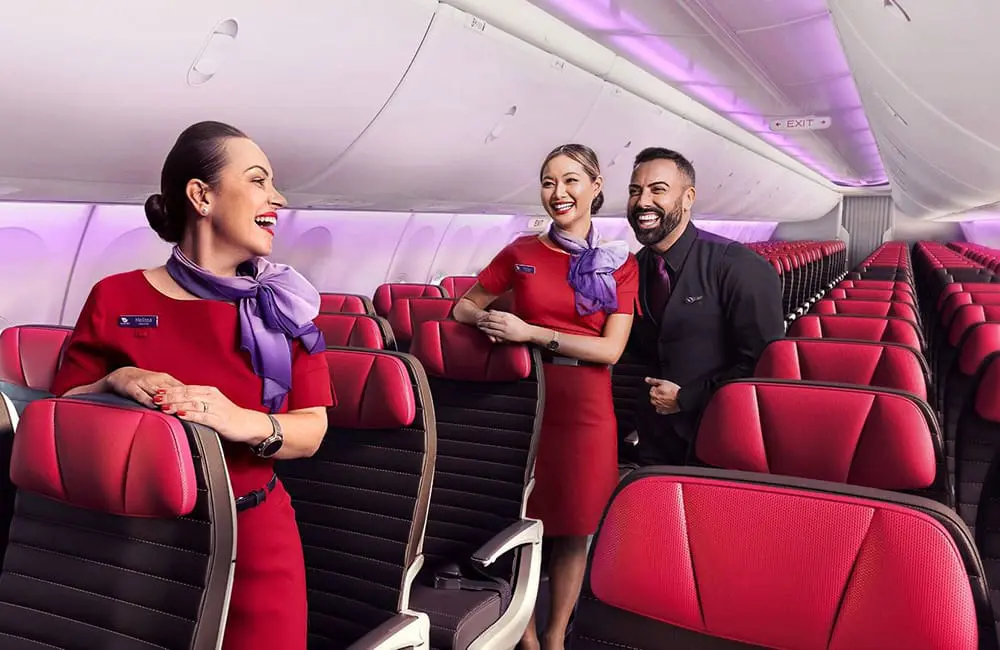
The seat count and interior configuration of Virgin’s 737-10s will be announced later, after the carrier unveiled new business and economy cabins that will set the standard across its Boeing fleet.
Why the bigger jet matters
The 737-10 delivers a 20 per cent reduction in fuel use and CO2 emissions per seat compared with the previous-generation 737-800, and joins the 737-8 and Embraer E190-E2 in Virgin’s new-generation line-up.
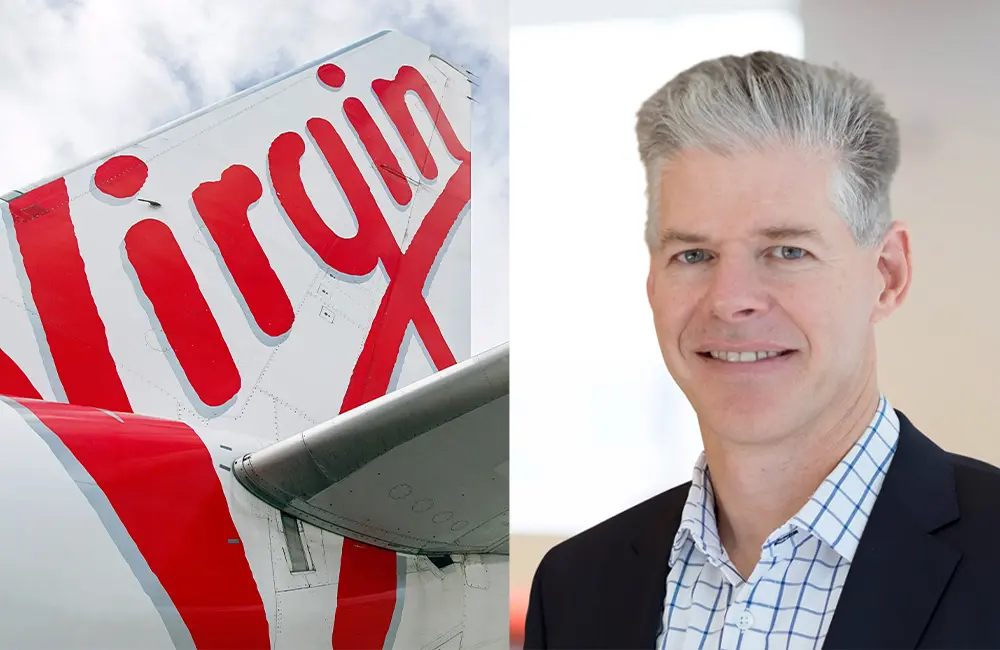
“The 737-10 will be the largest aircraft in Virgin Australia’s fleet and will give us more capacity and more flexibility across our network,” says Virgin Australia CEO Dave Emerson.
“This is an important next step in our fleet renewal program as we continue building a younger, quieter and more fuel-efficient fleet.
“Fleet renewal is the single biggest lever we have to reduce emissions in the near term, and the 737-10 will build on the benefits we are already seeing from the 737-8.”
How the MAX fleet is tracking
Virgin Australia marks three years of Boeing 737 MAX operations in June 2026, with 19 737-8s now flying. Another seven will arrive before the end of the calendar year, taking the 737-8 fleet to 26.
Over those three years, the airline estimates its MAX operations have saved about 30 million litres of fuel and cut more than 77,000 tonnes of CO2 emissions compared with the older 737-800.
“In addition to offering more seats, introducing the 737-10 will preserve commonality across the fleet, enhance flexibility, and improve environmental performance on both domestic and international routes,” says Boeing vice president commercial sales and marketing, Southeast Asia and Oceania Erika Pearson.
A milestone moment in Brisbane
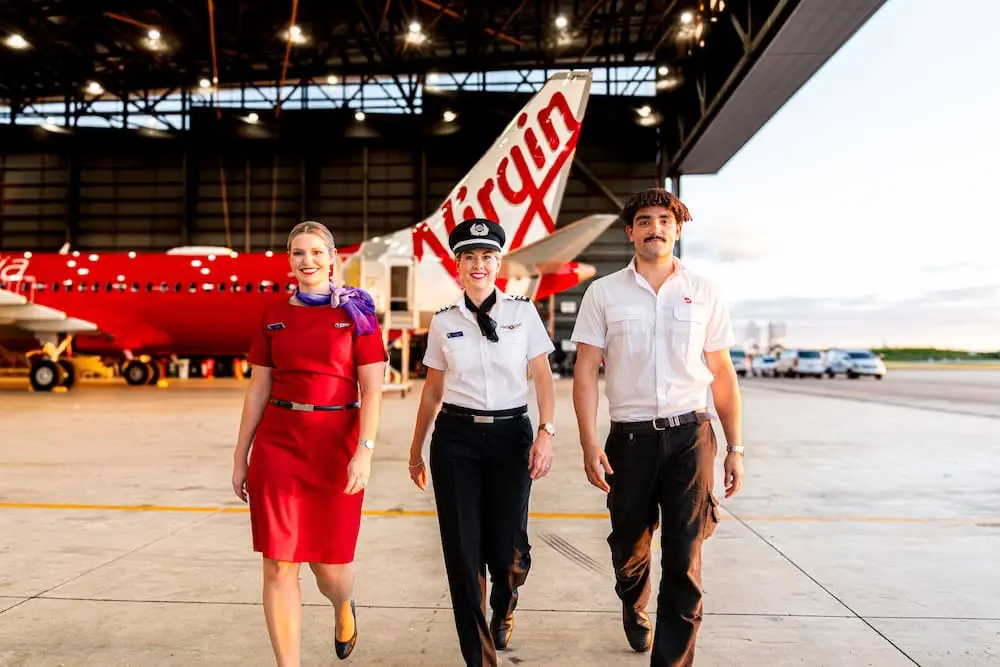
The announcement coincides with a family day at Virgin’s Brisbane maintenance hangar, where team members are stepping aboard Lake Centenary, one of the airline’s newest 737-8s, which carries a special red livery and the names of more than 8,000 staff printed on its overhead lockers.
The aircraft marks Virgin Australia‘s 150th Boeing 737 delivery and the 100th 737 in its current fleet.
“For many of our team members, today is the first chance to bring their families on board, see the aircraft up close and point out their own name inside the cabin,” Emerson says.
“That is a proud moment. It recognises the people behind our transformation and the energy, care and flair they bring to Virgin Australia every day.”
KARRYON UNPACKS: A 204-seat jet that can reach every port Virgin currently serves points to more seats on trunk routes and short-haul international flying from late 2027. For the travel trade, the headline is capacity: bigger aircraft on high-demand sectors typically means more availability where clients most need it.