



Flight Centre Travel Group has significantly lowered its FY26 profit guidance, citing the Middle East conflict’s disruption to international leisure travel, the company reported in an ASX update.
Flight Centre Travel Group (FLT) now expects underlying profit before tax (UPBT) of $275m to $295m for the financial year (to 30 June), down from a previous target of $310m to $345m once adjusted for the sale of Pedal Group. The new midpoint sits broadly in line with the $286m UPBT FLT delivered in FY25.
According to the group, the headline cause is the Middle East war’s impact on peak holiday travel, with lost fourth-quarter (Q4) leisure earnings set to reach $50m after the leisure business had been tracking towards a $200m UPBT at the end of Q3.
Flight Centre’s corporate profit growth is also expected to be partly offset by the weaker-than-expected leisure earnings.
In addition, the company predicts a $5m-$10m loss from the stronger Australian dollar.
How Q4 leisure weakened
The $50m Q4 leisure shortfall reflects two temporary shifts in booking patterns.
Travellers with forward bookings to the UK and Europe, FLT’s largest international leisure markets that typically travel via the Middle East, amended or cancelled their plans. Compounding this, customers who rerouted via Asia or the Americas to bypass the region often switched to lower-margin carriers.
Then came a slowdown in longer-haul bookings as volatility, capacity constraints and higher fuel prices drove airfare spikes. The group said that while enquiries remained robust (up 18 per cent month-to-date in the Flight Centre brand in Australia, for instance), customers have deferred bookings.
FLT also points to the Federal Government’s previous “Do Not Travel” advisory for key Middle Eastern transit hubs as a drag on recovery.
Where FLT still sees strength
For most of FY26 the underlying business performed strongly, with almost 10 per cent UPBT growth to $227m across the first three quarters. Q3 growth even accelerated to almost 20 per cent year-on-year, culminating in a record profit in Australia in March, despite escalating hostilities.
The new Middle East peace deal offers a clearer runway into FY27, though its timing means it is unlikely to meaningfully shift the FY26 Q4 result, Flight Centre states.
FLT added that it continues to lean on cost discipline and AI-driven productivity, including reducing discretionary spend, freezing support-role recruitment and a broad rollout of corporate AI assistants Sam (FCM) and Mel (Corporate Traveller) from this week, plus Google Agent Search and an upcoming AI Travel Assistant in leisure.
$200m buy-back
FLT has also announced an up-to-$200m issued capital buy-back, following a similar program completed in May 2026 that saw 16.2m shares (7.3 per cent of issued capital) bought back.
The new buy-back will run over the next 12 months at Flight Centre’s discretion, subject to share price and market conditions, and is intended to support earnings per share growth.
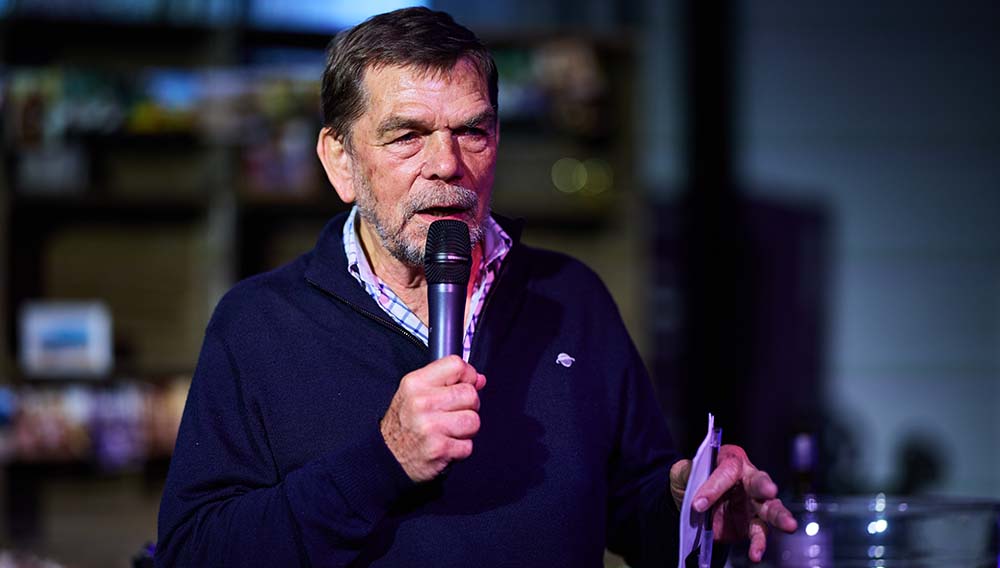
“The change in our short-term expectations reflects a temporary, conflict-driven headwind layered over what was shaping as a very solid year,” Flight Centre Travel Group managing director Graham Turner said.
“It has been driven by an external shock – the Middle East conflict disrupting peak leisure travel – not by a deterioration in our underlying business.
“Group-wide, the company delivered almost 10% UPBT growth across the first three quarters of FY26, accelerating to 20% growth during Q3. Even after absorbing Q4 disruption, the group still expects an underlying profit broadly in line with FY25.”
KARRYON UNPACKS: The Do Not Travel advisory on Middle Eastern transit hubs was the line that mattered most for sellers: it stripped insurance cover and rerouted UK and Europe bookings, the very trips that carry the highest value. With enquiry up 18 per cent but bookings deferred, the demand hasn’t gone, it’s waiting for a clearer runway.