




Australia has consumer law, ATIA Accreditation, agency and supplier terms, insurance, chargebacks and proposed stronger aviation consumer protections. What it does not have is a unified travel protection framework that clearly sets out what consumers can expect, what advisors must do and where responsibility sits when the failure is outside everyone’s control.
The Middle East war highlighted questions about advisor responsibilities: what must be disclosed, how client decisions should be documented, and where responsibility ends when circumstances change beyond anyone’s control.
The collapse of AVG Travels raised related questions about consumer protection: what happens when a travel business fails after taking payment and customers are left trying to recover their money?
The easy answer is to call for more regulation. But regulation is not free, and the cost does not disappear just because the intention is consumer protection.
Done well, stronger rules could give travellers clearer disclosure, better payment protections and more confidence when a travel business fails. Done badly, they could push up prices, add compliance costs for responsible operators, reduce choice, and still leave consumers exposed in situations insurance, chargebacks or supplier terms do not cover.
There is also the risk of false comfort. A more regulated system does not mean every traveller gets their money back in every circumstance.
Australian Travel Industry Association (ATIA) CEO Dean Long has argued that additional regulation would add cost for compliant operators, and that government could instead help by promoting ATIA Accreditation and making consumers more aware of the program already in place.
ATIA Accreditation is voluntary. It can set standards for participating businesses, provide a complaints pathway and help consumers identify accredited operators. What it cannot do, on its own, is stop every unaccredited operator from trading.
So does Australia need a heavier system, or does it need more consumers and businesses to use the protection framework that already exists?
Travel lawyer Anthony Cordato of Cordato Partners told Karryon that Australia does not have a dedicated framework for travel organisers equivalent to the package travel rules that operate in the UK, the EU and other parts of the world.
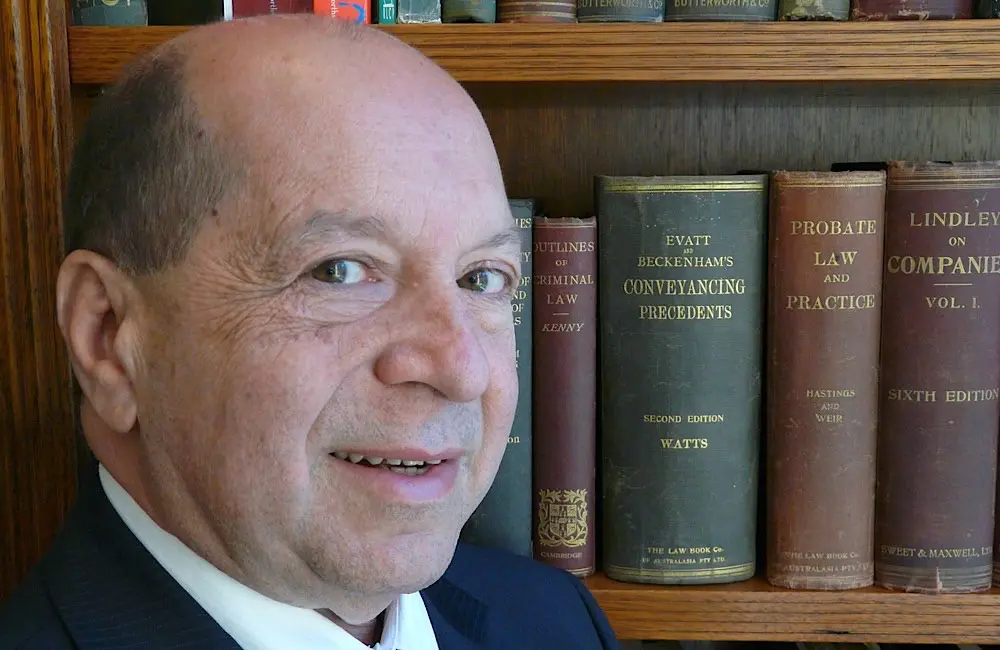
When asked whether Australia had anything comparable, Cordato said: “No, nothing like that.”
“There needs to be better rules,” he said.
“This is hopeless.”
The grey zone for advisors
Cordato said an advisor’s responsibility in Australia is narrower than many consumers may assume.
“Their responsibility is to make a proper booking,” he said.
That means booking what the client requested correctly and using a reputable airline or supplier.
“If they turn up at the airport and are denied boarding, the question becomes whether the booking itself was properly made,” he said.
On airlines, Cordato said carriers legally operating in Australia have already met the required aviation threshold.
“Any airline flying in or out of Australia is a reputable airline because it has to pass through the Civil Aviation Safety Authority (CASA), Australia’s aviation safety regulator,” he said.
The problem is not that advisors have no obligations. It is that many modern travel failures sit in a middle ground.
Cordato said he works with travel businesses on terms and conditions that comply with Australian Consumer Law and help define the line between events within the control of the travel provider, events within the control of the consumer and events outside the control of both.
Those middle-ground events include war, pandemics, government restrictions, volcanic ash and severe weather.
They are also the events that create the most uncertainty for advisors and their clients.
A clearer framework could define what advisors must disclose, what they should document, what consumers accept when they choose to proceed, and where the advisor’s responsibility ends.
Cordato said there should be “better rules” for these kinds of middle-ground events.
Is the current set-up enough?
Australia’s current protection model is spread across several places that do not operate as one system. Each has a role. Each also has limits.
Australian Consumer Law is not a dedicated travel protection regime. ATIA Accreditation is voluntary. Insurance may not cover insolvency, known events or actions against official advice. Chargebacks depend on timing, payment method and bank decisions. Supplier terms can limit what travellers recover.
A travel protection framework would need to answer the questions the current system doesn’t.
Australian Consumer Law is not a dedicated travel protection regime. ATIA Accreditation is voluntary. Insurance may not cover insolvency, known events or travel against official advice. Chargebacks depend on timing, payment method and bank decisions. Supplier terms can limit what travellers recover.
That does not automatically mean Australia needs to return to heavy licensing or recreate the former Travel Compensation Fund.
A light-touch model could start with better use of what already exists: standard disclosure wording, more visible accreditation status, a recognised checklist for high-risk bookings, and more consumer education around the ATIA Tick. But a voluntary model only binds those who participate.
Any stronger model would need government involvement. But that would also cost more, require administration and raise the question of: who pays?
Where ATIA Accreditation fits
ATIA Accreditation already provides a standards framework for participating travel businesses.
ATIA describes accreditation as a voluntary, industry-led scheme for travel intermediaries that buy and sell travel. Applicants are assessed against the ATIA Charter and Code, and accreditation is maintained through an annual submission process.
Businesses that hold accreditation are required to comply with Australian Consumer Law and the association’s Charter and Code of Conduct. The scheme also provides a complaints pathway for consumers dealing with accredited businesses.

“The collapse of AVG Tours is a direct consequence of the gaps that exist when accreditation is not prioritised,” Long said.
“If travel businesses are not ATIA-accredited or are choosing to work with suppliers and partners who are not accredited, they are creating the conditions for operators like this to exist and grow.
“That is a risk to your business. It is a risk to your customers. And ultimately, it damages confidence in the broader industry.
“ATIA accreditation exists for a reason. Businesses that do not prioritise it, or actively work around it, share responsibility for the space that unaccredited operators fill.”
AVG Travels and the compensation question
AVG Travels entered liquidation in May, leaving customers chasing refunds, missed flights and holidays they believed were safely booked.
Karryon previously reported that AVG’s website carried many of the familiar signals travellers associate with legitimacy: package pages, supplier names, office details, testimonials, secure-looking payment pathways and claims of experience.
What customers could not find was current ATIA Accreditation.
The collapse prompted renewed calls for stronger consumer protection, including calls to reinstate something like the former Travel Compensation Fund.
That fund was wound down after travel agent licensing was dismantled in Australia. The industry moved instead to its current model built around Australian Consumer Law and voluntary accreditation.
The AVG collapse raised the issue of whether consumers can easily identify whether a business is accredited, and whether the current system gives enough protection when an unaccredited operator fails.
The TCF question should not be the whole debate
Calls to bring back a Travel Compensation Fund-style safety net are understandable after customers lose money.
But reinstating the old TCF is not the only possible answer.
The European Union’s package travel rules require package organisers to provide insolvency protection, including refund and repatriation protections if an organiser goes bankrupt. The UK retained its own package travel regulations after Brexit.
Australia does not currently have an equivalent national travel compensation scheme.
A modern framework could sit somewhere between the old TCF model and the current voluntary system.
It could make accreditation status more visible. It could require unaccredited operators to disclose that status clearly. It could standardise language around supplier failure and insolvency risk. It could create a recognised safe-harbour process for advisors who have disclosed risk and documented client instructions.
Those ideas go beyond compensation.
They go to the bigger issue: whether Australia can improve consumer and advisor protection without returning the industry to a heavy licensing regime.
And that may be the most practical place to start.
Australia does not need to pretend it has no protections. It has several.
But it also should not pretend they form a clear system.
If the aim is to protect consumers without burying good operators in cost, the first step may be obvious: make accreditation more visible, make disclosures more consistent, and give advisors a clearer process to follow when risk sits outside their control.
That would not solve every failure, nor mitigate every risk. But it would give consumers a better signal, advisors a clearer standard, and the industry a stronger answer before the next collapse or crisis forces the same conversation again.
KARRYON UNPACKS: Australia already has multiple travel protections, but they don’t operate as one clear system. The real question is whether better visibility, clearer rules and stronger uptake are needed before the next failure exposes the same gaps again.