




AI-generated and manipulated images are making online holiday listings harder to trust. An RMIT University expert explains how to separate the real from the fake before booking accommodation – and why advisors have the trusted advantage over AI-generated holiday listings.
Booking an escape? Spotting an AI-generated holiday listing is less about finding one obvious giveaway and more about building a picture from several red flags.
The prevalence of AI-generated holiday listing fakes also feeds into the recent Australian Government warning about the risks of relying solely on AI tools for overseas travel planning.
With AI increasingly used to create and manipulate images, listings for accommodation and destinations are becoming more convincing and harder to verify, making it harder for travellers booking sight-unseen.
But it’s another opportunity for travel advisors to demonstrate their value as AI-generated holiday listings blur the line between real and fake online.
Where the image comes from
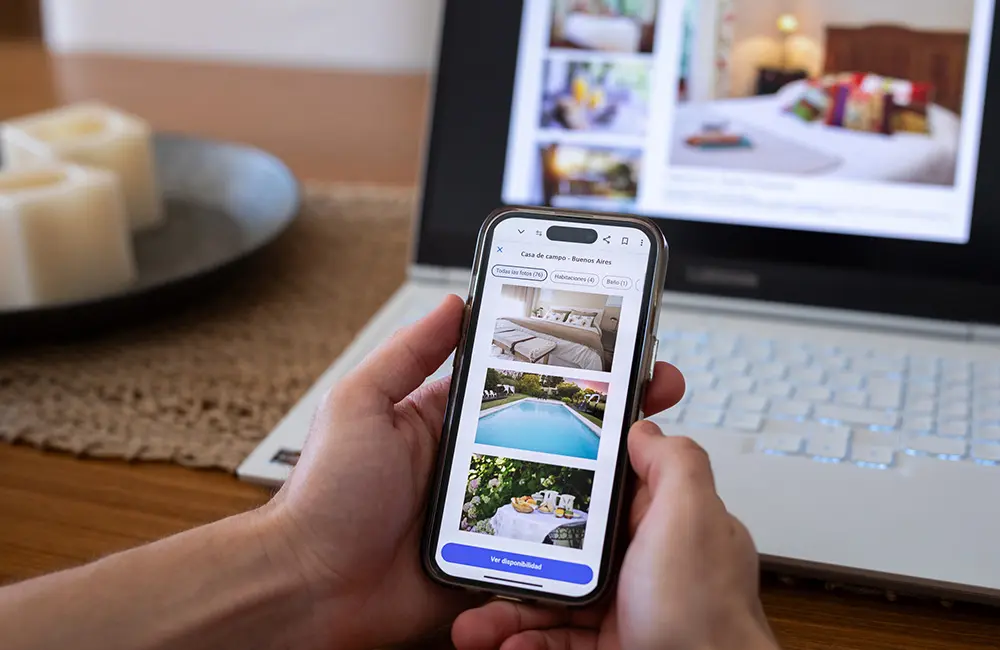
RMIT University Associate Professor Dr T.J. Thomson, who co-leads The News, Technology, and Society Network at the School of Media and Communication, said the answer lies in source credibility, looking for inconsistencies, weighing the broader context and applying critical thinking.
“Platforms that require an official app or have a more controlled process can cut down on the risk of encountering AI-generated holiday listing fakes,” he said.
Established brands with a proven track record are generally more trustworthy and it’s worth checking how long an account has been active and whether its past behaviour suggests it is reliable.
Why reviews and ratings aren’t enough

Star ratings and customer comments are often treated as signals of credibility, but they can be manipulated or generated by bots.
Thomson recommends basing an accommodation or supplier booking decision on multiple sources of evidence rather than a single review or rating.
It’s also where travel advisors have the upper hand on AI-generated holiday listings with firsthand experience, travel recommendations and expert knowledge about accommodation options and destination itineraries to share with clients.
The tools that help – and their limits

Reverse-image searches, such as Google Images, can be a useful way to check whether a photo has been used elsewhere online, though the absence of an exact match does not confirm an image is authentic.
Thomson warns that AI detection services should be used with caution as they are hit-and-miss and can throw up false positives or only work with content created through particular services.
Ultimately, he said critical thinking carries the most weight when appraising whether your stay is an AI-generated holiday listing or a real accommodation provider.
“Consider if what’s being shown realistically matches the price on offer and whether the image looks plausible,” Thomson said.
KARRYON UNPACKS: As AI images blur the line between real and fake online, the human advisor who has personally vetted a property or supplier becomes the most reliable filter a traveller has. It is a quiet reminder that due diligence is worth more than a 5-star rating that a bot may have written.