



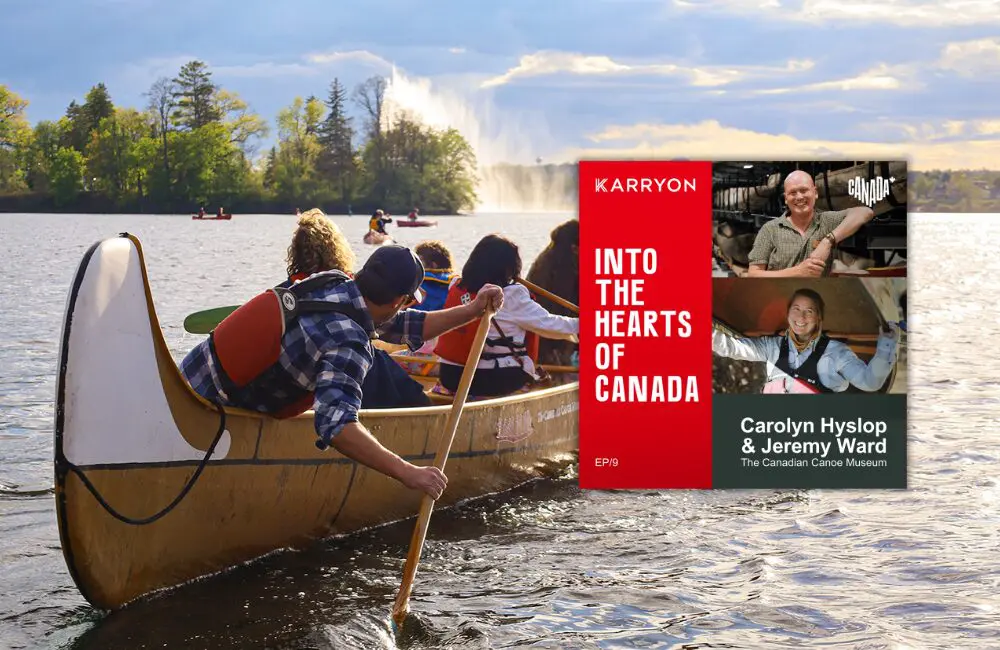
In Episode 9 of the Into the Hearts of Canada podcast, Matt Leedham sits down with Carolyn Hyslop and Jeremy Ward from the Canadian Canoe Museum in Peterborough, Ontario, to explore how the world’s largest collection of canoes and kayaks is telling the story of a country, its waterways, and its people.
Into the Hearts of Canada is a 10-part podcast series that explores the people, places, and powerful ideas shaping the future of travel through a Canadian lens. From Indigenous knowledge-keepers and local changemakers to iconic landscapes and regenerative tourism pioneers, each episode offers an intimate conversation with the people reimagining what travel can be.
Whether you’re a curious wanderer or a travel professional seeking fresh insights, this podcast invites you to see Canada with new eyes and an open heart.
Episode 9: Canoes and Culture: A Journey into Canada’s Heart at the Canadian Canoe Museum
Located just a 90-minute drive northeast of Toronto on the shores of Little Lake in Peterborough, Ontario, the Canadian Canoe Museum is a CAD $40 million (around AUD $45 million) waterfront facility that opened in 2024 on Treaty 20 Michi Saagiig (Mississauga) territory and the traditional territory covered by the Williams Treaties First Nations.
The museum houses more than 640 canoes, kayaks and paddled watercraft from across Canada and around the globe, in a town that spent a century as the global epicentre of wooden canoe manufacturing.
Carolyn Hyslop, Executive Director, has led the museum for over 20 years. Jeremy Ward, Curator, has worked with the collection for nearly 30 years. Together, they’ve built something that defies what most visitors expect when they hear “canoe museum.”
Episode 9: Top takeaways
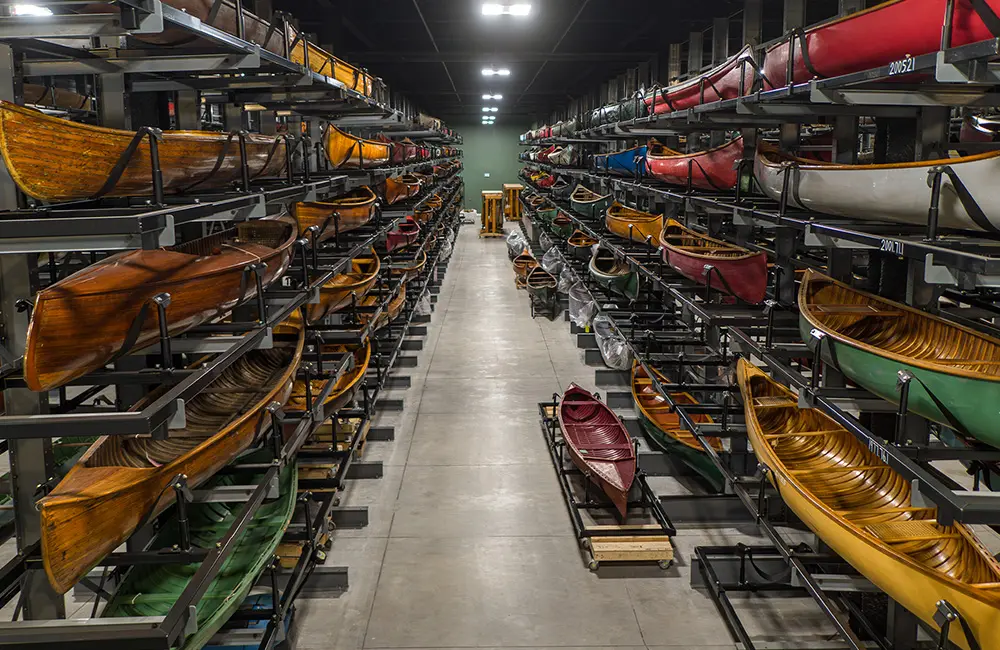
“You’re going to meet makers.” The museum is designed as an experience, not a display. Visitors encounter live workshops, hands-on exhibitions and the chance to paddle. “If we’ve done our job well, we’ve inspired you to want to get into a canoe or a kayak yourself,” Carolyn says.
“It is a place that people can walk to, ski to, snowshoe to, or, in the summer, paddle to.” The museum is a year-round destination, Carolyn says. In winter, students cook over open fires and snowshoe the property. Cross-country ski tracks lead right to the front doors. In summer, visitors paddle in from Little Lake.
“There’s always room.” About three-quarters of the collection comes from North America, but the rest comes from Papua New Guinea, Hawaii, Thailand, Samoa, and beyond.
The range spans ancient dugout canoes recovered from lake beds, one of the oldest birch bark canoes in the world, 36-foot red cedar log canoes from the Pacific Northwest, and three canoes belonging to world-renowned Canadian singer-songwriter Gordon Lightfoot, because paddling was the musician’s private antidote to life on tour.
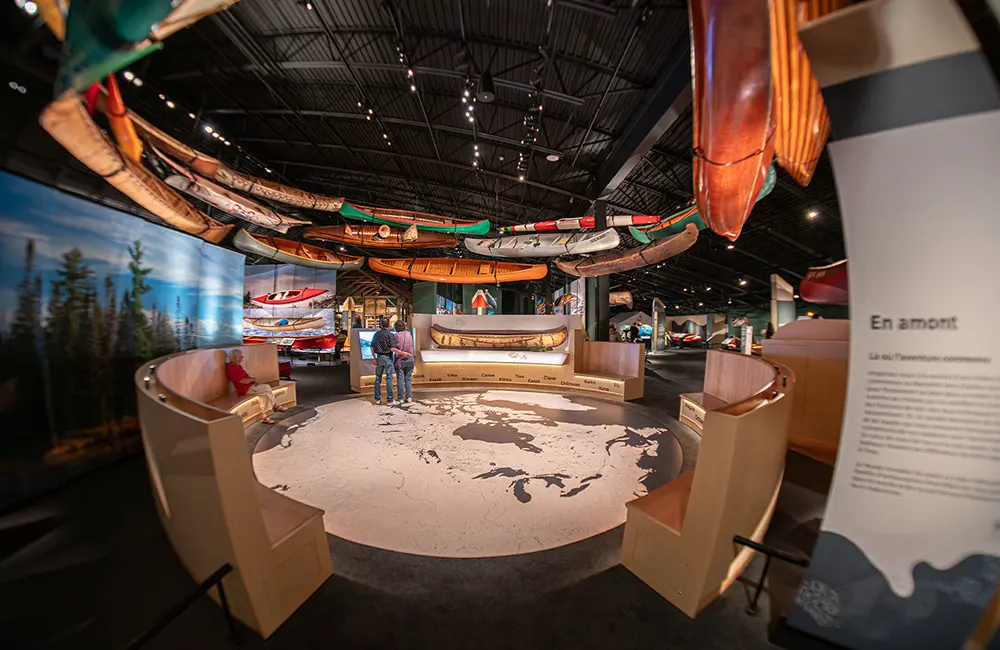
“It brings memories to the surface of a formative moment in their life.” The emotional responses catch people off guard, Jeremy says. Sometimes it’s the smells of old cedar and birch bark. Sometimes it’s a family connection no one expected.
One young man on a group tour mentioned he thought his family had a dugout canoe in a museum somewhere. They found it. It was 24 feet away. That discovery sparked a canoe-building revival in his home community. The museum drove the old canoe home for a day of ceremony and celebration. Then it came back to Peterborough with a new story to tell.
Where craft becomes culture
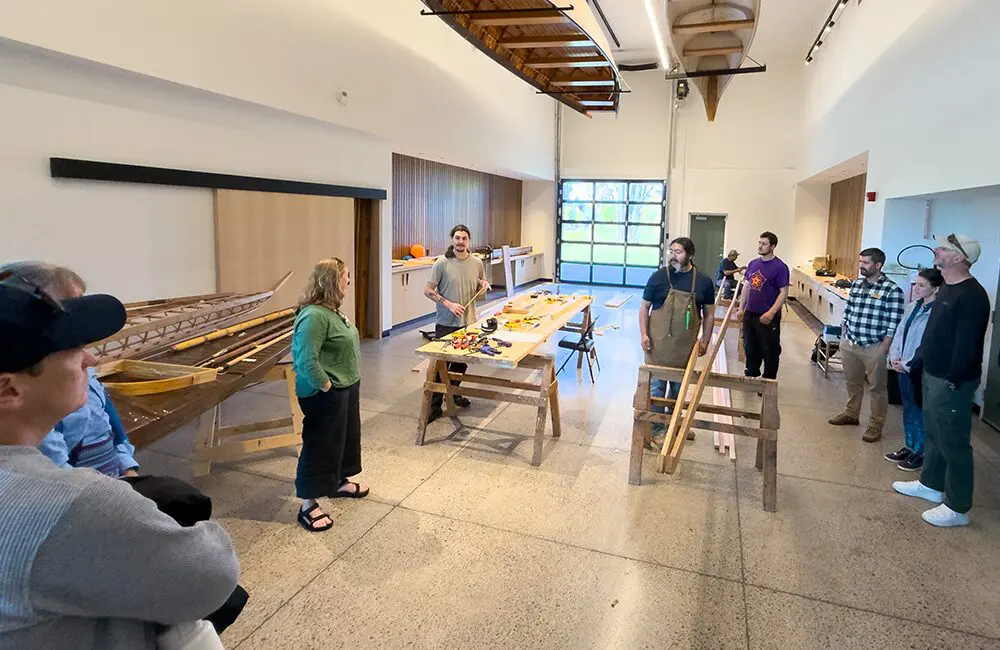
“One of the privileges we have here is to gather together people from very different backgrounds, over such a simple thing as a little boat that’s pointed at both ends,” Jeremy says.
The Builders in Residence program brings three to four master makers each year: Inuit kayak makers from Baffin Island, birch bark canoe builders, West Coast dugout carvers. They work in full view of the public. Some building traditions had been lost through colonisation, and makers visiting the collection sometimes encounter vessels from their own communities they’ve never seen. Those conversations can lead to canoes going home.
Wilderness and homeland
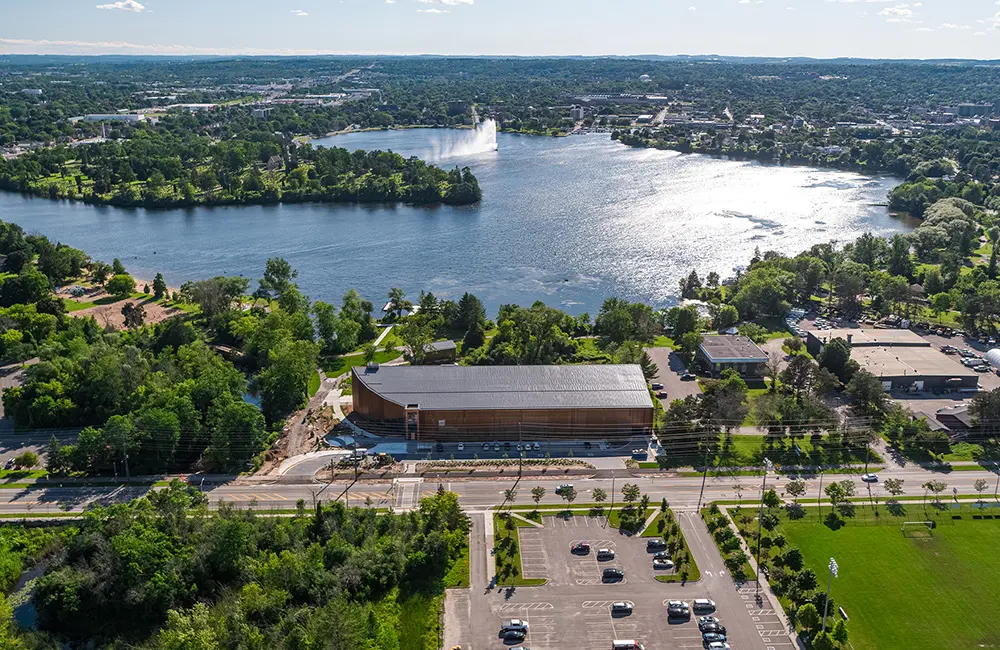
“You might also remember or discover that this wilderness is also somebody’s old homeland. Both of these ideas can coexist,” Jeremy says.
Canada has already held a citizenship ceremony at the museum. Jeremy sees it as a natural fit: a place where Indigenous and non-Indigenous voices share their own words about complex, shared histories. “It’s not loud. It’s not down your throat,” he says.
What does this mean for travel advisors?
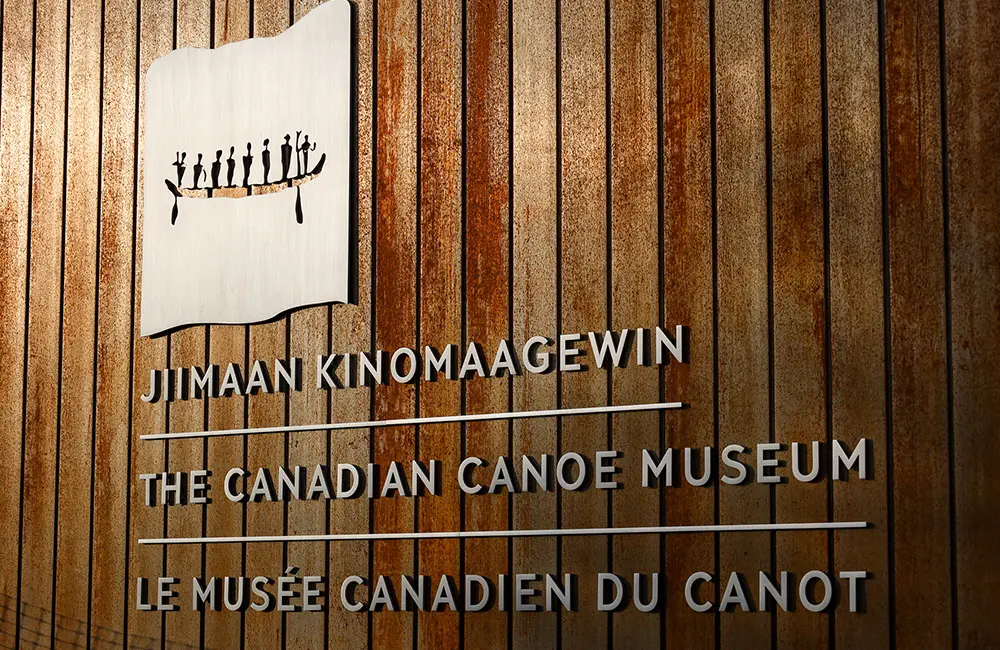
For Australians travelling to Ontario, the museum is a 90-minute day trip from Toronto. Peterborough sits at the gateway to cottage country: 250,000 lakes and over 100,000 kilometres of rivers. Pair the museum with a guided canoe trip and you’re well beyond the usual city-and-mountains formula.
“This is a one of a kind experience worldwide,” Carolyn says. “There’s nothing else like it.”
Show Notes
- Find out more about the Canadian Canoe Museum here.
- Subscribe to Into The Hearts of Canada Podcast here.
- Find your local Canada Specialist Travel Advisor here.
- Travel Advisors: Join the Canada Specialist Program here.
- Join the Together for Impact pledge and help co-create Canada’s regenerative future.
Into the Hearts of Canada is presented in partnership with Destination Canada.