



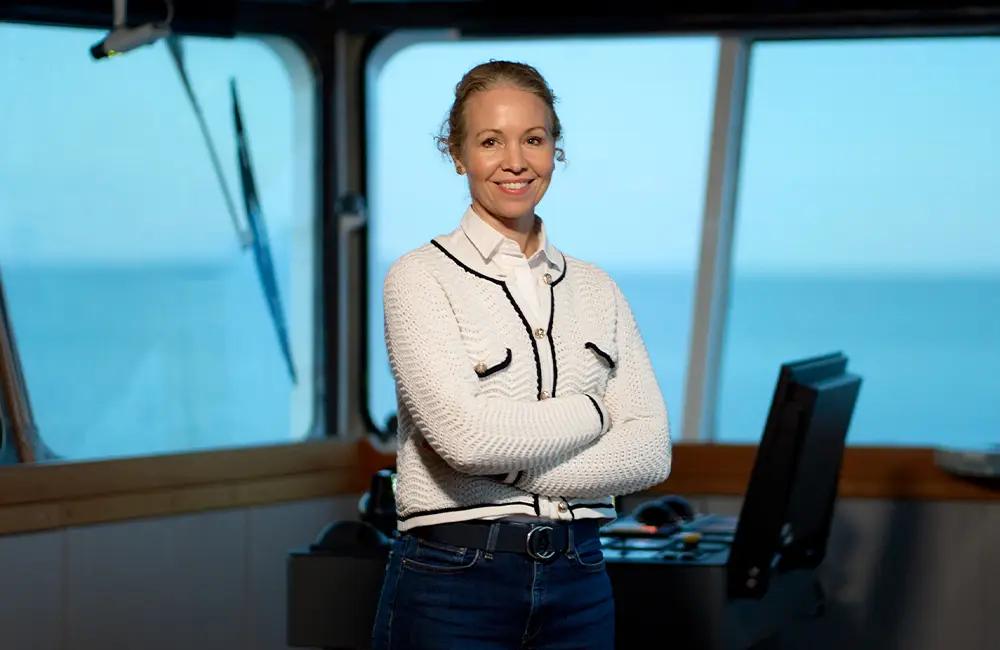
In Australia for just four days, Hedda Felin travelled from a Norwegian winter of minus 36 degrees to the steamy climes of Melbourne, Sydney and Brisbane to connect with trade partners. Karryon’s Matt Leedham caught up with the Hurtigruten Group CEO and Chair of the Board of Hurtigruten Svalbard to talk sustainability, brand legacy and what makes Australian travellers such a natural fit for Norway.
When Hedda Felin asks her ship crews in Norway who their favourite guests are, the answer comes back quickly and consistently.
Australians.
Not because they are the loudest or the easiest, she says, but because they are genuinely curious. They ask questions, and they want to understand the place they are travelling through, not just see it.
“There’s something about Australian guests,” Felin reflects. “They come with respect for the ocean, for nature, and for the people who live along the coast. They really want to know why we do things the way we do.”
Spend a little time with Felin, and it soon becomes clear this is not a company chasing trends. She is, of course, sharply focused, yet leads with a quiet warmth that feels modest and distinctly Norwegian. There is no need to overstate the story, as is the Norwegian way.
Side note: Norway is considered one of the happiest countries on Earth, according to the World Happiness Report.
At its heart, Hurtigruten is grounded in place, shaped by the sea, and deeply conscious of the responsibility that comes with 133 years of pioneering maritime history along Norway’s coast and beyond.
For Felin, that responsibility is personal. A proud Norwegian, she understands both the privilege and the weight of leading a company that has long been the country’s coastal lifeline.
“This is our home,” she says. “We’ve depended on the sea for generations, so it’s natural for us to take care of it. And when you’re trusted with something this important, you have to treat it with respect.”
Listening before leading
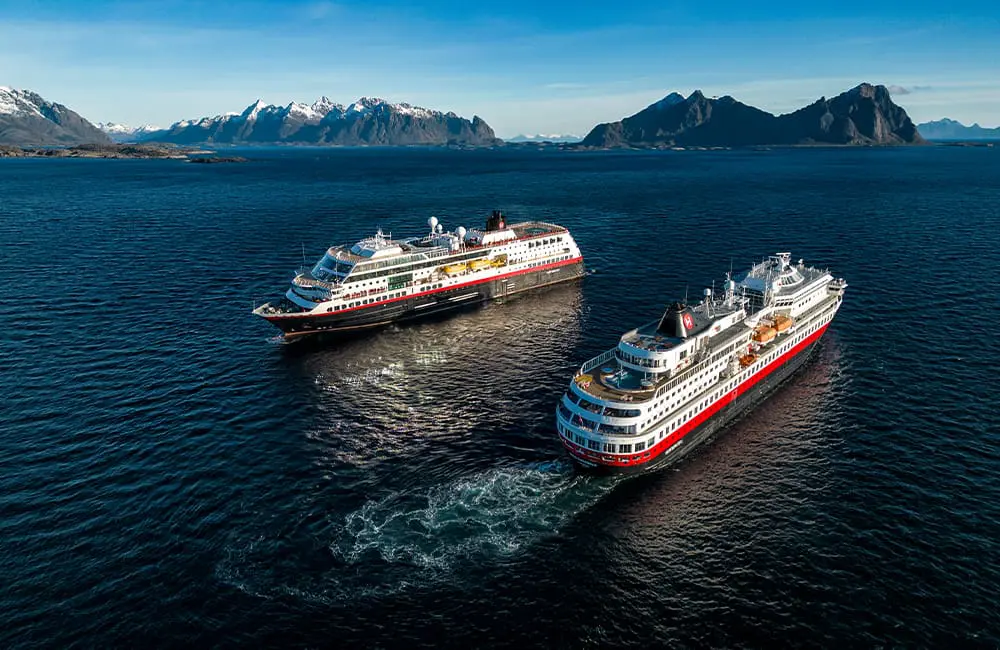
During her whirlwind visit, Felin met with industry partners across Melbourne, Sydney and Brisbane, including Hurtigruten’s Nordic Alliance partners, a group of 10 key travel agency partners and advocates.
But the visit was not about announcements. It was about listening.
“I can’t take decisions on behalf of the company without understanding what’s happening out here,” she says. “Australia is a growth market for us, so it’s important to hear directly from the people who know the guests best.”
That feedback has directly influenced how Hurtigruten designs its itineraries, with cruise and tour journeys proving a natural fit for Australians who like to travel slowly, stay longer and explore more deeply.
Consequently, Australia has become one of Hurtigruten’s most important global markets, with travellers from Down Under increasingly choosing longer, more layered journeys that combine coastal cruising with immersive touring.
Those extended journeys now make up a significant share of Australian bookings, and their popularity is helping shape new itineraries and experiences, including the continued growth of Hurtigruten’s premium Signature Voyages.
A sharper focus after separation with HX
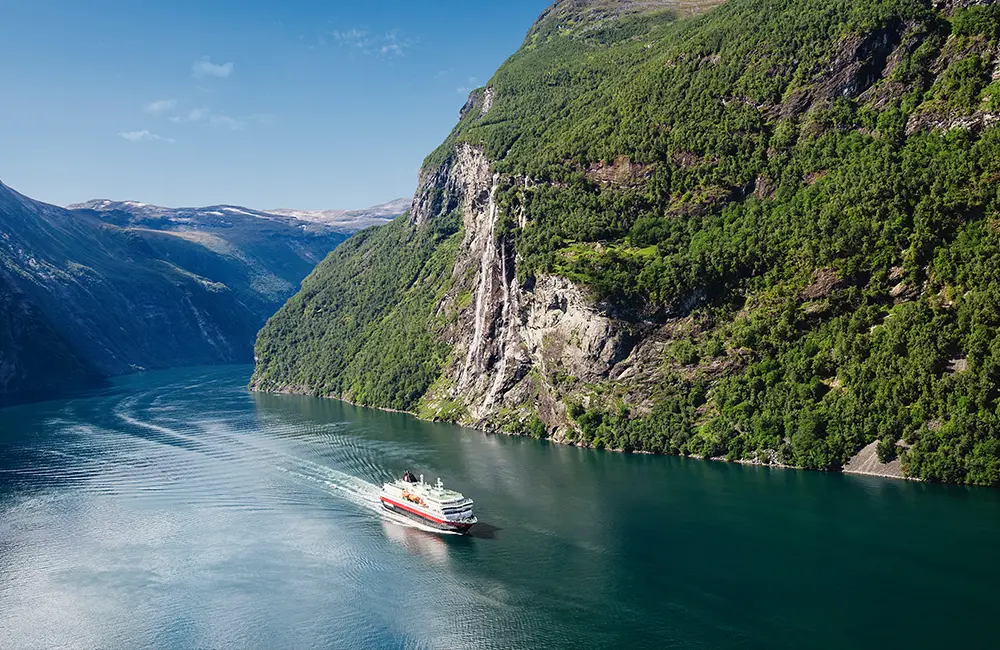
That clarity of direction has sharpened further following Hurtigruten’s official separation from HX in January last year, with both now operating successfully as standalone businesses.
“Splitting the business took a lot of energy,” Felin says. “There was a period where we had to be very internally focused. But once that was behind us, it released enormous momentum.”
With Hurtigruten now fully focused on Norway and Svalbard (its land-based operations in Longyearbyen), the strategy has tightened, and confidence has returned.
“We can be very clear about who we are and what we stand for,” she says. “That focus has landed well with our teams, our partners and our guests.”
“We are better than we hoped for,” says Felin.
Sustainability you can feel
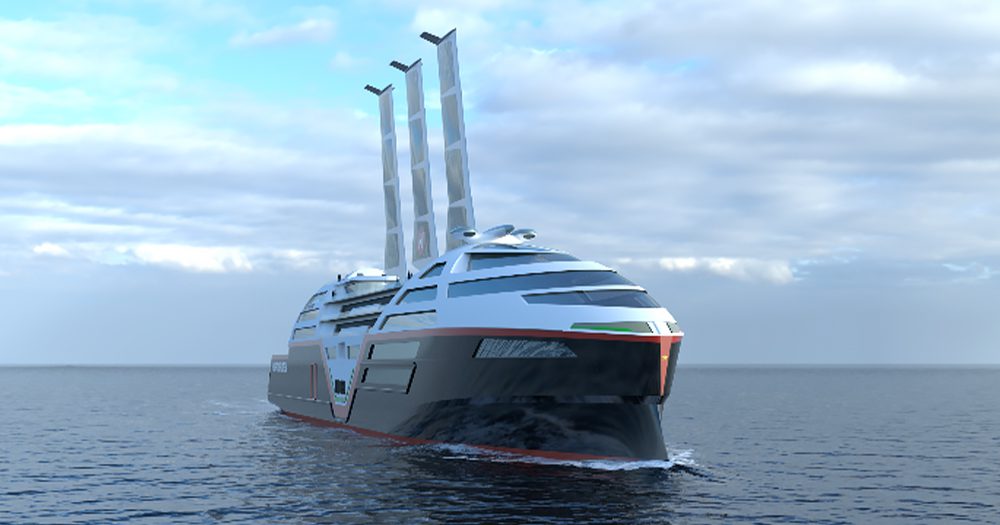
When it comes to sustainability, Hurtigruten does not treat it as a headline act. It is embedded, practical, and deliberately understated, from eliminating plastic waste years ago and backing local suppliers to investing early in hybrid ships and lower-emissions technology. One hundred and thirty-three years on, Hurtigruten continues to lead by example.
“This is part of our DNA,” Felin says. “But you cannot just say you are sustainable and relax. You always have to keep improving.”
“We should not wait until the perfect solution comes,” she adds.
That mindset underpins initiatives such as the Sea Zero 2030 project and its first climate-neutral sailing using certified biofuel last year, which achieved an emissions reduction of more than 90 per cent. The biofuel came from used cooking oil that would otherwise be garbage.
Felin says the Sea Zero concept has now moved beyond theory, with testing completed and partners selected, putting the company on track to launch a zero-emission propelled Coastal Express vessel by 2030.
“It’s important to be concrete,” Felin says. “When people talk about net zero in 2050, it feels abstract. This was about showing what we can do now.”
The same philosophy plays out on board. More than 80 per cent of produce is sourced locally, often hyper-locally, with Hurtigruten’s Coastal Kitchen concept and menus shaped by what is available along the coast rather than fixed meal plans.
A circular story worth telling
One of Hurtigruten’s most compelling initiatives is also one of its simplest.
Food waste from ships is collected, composted on shore and turned into fertiliser. That fertiliser is then used to grow vegetables and herbs, which are picked up on the next sailing and served back on board.
For guests, sustainability suddenly becomes visible and tangible. Leftovers become tomorrow’s lunch. The theory becomes real, and lives on in the travel stories shared at dinner tables long after the trip is over.
“It’s a small thing,” Felin says. “But when you add up many small things, it becomes something meaningful.”
Investing in people and place
Responsibility at Hurtigruten also extends to people. Felin tells me the company runs one of Norway’s largest trainee programs, with currently around 120 apprentices across its fleet and operations, second only to the Norwegian army.
Hurtigruten is one of Norway’s largest maritime employers, with thousands of crew and staff supporting its year-round coastal operations.
“That’s a big responsibility,” Felin says. “But it’s also a privilege. We are helping build skills, careers and communities along the coast.”
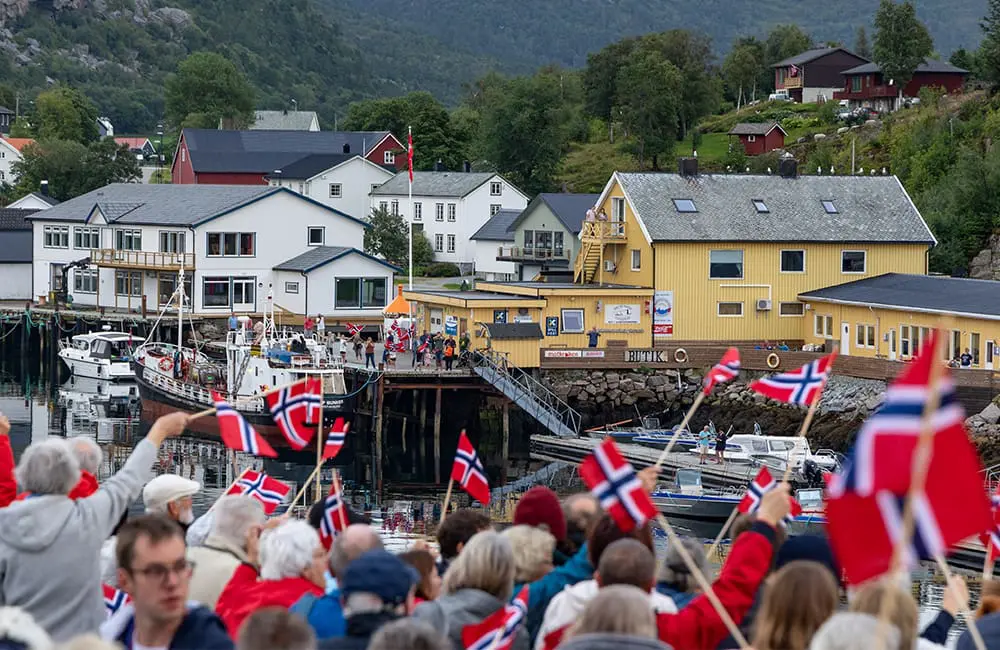
That long-term mindset also underpins Hurtigruten’s Open Village concept, a thoughtful counterpoint to overtourism. Working with residents in Træna, Bessaker and Sæbø, the program invites communities to design exclusive, locally led experiences available only to Hurtigruten’s smaller Signature Line ship guests.
Participation comes at no cost to guests. Instead, Hurtigruten contributes 250 NOK (around AUD $38) per passenger to each host village on every visit. With ships carrying up to 500 guests, that commitment translates into meaningful, repeat investment in rural communities that rarely benefit from tourism.
The result is simple and powerful. Guests are welcomed openly, while communities gain pride, purpose and opportunity.
“We don’t want to bring everything with us,” Felin says. “That doesn’t create value locally. We want the communities to be part of the experience.”
Earning the right to grow
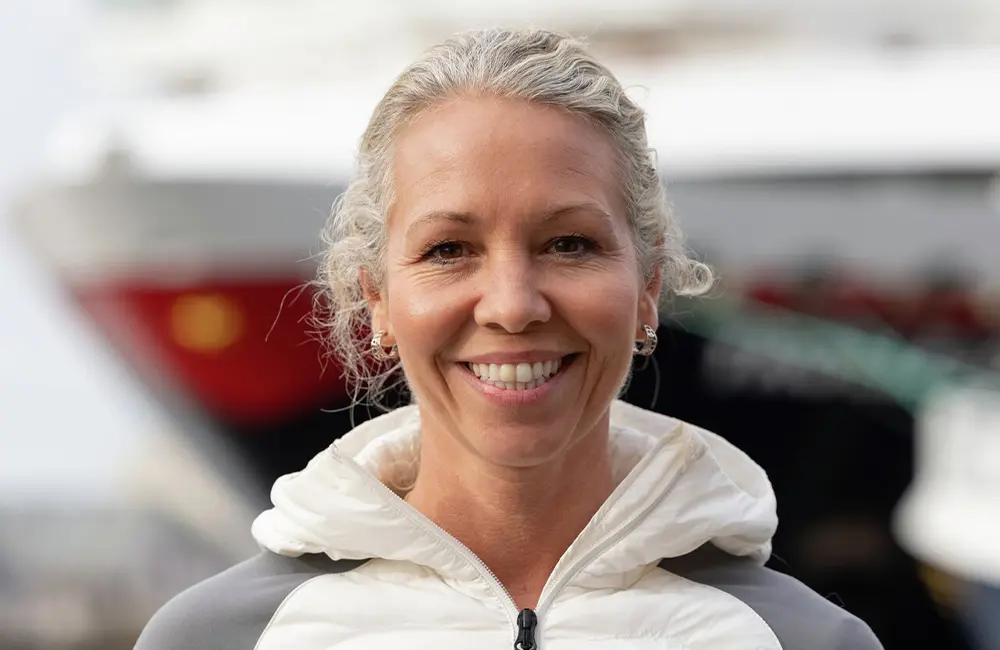
Five years into the role, shaped by leading through the pandemic and the separation of Hurtigruten and HX, Felin speaks with calm confidence about what lies ahead.
“The heritage matters,” she says. “But so does the future. Our job is to protect both.”
“I think about that responsibility every day.”
For Australians who return year after year, the appeal is not just Norway’s dramatic coastline. It is the sense that their journey matters and that they have left something good behind.
For Felin, growth is not automatic.
“We need to earn our right to grow,” she says. “That means being profitable, being responsible, and making sure we create value for the communities we are part of. If we do that, then growth will follow.”
For more on Hurtigruten, head to: www.hurtigruten.com/en-au