



Before the US-Iran conflict wreaked havoc on the region, the Middle East was emerging as one of the fastest-growing regions for travel, new figures show.
According to World Travel & Tourism Council (WTTC) data, the region’s travel and tourism sector expanded by 5.3 per cent in 2025, comfortably ahead of the global average of 4.1 per cent. International visitor spending also climbed 5.2 per cent year-on-year, supported by strong connectivity and growing demand for both leisure and business travel.
Surprisingly, considering the competition it faces in the UAE and Qatar, Saudi Arabia led the charge, the data shows. The Kingdom’s travel and tourism GDP surged 7.4 per cent, nearly double the global growth rate, while international visitor spending rose 8.2 per cent.
Meanwhile, business travel spending in Saudi Arabia soared by more than 55 per cent as the country continued positioning itself as a global events and investment hub.
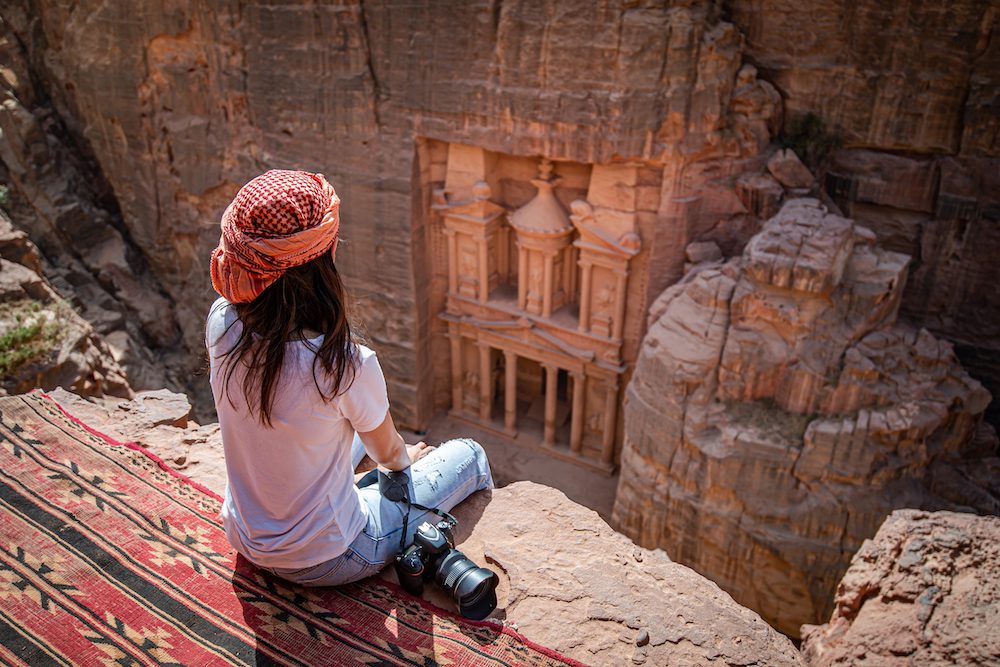
The United Arab Emirates (UAE), Jordan and Oman also posted healthy gains, reinforcing the Middle East’s momentum before the conflict.
Since the outbreak of the war, however, that trajectory has shifted sharply. As reported by Karryon, airlines across Australia, Asia and the Gulf have cut flights, rerouted services and adjusted schedules due to soaring fuel costs, security concerns and changing traveller behaviour. Travel advisors are also seeing more clients actively avoiding Middle East transit hubs, instead opting to reroute through Asia where possible.
The changes have added complexity to itineraries and disrupted some of the world’s busiest aviation corridors, particularly for Australians travelling to Europe.
But despite the turbulence, WTTC believes the region remains well positioned long term, citing continued infrastructure investment, business travel demand and global connectivity as key strengths once stability returns.

“The Middle East continued to deliver strong travel and tourism growth in 2025, with Saudi Arabia playing a central role in driving this success and emerging as a leader in the region, with growth nearly double the global average,” WTTC President and CEO Gloria Guevara said.
“The Middle East’s performance in 2025 highlighted the strength and long-term potential of travel and tourism, with the sector continuing to act as a key driver of economic growth, job creation and international connectivity.”
The Department of Foreign Affairs and Trade (DFAT) continues to advise against visiting (level four warning) the Middle East region, with the exception of Saudi Arabia, Jordan and Oman, where it advises Aussies to ‘Reconsider your need to travel’ (level three).
In this Karryon exclusive, The Runway Traveller’s Vanessa Tokatly (Karryon Travel Advisor Board member) details what it’s like to travel right now in the Middle East, where disruption remains real, but on-the-ground experiences reveal a more nuanced picture for travel advisors.
KARRYON UNPACKS: Data shows this wasn’t a market slowing down naturally – it hit a geopolitical wall. The interesting part now is whether traveller confidence rebounds as quickly as the region’s aviation ambitions hope to accelerate. For the trade, it’s about remaining agile as clients reroute, rethink and still find ways to travel.