



It started with a conversation in a Melbourne nursing home. Today, it involves a Maasai women’s hub in rural Kenya, a $25,000 solar fundraising target and a growing network of Australian travel clients helping make it happen.
Australian travel advisor Carolyn Allen first heard about the realities facing Maasai communities through Joanne Sankori, a nurse caring for a friend’s mother in Glenroy. Sankori and her sister Semerian would go on to establish Patinaai Osim, an initiative supporting Maasai women and children in Kenya’s Kajiado County through education programs, reproductive health support, economic opportunities and cultural preservation.
Over time, what began as sending sanitary hygiene products to help girls stay in school evolved into something much larger. Visits to the region while escorting tour groups revealed both the scale of the challenges and the potential for lasting change. Today, a growing community hub built from bare ground is bringing women together to learn new skills and build independent livelihoods.
Karryon spoke with Allen about how a chance encounter turned into a long-term commitment and why the travel industry may be uniquely placed to help support the centre’s next phase.
Can you tell me the story of how this all began for you?
It all began in an aged care facility in the Melbourne suburb of Glenroy where a beautiful Maasai woman, Joanne Sankori, was nursing my friends’ mother. She told us her story, and life challenges the Maasai people face in her homeland, Kajiado County, Kenya.
Joanne and her sister Semerian, who lives in Nairobi, are fortunate enough to be well educated in our western system. This is not the case for the vast majority of Maasai, so Semerian launched Patinaai Osim, an organisation that works in rural communities to uplift indigenous Maasai women and children, with a strong focus on education.
Patinaai Osim also addresses four other key issues: reproductive health, economic empowerment, environmental restoration, and cultural preservation.
Joanne and Semerian’s determination to help their people had my immediate attention.
What did you see or learn that made you realise this was something practical you could do?
One of the challenges young Maasai girls face is a lack of sanitary hygiene. This forces them to stay home from school for one week of every month, which has a dramatic impact on their education.
We quickly realised we could help and started sending over sanitary towels to Semerian for distribution.
How did your relationship with Semerian develop over time?
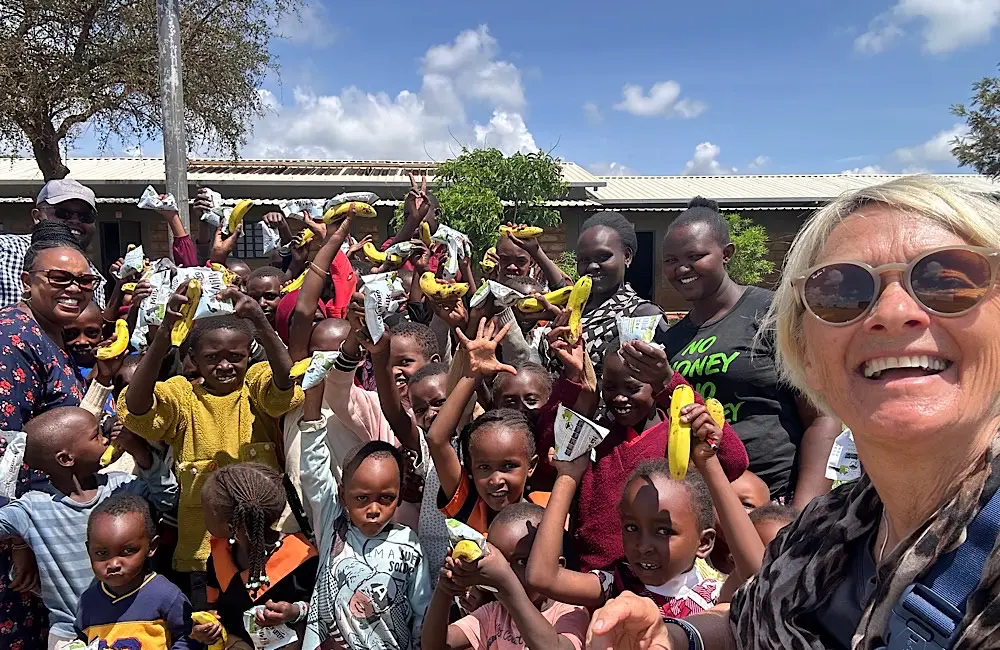
Seven years ago, I happened to be in Kenya escorting a tour group. We arranged to visit a gathering of schools to make a further distribution of sanitary hygiene products. This was seen as a huge event in a county where the living conditions are harsh.
I witnessed Semerian actively educating young girls and parents about the importance of sanitary hygiene as well as the importance of continuing their education as adolescents. Teen pregnancies and drop-out rates are sky high in this area.
Little did I know that our visit would be the catalyst to broaden the opportunity for lasting change in the region.
When you went back to Kajiado last year, what did you notice that felt different from your earlier visits?
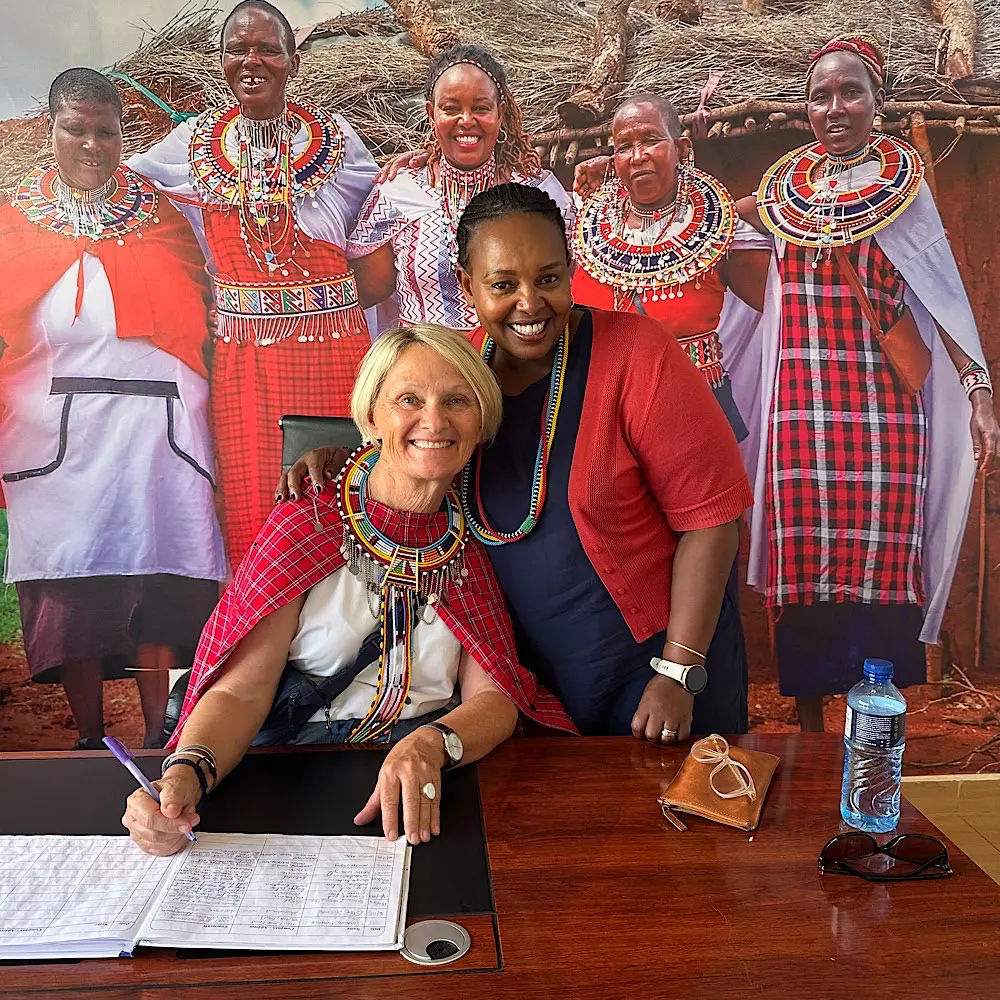
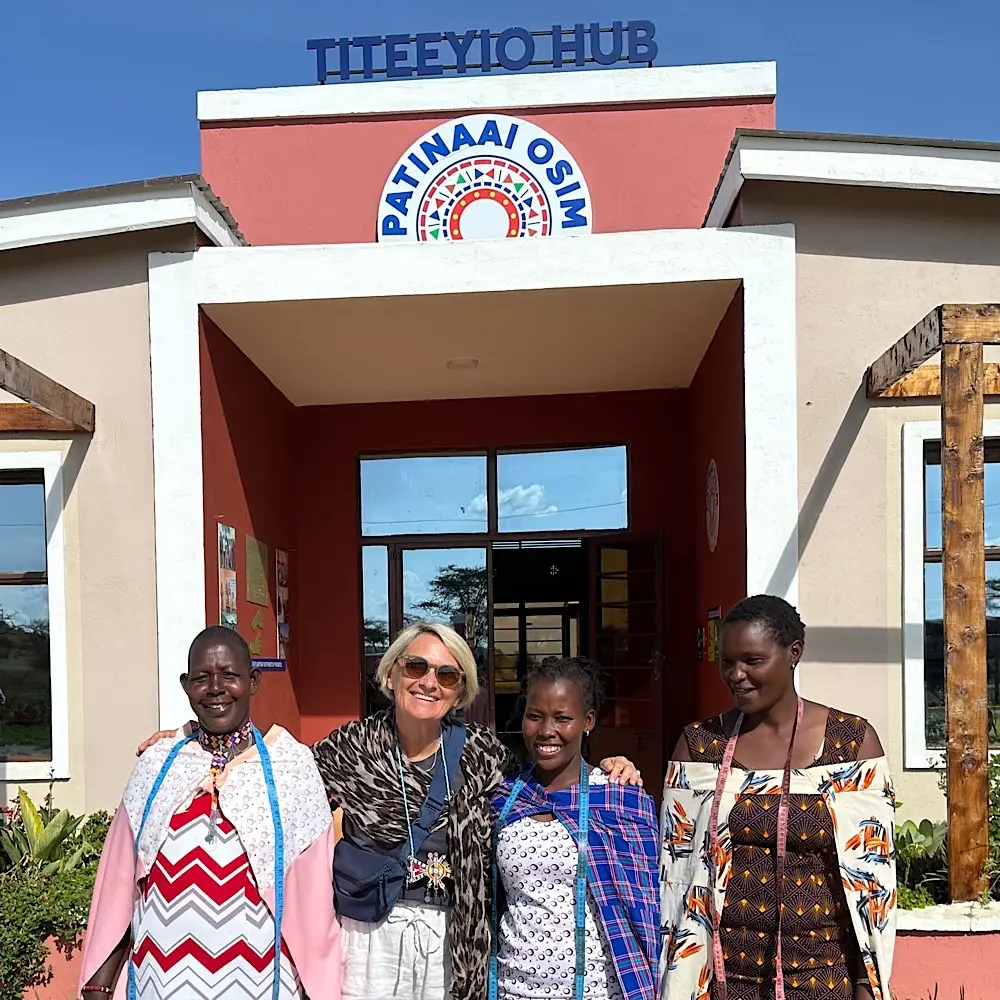
From bare dirt, Patinaai Osim had built a community hub in Kajiado County, so the physical change was huge. This hub allows women to come together, to feel safe, to learn new skills and earn a living. The hub currently has approximately 30 active participants, with 75 on the waiting list. Word is spreading and they are keen to grow.
But the real difference I saw was in the women themselves. I could feel a newfound confidence. I could see life and joy in their eyes. I could feel the change for good.
Can you describe a day at the centre?
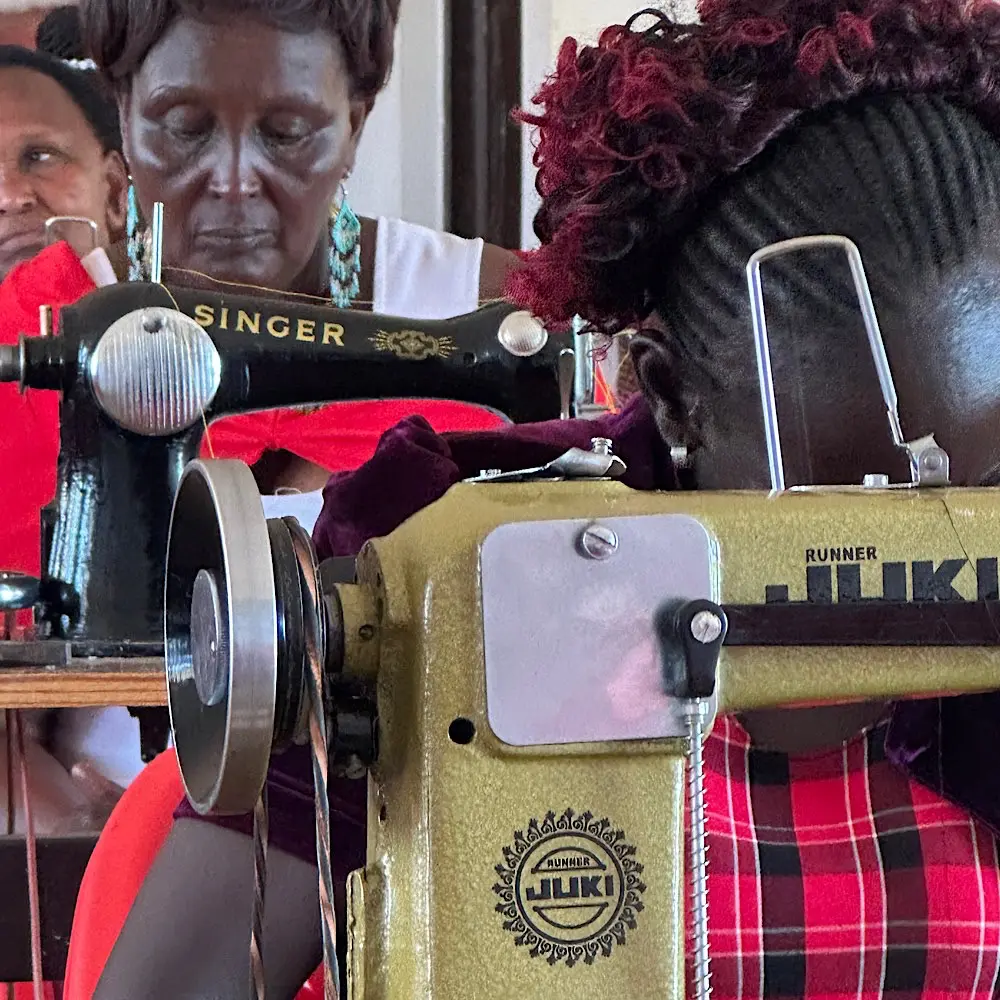
One of the activities I tried my hand at was sewing. Tailoring classes are run using treadle sewing machines. I very clumsily tried making a bag. I then moved on to the beading room where I had nothing but admiration for the intricate bead work being made by the women.
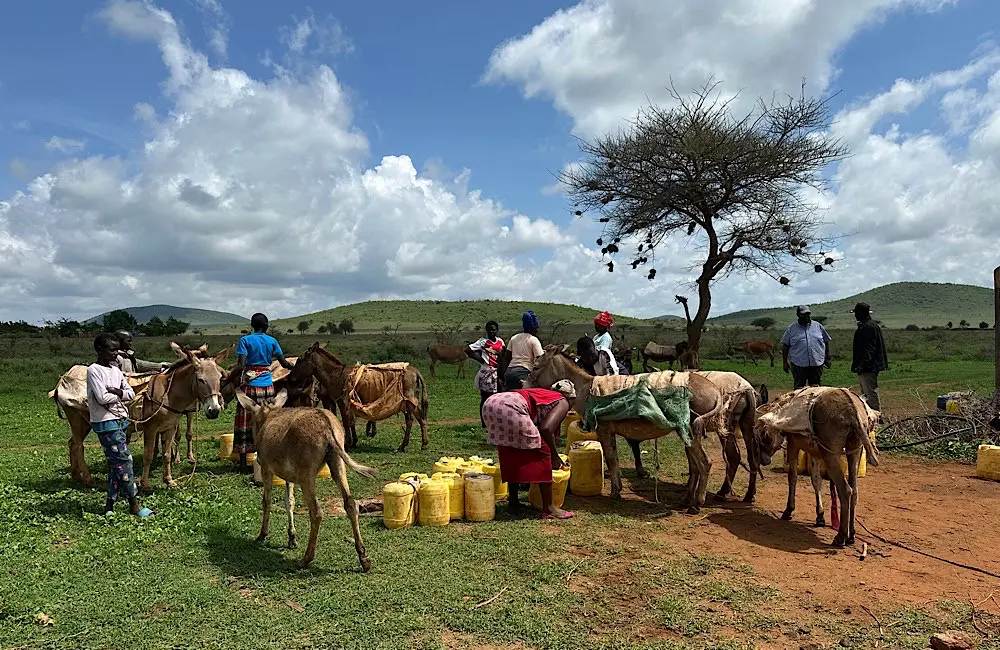
I talked to the women about the challenges they face at home. A typical day means rising at 5am to walk with their donkey, a 15km round trip to the water point to collect water for the day. On returning home they have a couple of hours to complete the household chores before walking another 8km to the centre for their sewing lesson.
Most live in huts made from cowpats. They simply want to earn a living which could be to buy a piece of tin to put on the roof, to catch water, to water their kitchen garden, to feed their family.
When asked what new skills they would like to learn, one lady said simply: “I would like to learn to read and write.”
At what point did you decide to move from visiting and supporting informally to actively fundraising?
My visit to the hub changed my world completely. I could see that Semerian is dedicated to her cause and the change Patinaai Osim is making to improve the lives of so many is immeasurable.
It became obvious that for this centre to fully thrive, it needs power and water. I came home determined to make a difference.
I began raising funds through a profit-share scheme with my travel business and reaching out to my client base. I have also now partnered with the Intrepid Foundation, which runs a page where Australians can donate funds.
What will having reliable power allow the women to do that they can’t do now?
Water and power are the big challenges in this area. There simply isn’t any, and without them it is difficult for the centre to really thrive.
Our current aim is to raise $25,000 by May to help the centre get solar power, which will allow it to buy electric sewing machines and overlockers, which will in turn improve productivity and the quality of the work.
The centre is also on the main highway to Amboseli and power would provide an opportunity to open a coffee shop, enabling more local women to learn new skills.
Once we achieve solar power, we want to move on to raising funds for water tanks, the electric sewing machines and equipment for the proposed coffee shop.
What appealed to you about working with the Intrepid Foundation on this?
The Intrepid Foundation had been a supporter of Patinaai Osim for years, so it made sense to collaborate.
As a registered charity, Intrepid provides the perfect platform for our fundraising campaign. Most importantly, 100 per cent of every donation goes to Patinaai Osim.
Also, one of the great things about the Intrepid Foundation is that if people make multiple monthly donations, it will match them dollar for dollar. Any small donation split over a minimum of two months will qualify.
Has this journey influenced how you think about your work in travel?
My business is no longer just about the bottom line. It is a long-term engagement with Patinaai Osim to educate and provide life-changing opportunities to the Maasai people.
I am enriched by my experiences in Kajiado. I hope others will be too. Together we can drive change.
KARRYON CALL TO ACTION: How the travel industry can help
Allen’s current fundraising goal is $25,000 by May to install solar power at the Kajiado hub. Reliable electricity would allow the centre to operate electric sewing machines and overlockers, increasing productivity and opening the door to additional training opportunities.
Power could also enable a small roadside coffee shop along the highway to Amboseli, creating further income streams and skills training for local women.
For an industry built on global relationships, Allen believes travel advisors, operators and clients can play a meaningful role.
Donations to support the solar project are being collected through The Intrepid Foundation, where contributions go directly to Patinaai Osim. The foundation also matches eligible monthly donations dollar for dollar.
For Allen, the goal is simple: help the centre secure the infrastructure it needs to keep growing and bring more women through its doors.