


Competition watchdog, the Australian Competition and Consumer Commission (ACCC), has warned that soaring airfares highlight the need for stronger competition in Aussie skies.
The ACCC says that the current Qantas Group-Virgin Australia duopoly leaves travellers vulnerable when demand spikes – and that demand has surged in recent months.
According to the ACCC’s latest Domestic Airline Competition report, September and October’s “very high” demand stretched capacity and pushed fares higher. And despite carriers adding services, airlines struggled to keep up with the surge.
More than 5.5 million passengers flew in October, up 3.8 per cent year-on-year and the second-highest monthly total since early 2019. Planes were fuller too, with load factors climbing to 84.4 per cent.
That squeeze led to the highest average domestic fares since December 2022.
“Airfares are typically elevated during peak demand periods, but the higher passenger levels in October 2025 placed additional pressure on seat capacity, which pushed up airfares for consumers,” ACCC Commissioner Anna Brakey said.
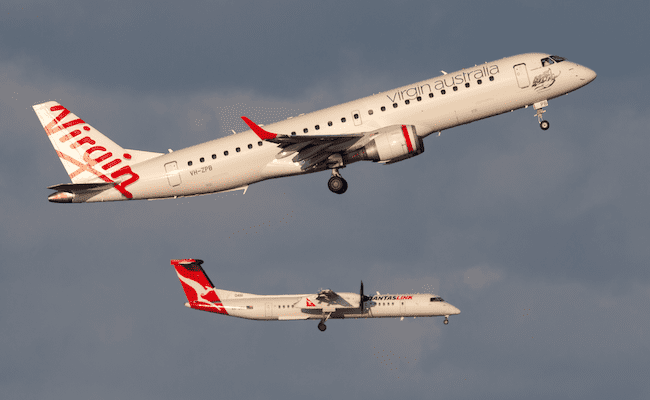
The ACCC says the situation reflects a market dominated by two groups that together command about 98 per cent of seats.
While both Qantas Group and Virgin Australia boosted services during the peak period of late September and early October, their scale reinforces the need for more competitors, according to the regulator. It argues that genuine choice, not just extra flights, is key to easing fare pressure.
“More competition in the domestic airline industry is essential to ensure consumers can enjoy lower airfares and more choice,” Ms Brakey said.
However, the Commissioner added that, “the high barriers to entry into the domestic aviation sector have helped to stave off competition from new entrants, particularly since Rex withdrew from routes between major cities”.
But Air T’s recently revealed plan to acquire Rex is expected to secure regional connectivity and rebuild the carrier’s pre-pandemic network, the report found.
Meanwhile, on-time performance dipped to 74.1 per cent in October, largely due to severe weather.
“We expect the airlines to improve their service reliability across all routes to give consumers a better experience when they travel,” Brakey remarked.
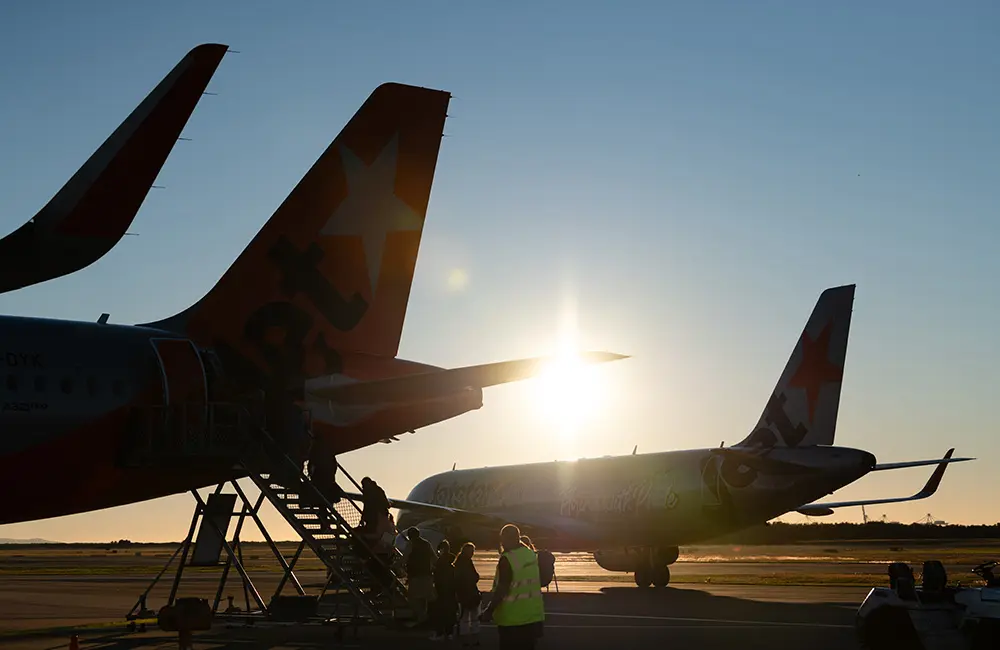
On the airport side, Australian Airports Association (AAA) CEO Simon Westaway said major hubs are stepping up to meet projected growth, with over $44 billion in planned crucial infrastructure investment over the next decade.
KARRYON UNPACKS: For agents, the ACCC’s message is hard to ignore. When two carriers dominate almost the whole domestic market, fare swings can hit your clients and your bottom line. We’re seeing record demand, fuller cabins and rising prices at a time when Aussies are eager to travel. More competition won’t fix everything, but it can steady the market and support better service.