



The global airline industry is expected to remain profitable in 2026, but a sharp rise in fuel costs linked to the Middle East conflict will slash earnings and create new challenges for carriers worldwide.
According to the International Air Transport Association (IATA), airlines are now forecast to post a combined net profit of US$23 billion in 2026. That’s almost half of the US$45 billion expected for 2025 and a far cry from the previously forecast US$41 billion.
The downgrade comes as the industry grapples with war-related disruptions across the Middle East, rising oil prices, slower economic growth and ongoing aircraft supply constraints.
“War-related disruptions in the Middle East and rising fuel costs have shifted the outlook for airlines to the worse,” said Willie Walsh, Director General of IATA, which just wrapped its annual AGM in Rio de Janeiro.
“All airline bottom lines are suffering from the rapid 70% rise in jet fuel prices.”

In his annual State of the Global Air Transport Industry report at the AGM, Walsh added that fleets that are less efficient than planned are compounding problems.
“The aircraft order backlog is over 18,000. And the average fleet age has reached a record 15.2 years,” he stated.
“Moreover, being short over 5,000 more fuel efficient replacement aircraft that we had counted on, means missed efficiency gains, not to mention higher lease rates and increased maintenance costs.”
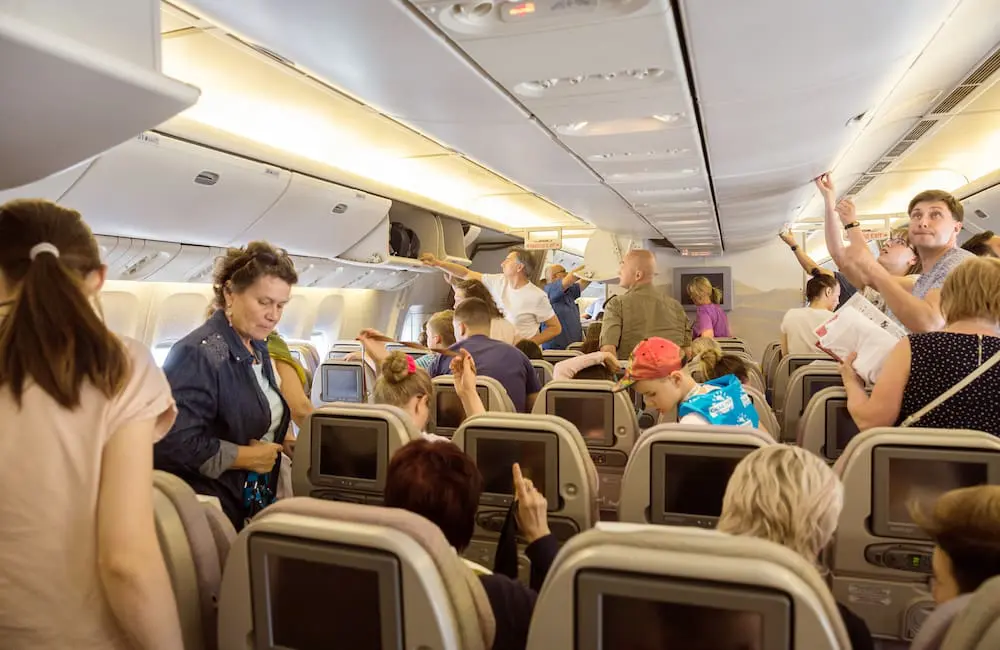
Despite the gloomy outlook, there is a notable bright spot for carriers: airlines are still expected to fill more seats than ever before. IATA forecasts passenger load factors will reach a record 84 per cent in 2026, up from 83.5 per cent in 2025.
Passenger numbers are also expected to climb to 5.1 billion globally.
In its latest monthly passenger report, IATA revealed that global passenger demand, measured in revenue passenger kilometres (RPK), was down -3.4% compared to April 2025. But excluding the Middle East, demand increased by a modest but still significant 1.2 per cent, with international demand rising by a further 1.9 per cent.
All of this means demand for air travel remains relatively strong, notwithstanding the Middle East, even as airlines face significantly higher costs.

APAC remains resilient
Asia-Pacific carriers continue to benefit from solid domestic and international demand.
According to IATA, APAC passenger traffic is still growing, and some airlines are seeing extra traffic as travellers adjust routings affected by the Middle East conflict.
However, the region is particularly exposed to higher fuel costs because it relies heavily on crude oil imports from the Gulf.
Airspace restrictions linked to the war are also forcing some airlines onto longer flight paths, increasing fuel burn and operating expenses.
In addition, several Asian currencies have weakened against the US dollar, adding another layer of cost pressure because fuel and many aviation expenses are priced in US currency.

Regional report
Unsurprisingly, IATA expects Middle Eastern airlines to collectively fall into the red as flight disruptions, capacity reductions and weaker transfer traffic take their toll.
But the impact extends well beyond the region itself.
Many international services connecting Europe, Asia and other parts of the world rely on major Mideast hubs – and any disruption to those networks can influence schedules, operating costs and passenger flows globally.
For Australian travellers heading to Europe, the conflict continues to create uncertainty around routings and airline operations.
According to IATA, Europe has benefited from some shifting passenger flows as travellers seek alternatives to Gulf hub connections.
However, European airlines are also facing higher fuel prices and broader economic pressures as rising energy prices, regulatory costs and operational disruptions continue to weigh on profitability.
In North America, airlines are expected to remain profitable but also face rising fuel costs.
“At the regional level, all are in the black but with sharply reduced financial performance, with the exception of the Middle East,” Walsh said.
“The Gulf carriers face operational uncertainty following a near complete shutdown of airspace at the outbreak of the war. These carriers are doing an amazing job maintaining connectivity, but major financial impacts are unavoidable.”
Fuel focus
Of course, fuel remains the industry’s biggest challenge.
IATA forecasts fuel costs will rise nearly 40 per cent to US$350 billion in 2026, with jet fuel prices expected to jump almost 70 per cent compared with 2025 levels.
As a result, fuel will account for more than 31 per cent of airline operating expenses.
Despite that, industry revenues are forecast to rise 9.4 per cent to US$1.165 trillion, driven by higher fares, growing passenger numbers and stronger ancillary revenue.
KARRYON UNPACKS: Airlines continue to fill aircraft at record levels, but higher costs are making profitability harder to achieve. That combination could mean fewer bargains, tighter availability and continued pressure on international airfares, particularly on long-haul routes popular with Australians.