




With headlines telling Australians to scrap travel plans amid Middle East airspace disruptions, ATIA CEO Dean Long says the advice is wrong, alternative routes are operating, and panic-cancelling could cost you your refund rights.
Australian Travel Industry Association (ATIA) CEO Dean Long says carriers across Asia are still operating and providing workable alternative routings to Europe, even as airspace closures across Iran, Iraq, Qatar, the UAE and surrounding nations continue to disrupt traditional flight paths.
The industry’s peak body is calling the cancel-your-trip advice premature and potentially costly for travellers who act on it. “There are plenty of safe ways to get to Europe and the aviation sector has and will continue to adapt,” Long says.
“Asia is open and operating. We have flights coming out of the Middle East. There will be some delays and a bit more disruption than what we’re used to but no one in the travel industry is going to put you in a place where it’s unsafe.”
What are the alternative routes to Europe right now?

Singapore Airlines, multiple Chinese carriers and other Asian operators are flying normally and offering reliable connections to European destinations, according to ATIA. Long says Etihad and Emirates are also flying. The reality is more nuanced.
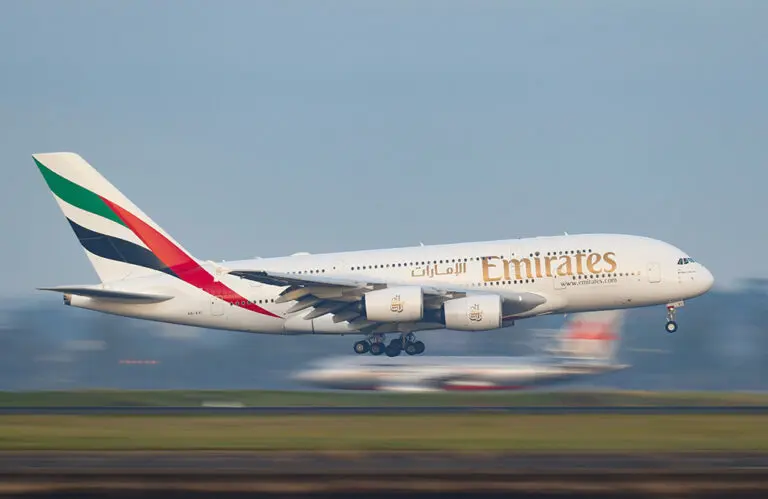
The first Emirates flight to Sydney only departed Dubai yesterday, an A380 carrying around 200 Australians, and as of Tuesday, more than 80 per cent of flights to and from Dubai were still cancelled. These are repatriation and limited services, not normal schedules.
Asian carriers, by contrast, are operating regular timetables. That said, flight times may be longer, and flights are reportedly more expensive. That is the trade-off right now.
It is a shift travel advisors have been flagging for days. Geoff Currie from Luxe by iTravel, who estimates 85 to 90 per cent of his European bookings previously routed through Emirates or Qatar Airways, told Karryon earlier in the week that he expects a broader industry pivot.
“I predict a shift to the Asian carriers or Turkish Airlines, all of which avoid a transfer in the Gulf States,” Currie says.
Long points to a similar disruption twelve months ago, when a 12-day Middle East conflict caused widespread cancellations and the industry resolved the routing challenges quickly.
Why is panic-cancelling the worst move travellers can make?

The strongest message from ATIA is financial, not emotional. Travellers who cancel their own bookings before an airline does risk forfeiting their right to a full refund or free rebooking. Once you cancel, the airline’s obligation to accommodate you disappears.
“Importantly, do not cancel. Whether you are booked to travel in the next weeks or planning to travel in coming months,” Long says.
“If you’re booked to go shortly via the Middle East, it is critical that you do not panic-cancel but rather wait for your airline to cancel as otherwise you are erasing all of your rights of a refund or rebook.”
“If your trip is in the next couple of months, talk to your accredited travel agent or tour operator as there are plenty of alternates,” he says.
What should travellers do right now?
ATIA’s practical advice starts with the basics. Download your airline’s app and check the Manage My Booking tab before heading to the airport to confirm your flight is actually operating. Register with Smartraveller so the Australian Government can reach you if the situation changes.
For Australians already in the Middle East wanting to get home, ATIA says to register with DFAT immediately. Middle Eastern carriers are repatriating Australians with no additional charges, according to the industry body.
For those booked to travel in the coming months, the message is clear: talk to your travel advisor.
There is also an insurance dimension travellers need to understand. As Karryon previously reported, standard travel insurance policies do not cover war-related claims. Analysis of 22 Australian providers found none offer coverage for acts of war, whether formally declared or not.
DFAT’s current Level 4 “Do Not Travel” advisories for the UAE, Qatar, Bahrain and other affected nations can also void coverage, and even a brief layover through affected airspace may be enough to eliminate protection for an entire trip.
Another reason to seek professional advice before making any changes.
What are travel advisors actually doing behind the scenes?
While the headlines deal in alarm, advisors deal with extreme, fast-changing logistics day in and day out.
Andrew Sullivan from The Don’t Forget Travel Group told Karryon his team shifted into crisis mode immediately. “You basically have to do a travel audit and identify clients currently travelling,” Sullivan says.
“You are in a constant state of heightened awareness and monitoring. Checking airline policies and waivers, travel insurance, watching and reading the media. You’re looking for alternatives and workarounds for clients, plus fielding lots of questions.”

Vanessa Tokatly from The Runway Traveller says technical knowledge is what makes the difference. “Understanding airline fare rules, rebooking policies and operational procedures allows us to act quickly,” Tokatly told Karryon.
Anna Shannon from Travel Agent Finder says the crisis is a reminder of what the trade exists for. “Trust isn’t built in calm waters. It’s built in moments like these—when we’re securing seats on alternative routes,” Shannon told Karryon.
“Anyone can issue a ticket in stable times. It’s how we show up in crisis that defines professionalism.”
KARRYON UNPACKS: The message from ATIA and the advisors working through this is consistent: do not cancel, do not panic, and do talk to your travel advisor. Asian carriers and Turkish Airlines are providing viable connections to Europe right now. Advisors who can navigate fare rules, waivers and alternative routing are earning clients for life this week and beyond.