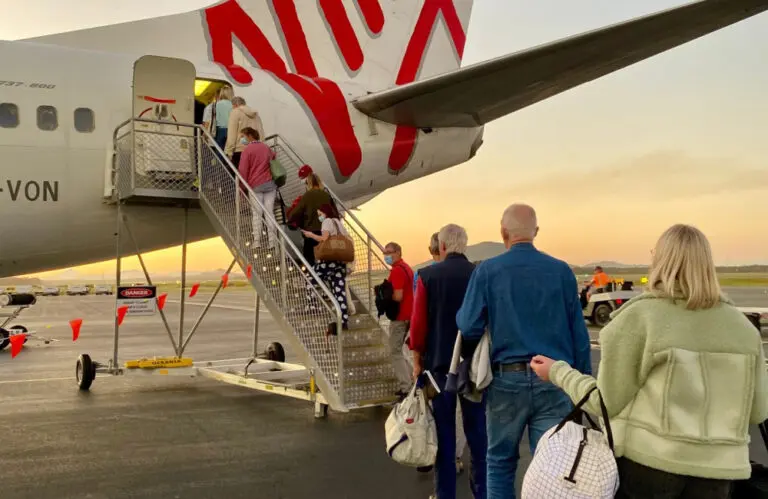





Four airlines, four very different scorecards. Australia’s carriers are climbing, Jetstar is continuing its breakout moment, and Air New Zealand is navigating crosswinds that have nothing to do with demand. Here’s what it all means heading into the second half of 2026.
This week, four carriers that matter most to the Australian and trans-Tasman travel trade handed in their half-year scorecards for the six months to 31 December 2025. Three were strong. One was bumpy. But none of them are quite what the headline numbers suggest on their own.
Clear skies for Qantas and Virgin
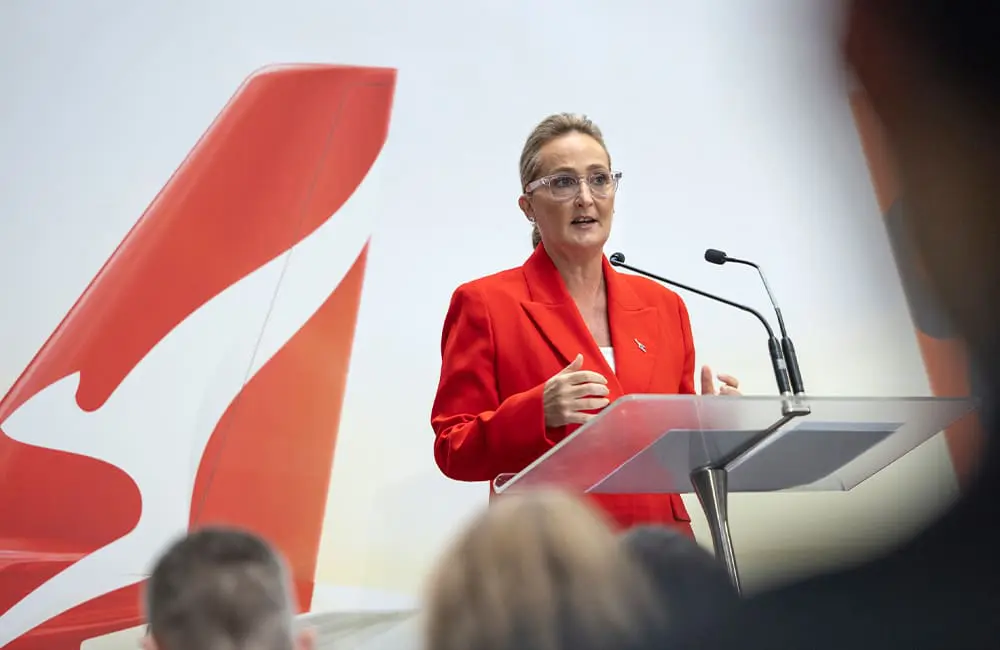
The Qantas Group reported underlying profit before tax of $1.46 billion, up five per cent on the prior corresponding period, powered by its largest fleet renewal in history with 18 aircraft delivered during the half.
Qantas Group CEO Vanessa Hudson said the Group is entering “an exciting new era,” making “significant improvements for our customers and our people.” Given the fleet pipeline, the loyalty overhaul and a little thing called non-stop Sydney to Las Vegas from December, it’s hard to argue.
And yet, the market wasn’t entirely buying it. Qantas shares have fallen around nine per cent in the days following the result, with investors zeroing in on rising international costs and softer economy-class demand on U.S. routes. Turns out even a $1.46 billion profit comes with fine print.

Virgin Australia’s underlying net profit after tax climbed 20.7 per cent to $279 million, with revenue up 9.3 per cent to $3.32 billion. Virgin Australia CEO Dave Emerson, in his first results since taking the top job, was upbeat but honest. “Cost pressures persist across the industry,” he said, “with costs growing above inflation in areas like airport charges and aircraft maintenance.”
Jetstar: the carrier that’s earned its wings

While Jetstar technically reports within the Qantas Group, its half-year results have again earned their own moment. The low-cost carrier says it carried more than 8.5 million domestic passengers and delivered a 38 per cent increase in underlying EBIT (earnings before interest and tax, a measure of operating profit).
Thirty-eight per cent. That’s not a tailwind. That’s an LCC rocket.
The Qantas Group attributes around 60 per cent of that growth to its next-generation A321LR aircraft, which fly further on less fuel and are opening routes that weren’t viable at low-cost fares before.
As such, Jetstar has leaned into Aussies’ “Let’s go to South-East Asia” boom hard, with direct services from Newcastle, the Sunshine Coast and Melbourne Avalon to Bali, plus Perth to Manila and Brisbane to Cebu, and first-ever flights to Sri Lanka coming later this year. The Newcastle service connects through to Singapore via Bali from late March. Add the Gold Coast to Bali direct already in market, and Jetstar’s Australia-Bali network now sits at ten routes.
Air New Zealand: grounded planes, but not grounded ambition

Air New Zealand’s swing to a roughly A$50 million loss (NZ$59 million) is a significant reversal from the AU$121 million profit (NZ$144 million) it posted in the prior corresponding period. But passenger revenue actually grew four per cent to around AU$2.5 billion (NZ$3 billion). The demand is there. The problem is supply.
At various points during the reporting period, up to eight aircraft were grounded because engine manufacturers Pratt & Whitney and Rolls-Royce couldn’t deliver spare engines fast enough. The airline estimates it missed out on roughly AU$76 million (NZ$90 million) in additional earnings, and while it received around AU$46 million (NZ$55 million) in compensation, that only covers part of the gap. It’s a supply-side problem, not a demand one, and that distinction matters.
The battle for loyalty continues
Qantas Loyalty delivered an underlying EBIT of $286 million, up 12 per cent. But the bigger story is the structural shift. Hudson has flagged a major overhaul of the Frequent Flyer program that, for the first time, allows its 18 million or so Frequent Flyer members to earn Status Credits as well as points through everyday spending, not just flying. Equally, Qantas is removing the biggest friction point in status programs: the annual reset that forces members to start from zero.
That’s a huge moment. The path to Gold or Platinum no longer runs exclusively through the departure gate. It’ll run even more now through the supermarket, the fuel station and the credit card.
Meanwhile, Virgin Australia’s Velocity posted underlying EBIT growth of 14.8 per cent to $74 million, with record external billings and a whopping 700,000 new members in six months.
The numbers are strong, but Velocity’s overhaul last year drew sharp criticism from members who felt the new (harder-to-earn) rates and status thresholds went too far. With Qantas now making status easier to reach without flying, the pressure on Virgin to respond just went up another notch.
Cleared for landing: what does the rest of 2026 look like?

Qantas expects domestic unit revenue to grow around 3 per cent in the second half, with international unit revenue growth of 1 to 3 per cent. Jetstar’s network expansion continues to ramp. Virgin Australia’s transformation program is expected to deliver more than $400 million in benefits across the full year.
And then there’s Project Sunrise. Qantas says its first A350-1000 is in final assembly and due for delivery late this year, with non-stop services to New York and London expected in the first half of 2027. If it actually happens on schedule, it would be a defining moment for Australian and global aviation. That’s a meaningful “if”, given the project has missed multiple deadlines. But with the aircraft now under construction, it feels closer to reality than ever.
Across the Tasman, Air New Zealand faces a longer taxi back to the profit runway, but the pieces are moving. The engine issues that weighed on its FY25 result have deepened, but new CEO Nikhil Ravishankar says the airline is on the “road to recovery,” launching a strategic review aimed at “returning the airline to sustained profitability.” Four grounded aircraft are expected to return to service through 2026.
Four airlines. Four different stories. But for anyone selling travel right now, there’s plenty of upside at cruising altitude.
KARRYON UNPACKS: Qantas, Jetstar and Virgin Australia are well-positioned on capacity, new routes and loyalty value through 2026. Jetstar’s regional push into Southeast Asia is creating more bookable products than existed a year ago. Air New Zealand’s challenges appear temporary, and revenue growth confirms trans-Tasman demand is alive and well.