



Dubai is ready to welcome Aussies back, but the city believes a full recovery will depend less on its own preparedness than on when Australia’s official travel advice is downgraded from its current level three warning (“Reconsider your need to travel”).
Speaking to Australian media (including Karryon) in Sydney last week, Dubai Department of Economy and Tourism Regional Director for Asia-Pacific Shahab Shayan said the destination was now open for both stopovers and longer stays, but acknowledged Australian visitation was unlikely to return to its 2025 levels for some time.
“I think by the end of the year [2026] would be a stretch,” Shayan said of a full tourism recovery.
“We can manage our own criteria and infrastructure and [readiness] of welcoming tourists, but if the travel advisories don’t shift, that doesn’t allow us to bring back more tourists.
“It all depends on what we see from the travel advisories… I say 12 months from now would be a good place to start off.”
The comments reveal the devastation this year’s US-Iran conflict has caused Dubai tourism, given that the emirate entered 2026 from a position of relative robustness.
According to Shayan, Dubai welcomed a record 19.6 million overnight visitors in 2025, including 330,000 Australians – an eight per cent increase year-on-year.
Momentum continued into the start of 2026, with global visitation rising eight per cent in January and nine per cent in February before regional tensions disrupted travel.
“Dubai really ended 2025 in a huge success, and started 2026 in a big success as well. So until March… everything was not just going according to plan, but even exceeding [it],” Shayan remarked.
Flights returning
Of course, air capacity to the region is key to Dubai’s comeback as a destination.
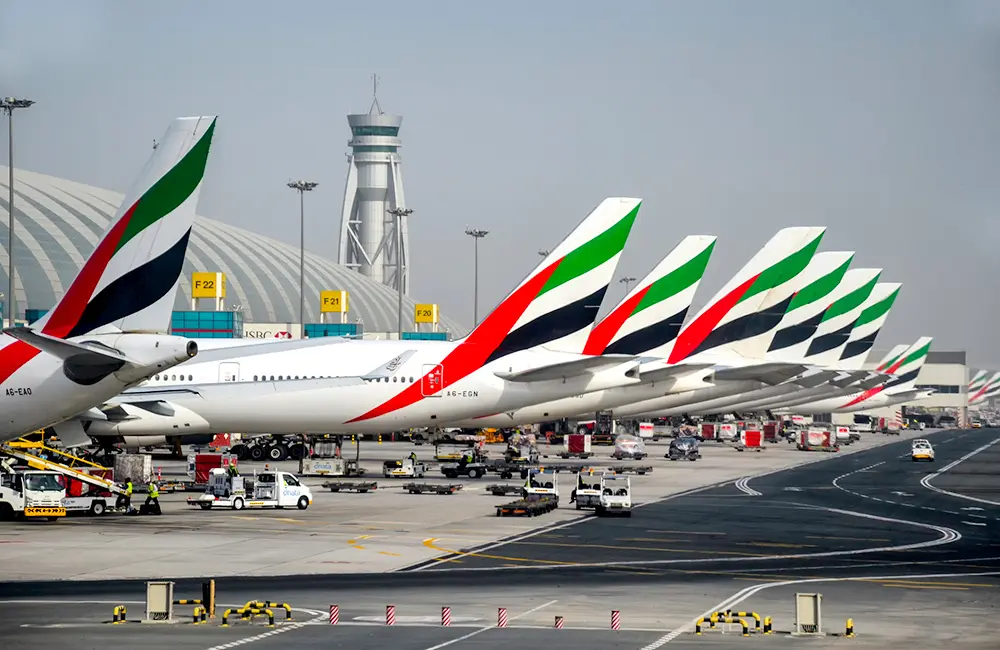
Flag carrier Emirates has already recovered around 96 per cent of its Australian seats, with only a small number of services still to return.
“So Emirates… they’re about 90% back in the region – New Zealand is 100% back, Australia is about 96%. I think we’re missing one flight from each gateway, which will naturally start coming back in the next few weeks,” Shayan said.
But while airline capacity is steadily returning, Shayan still believes the biggest catalyst for recovery remains Australia’s travel advice level.
“The agenda for Dubai is clear: for us, it’s about positioning ourselves well, communicating proactively, and showcasing why Dubai is ready,” he said.
“Obviously, we don’t have an influence on how the Australian government looks at it. Our job is to showcase what Dubai is really like.”
The Gulf state has already developed a suite of recovery campaigns specifically for Australia, but many remain on hold until the Department of Foreign Affairs and Trade (DFAT) lowers its advice.
“For the Australian market, we have an incentive in place with Emirates that’s looking at how they book through their DEX [Emirates Dubai Stopover Experience] program. So, that’s transiting and stopping over in Dubai,” Shayan stated.
“That’s going to be rolled out as soon as the travel advisory again gets lowered.”
Dubai also has broader trade and consumer campaigns ready to launch.
“It starts in a softer tone… and as the travel advisory shifts… we would then switch the messaging to a more tactical and executional messaging of welcoming you back to Dubai.”
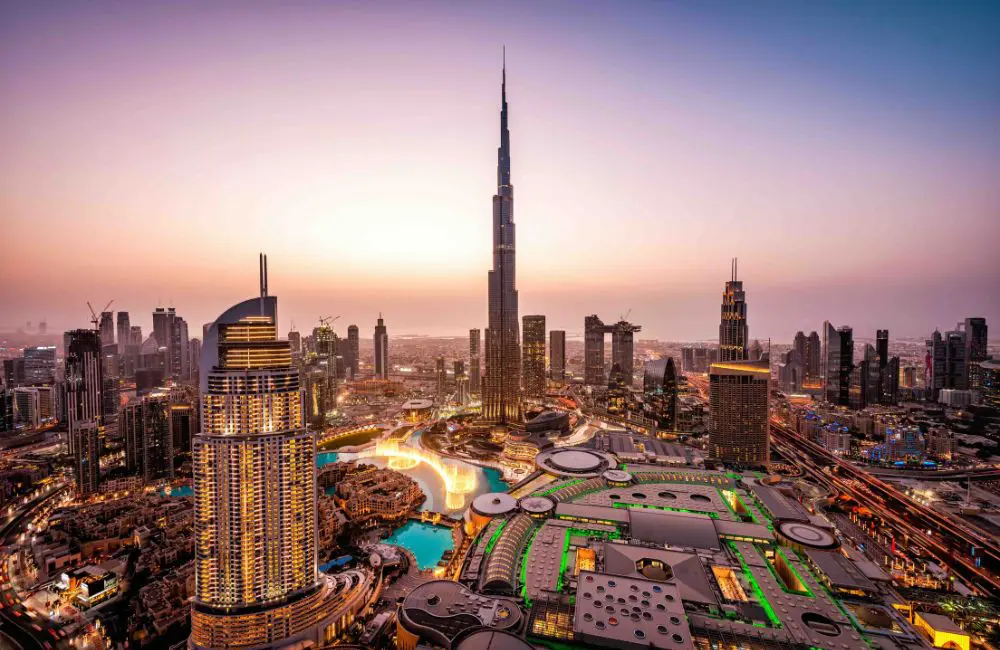
Dubai and Emirates will continue promoting complimentary hotel stays for eligible passengers, while Dubai Tourism is also preparing its own global stopover campaign targeting Australians.
“We’re still committed to that,” Shayan said. “We have a big stopover program that we’re running by ourselves… Australia obviously being involved – it’s our big stopover market.”
“But there’s no point for us to push that out until we know that the Australians are ready to come back.”
The stopover messaging is designed to show Aussies they can experience Dubai in as little as 24 to 72 hours, from Downtown Dubai and Dubai Mall to the heritage precinct of Al Fahidi and the city’s famous souks.
Australians, however, are increasingly staying much longer.
Shayan said average stays have grown from around three nights several years ago to four or five nights today, with many visitors remaining for up to two weeks.
“So [it has] become not just a stopover destination, but a point-to-point for Australians, and we’re very proud of that,” he added.
He believes Australian travellers are also among Dubai’s most resilient.
“If I look at it from a regional perspective, Australian travellers are much more resilient.”
“What we’ve seen is a lot of people still holding onto the bookings that they made earlier, so just changing dates to make sure that they arrive.”
He also pointed to attractive hotel pricing during Australia’s peak holiday period, which coincides with Dubai’s quieter season.
“Australia is such a unique market; the peak traffic of Australia, which happens during the European summer, is the time where Dubai actually slows down, and the rates of the hotels that are five stars, which are usually $1,000 a night, go down to $500, $450 sometimes,” he explained.
Advisors essential
Looking ahead, Shayan believes travel advisors will play an essential role in rebuilding confidence.
“For us, it’s a crucial role, especially during these situations,” he said.
“We’ve done webinars two weeks ago; we’re doing another webinar next week. We want to make sure that people understand what is happening… but also to give them the facts.
“They play a crucial part, especially [in] a market [like] Australia, where there’s a big impact from the travel trade side to the consumer.”
For Shayan, Dubai‘s recovery is ultimately not about rebuilding from scratch, but switching on plans that are already waiting.
“We’re more than prepared – we have a line of activities waiting and campaigns waiting to be rolled out, it’s just a matter of time.”
KARRYON UNPACKS: Dubai’s challenge isn’t convincing Australians the destination is ready. It’s waiting for travel advice to catch up. Once that happens, expect airlines, agents and tourism operators to move quickly, with campaigns already primed to reignite demand.