



The UAE has removed all temporary airspace and airport restrictions imposed during the Iran conflict, clearing the way for Emirates, flydubai and Etihad to return to full schedules after two months of disruption.
The all-clear came on Saturday, when the UAE’s General Civil Aviation Authority (GCAA) confirmed all temporary limits on airspace and airport operations had been removed following a safety review.
The decision allows the UAE’s three flag carriers to confidently move towards restoring their network schedules for the first time since early March.
Emirates had been operating to about 80 per cent of its normal schedule, the regulator said, while flydubai had been running at roughly half capacity. Etihad Airways was also caught by the same restrictions, with daily flight numbers capped as carriers were funnelled into a narrower set of corridors.
The limits were imposed after regional airspace closures during military action involving the U.S, Israel and Iran, which included Iranian drone and missile attacks targeting parts of the Gulf and the UAE itself. Slot availability across the region tightened sharply, particularly on the high-volume Australia-to-Europe corridor that runs through Dubai and Abu Dhabi.
Australia rebuilds first
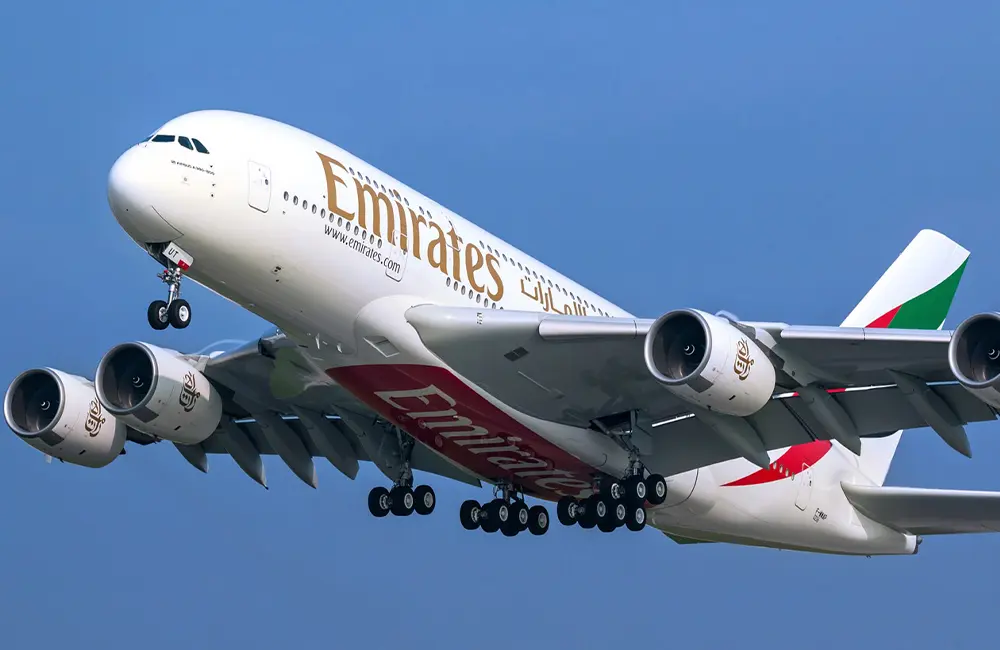
Emirates moved first on the Australian network. From 1 May, the airline restored Brisbane services, doubled Melbourne to two daily A380 rotations, and resumed Sydney’s nonstop A380. Adelaide and Perth also stepped back up, although Emirates is still running at about 77 per cent of its originally planned schedule on the interim timetable to 15 May.
Etihad has rebuilt to around 92 daily flights from Zayed International Airport in Abu Dhabi, serving roughly 80 destinations after dropping to about 40 daily flights at the height of the conflict in early March.
European connections get the lion’s share of the returning capacity
The most significant restorations land on the routes Australians actually use to reach Europe.
Under Emirates’ interim May schedule, Paris Charles de Gaulle increases to 21 weekly from 17, Rome Fiumicino moves from 10 to 14 weekly, and Madrid expands to 14 weekly, with the A380 service returning.
London Heathrow lifts to six daily A380 services from five, Manchester grows to 21 weekly with A380s on two daily rotations, Frankfurt restores its A380, and Munich doubles to two daily 777-300ER services.
That is a sharp swing in a fortnight. Passengers booked to travel between 28 February and 31 May can still rebook free of charge on an alternative Emirates flight up to 15 June, or request a full refund.
Etihad has matched the policy from 16 May, with rebooking valid through to 15 June.
Sir Tim Clark’s rebound call gets its runway

As we reported last week, Emirates president Sir Tim Clark was confident that travellers would return to the Gulf quickly once restrictions eased.
“People have short memories,” Clark said, backing a swift Iran rebound and pointing to the airline’s experience through previous regional shocks.
Speaking at the CAPA Airline Leader Summit in Berlin, Clark predicted full operational recovery within one to two months of the Strait of Hormuz reopening and made a bold financial call, saying, “We will be the most profitable airline of the year, as you will hear soon.”
Saturday’s announcement gives that prediction its first real test. With Emirates rebuilding aggressively on its European program and Etihad already operating across roughly 80 destinations from Abu Dhabi, the question is how fast Australian forward bookings to London, Paris, Rome and Frankfurt rebuild over the next month.
Over in Doha, the picture is still more measured. Qatar Airways is continuing to fly through QCAA-authorised corridors that cap daily departures, with its full international network of more than 150 destinations not scheduled to return until 16 June.
On its website, the airline says its latest revised schedule aims to increase flights to and from Doha to “more than 120 destinations by mid-May 2026 across Qatar Airways’ global network”.
KARRYON UNPACKS: Sir Tim Clark’s “people have short memories” bet is now in front of the data. The faster Middle Eastern carriers restore connectivity via European hubs, the easier it will be to win back Australia-to-Europe traffic that quietly rerouted via Singapore, Istanbul, Hong Kong and even the U.S. over the past two months.