



Sydney to Newcastle high-speed rail has been greenlit for a $659.6 million design development phase from 2026, targeting one-hour journeys and just 30 minutes to the Central Coast.
Australia’s long-awaited Sydney to Newcastle high-speed rail project has taken a major step forward with the Federal Government approving a $659.6 million, two-year development phase to begin in 2026.
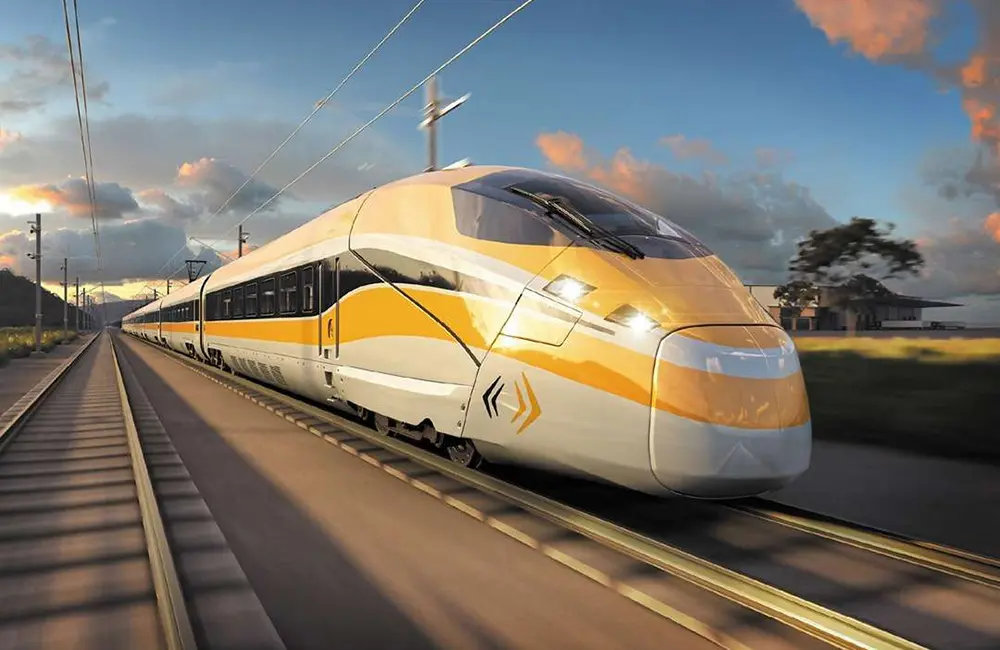
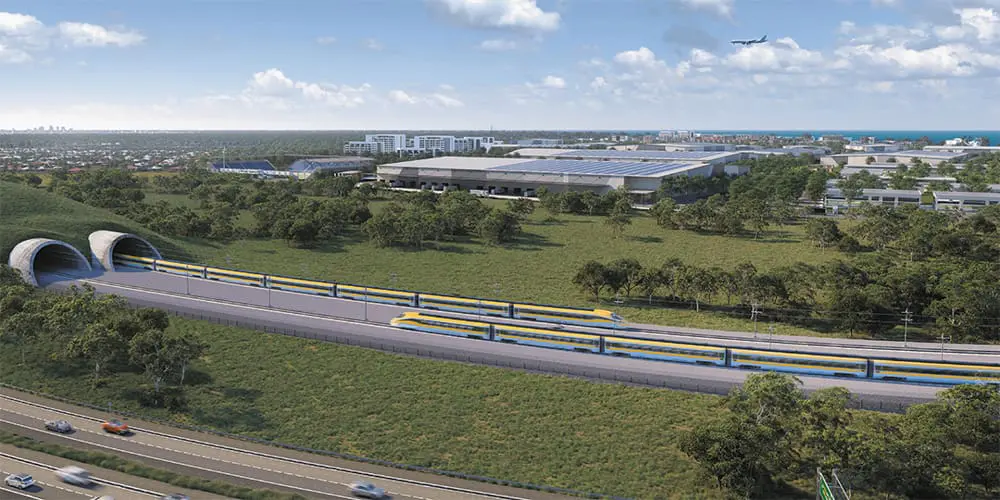
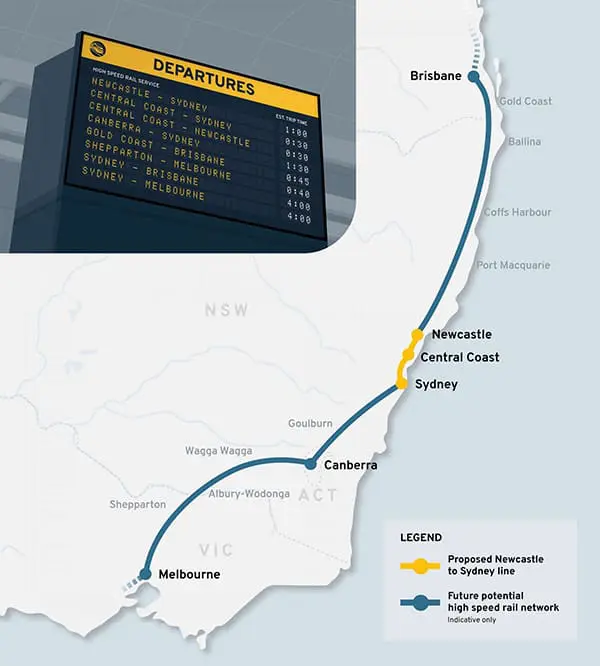
The funding will lay the detailed design groundwork for a 140km corridor linking Newcastle, Central Coast and Sydney with trains capable of speeds up to 320km/h.
Under the proposed Sydney to Newcastle high-speed rail plan, travel times would be cut to just one hour between Newcastle Broadmeadow and Sydney Central and 30 minutes between Gosford and Sydney.
Infrastructure & Transport Minister Catherine King said the overall $55 billion project will boost the economy by $250 billion over the next 50 years and produce more than 99,000 new jobs, including roles linked to tourism.
“High-speed rail between Newcastle and Sydney will change the way people live, work and travel in our country’s most populous region. It will connect the Newcastle and Central Coast communities to Sydney in a way that has never been done before,” she said.
The long-term vision is for a 1,800km high-speed rail corridor connecting Brisbane to Melbourne.
King told ABC Radio that the government hopes to start construction in 2029, noting that Australia is the only high-income country without high-speed rail as new projects in the US and Japan are already underway.
“You’re seeing it in every other developed country. Most countries are investing in it as well. We think it’s time that Australia does have high-speed rail. We want to see it happen. It won’t be built in the short term. It’s going to be a really long-term project, but we want to see it started,” she said.
For travel advisors and tourism operators, Sydney to Newcastle high-speed rail could be transformative. A one-hour connection between Sydney and Newcastle would effectively reposition the Hunter region and Central Coast as viable day-trip or short-break markets for both domestic and international visitors.
Improved rail access may also unlock new packaging opportunities, encouraging multi-centre itineraries that combine Sydney city stays with coastal or regional NSW experiences. Faster, more reliable transport between major hubs can stimulate dispersal, extend length of stay and support regional tourism growth.
Find out more at hsra.gov.au