



The first flight from the United Arab Emirates (UAE) to Australia since airspace closures began last weekend has departed Dubai, as the Australian government confronts the largest consular crisis in DFAT’s history.
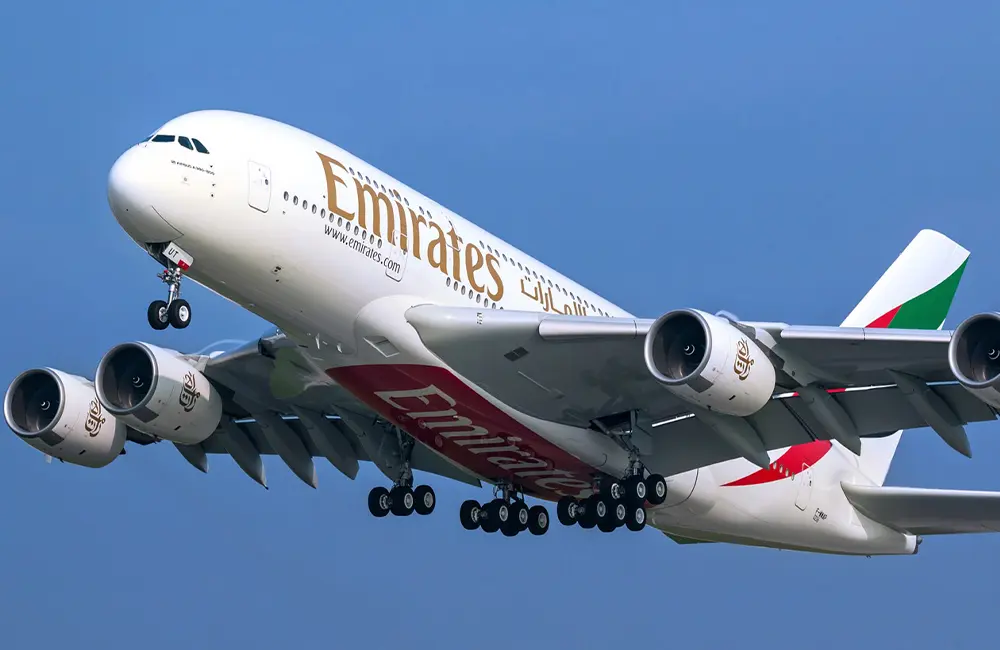
Emirates flight EK414, an Airbus A380 carrying around 600 Aussies from Dubai to Sydney, is in the air.
It is the first service to depart the UAE for Australia since airspace closures triggered by US-Israeli strikes on Iran grounded commercial aviation across the region.
After taking off from Dubai International Airport at 2.30 am local time, the flight is due to land in Sydney at around 10.30 pm local time.
At the time of writing, than 39,000 people were tracking it on FlightRadar24, making it the most-watched plane in the world.
Foreign Minister Penny Wong told ABC’s AM earlier that the Dubai-to-Sydney service would only depart if conditions were safe. “But obviously that is dependent on the circumstances,” she said at the time.
The first departure is an initial step to solving what Wong described as the largest consular operation the department has ever faced. Up to 115,000 Australians are still stuck across the Middle East, with DFAT estimating more than 11,000 Australians move through the region on any given day.
What are the options for getting stranded Australians home?
Wong told the ABC the government is examining “all contingencies,” but the options are narrowing as the conflict widens. Overland corridors from the UAE and Qatar through to Riyadh or Muscat have been floated, but Wong was blunt about the risks.
“I’d make the point that there have been attacks on Saudi Arabia. It is one of the 10 countries Iran has now attacked in the region. This is a much broader spread of conflict in the Middle East than we have seen,” she said.
The maths on charter flights is just as sobering. With six figures worth of Australians scattered across multiple countries, Wong indicated commercial aviation remains the only mechanism that could move people at the scale required.
“Given the number of people in the region, people will get home most quickly if we can facilitate people getting on commercial flights,” she said. Opposition senators have pushed for military aircraft, but Wong noted that it is not viable while regional airspace remains closed.
How bad is the flight situation out of the UAE?
Limited services resumed from the UAE early this week, but the word “limited” is doing heavy lifting. According to CNBC reporting, more than 80 per cent of flights to and from Dubai were still cancelled as of Tuesday.
Abu Dhabi fared slightly better, but more than half of the scheduled services remained grounded. Emirates had its first post-closure departure take off on Sunday evening, flight EK500 to Mumbai, while Etihad said commercial operations would stay suspended until at least Wednesday local time. The airline indicated some repositioning and repatriation flights could operate, subject to safety clearances.
Across the wider region, more than 11,000 flights have been scrapped since Saturday, according to Al Jazeera. Dubai International Airport, one of the busiest hubs on the planet, took a direct hit when a missile struck one of its concourses on Sunday. That alone tells you how far from normal operations remain.
Where does Smartraveller advice sit now?
Smartraveller rewrote the map on 1 March. The UAE, Qatar, Kuwait and Bahrain were all elevated to “Do Not Travel,” joining the existing advisory for Iran, Iraq, Israel, Palestine, Syria, Lebanon and Yemen. Jordan, Saudi Arabia, and Oman are listed as “Reconsider Your Need to Travel.” DFAT’s Crisis Centre is active and urging Australians in the region to register their presence.
On the military front, Defence Minister Richard Marles confirmed Australia is not involved in the current US and Israeli operations, according to SBS News. All Australian personnel stationed at the Al Minhad air base in the UAE were accounted for after it was struck by a drone during Iran’s retaliatory wave, with no injuries reported, InDaily confirmed.
Are other countries already bringing their citizens home?
Some are. The UK, with an estimated 300,000 nationals stranded, has begun organised repatriation flights and is exploring overland routes through Saudi Arabia as a fallback.
India has reactivated Operation Sindhu, its established evacuation framework, deploying Air India widebody aircraft to Gulf hubs. With more than eight million Indian nationals across the region, New Delhi is operating at a scale no other government is matching.
The Philippines, home to 2.4 million workers in the Middle East, has flagged repatriation flights but only once airspace conditions allow.
Australia’s approach, of holding commercial aviation for now, sits closer to the US position. Washington has told its citizens to leave on commercial flights but has not announced government-organised evacuations either.
What about travel insurance?
This is the question travel advisors will be fielding most in the days ahead, and the short answer is uncomfortable. As Karryon has previously reported, standard Australian travel insurance policies explicitly exclude claims arising from war, acts of war, rebellion, revolution or military conflict, whether formally declared or not.
Travellers who were mid-trip when the conflict escalated may have limited cover under “travel delay” provisions, but if an insurer determines the disruption is war-related, claims can still be denied.
Travelling against a “Do Not Travel” advisory can void a policy entirely. The advice to clients: read the Product Disclosure Statement and contact your insurer directly.
What should travel advisors be telling clients right now?
The advice to stranded travellers has been consistent: hold your booking. Flights are being rescheduled at short notice, and a confirmed reservation puts travellers in the queue when services resume.
Qatar Airways has opened refund and rebooking options for passengers with confirmed travel between 28 February and 10 March. Any Australian services routing through Doha, including those operated by Qatar Airways on behalf of other carriers, remain heavily disrupted.
For advisors fielding calls from worried clients, the uncomfortable truth is that patience is the only real strategy. Commercial routes will reopen before any government evacuation could make a meaningful dent in a stranded population this large.
Wong has been careful not to overpromise, and advisors should take the same approach: factual, calm, and across the details as it shifts.
For the latest updates on airline operations and DFAT advice, Karryon’s rolling Middle East coverage is here.
KARRYON UNPACKS: This is the biggest test of the advisor-client relationship that many in the trade will face. With 115,000 Australians waiting for the reopening of airspace, the government has made clear that commercial flights are the path home, not charters or military lifts. Advisors who stay across airline waiver policies, Smartraveller updates and rebooking windows in real time are the ones whose phones will keep ringing long after this is over.