




The Australian Government has increased its travel warning level for Cambodia as clashes at the country’s border with Thailand continue to rage.
According to the Department of Foreign Affairs and Trade’s (DFAT) Smartraveller website, the federal government has upped its overall travel advice from “Exercise normal safety precautions” – its lowest level – to “Exercise a high degree of caution… due to ongoing conflict and its security risks”.
“The security situation remains unpredictable,” it states on Smartraveller.
“We continue to advise do not travel to areas within 50 kilometres of the Cambodia-Thailand border and reconsider your need to travel within an additional 30 kilometres of that border (and all of Battambang city) due to ongoing armed clashes including military strikes and violence, and the presence of landmines and unexploded ordinance.”
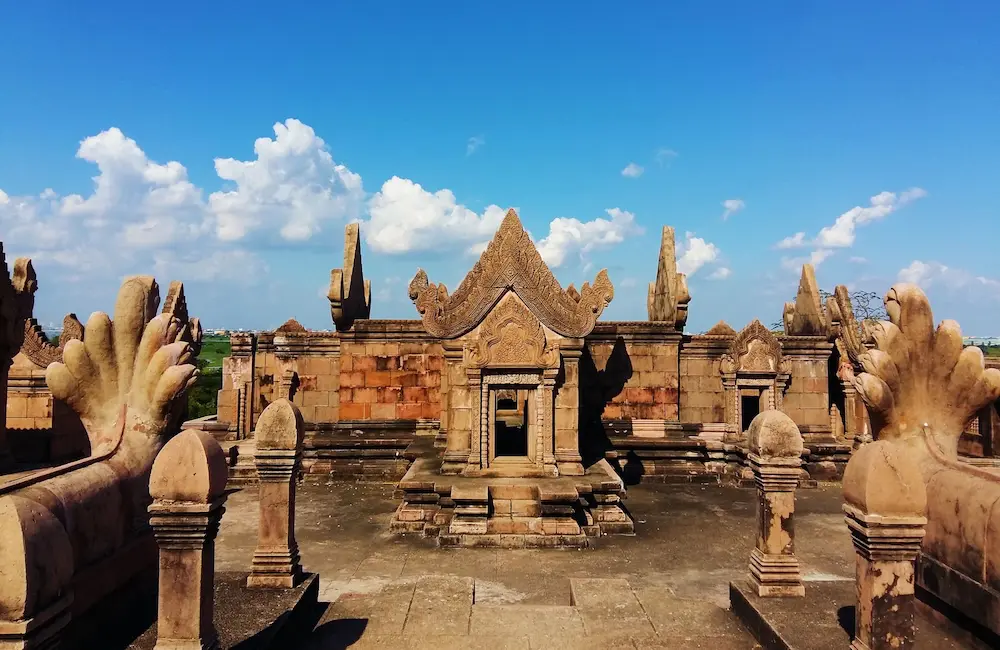
The two countries’ border dispute dates back over a century to French colonial-era maps and has flared up repeatedly, fuelled by ongoing nationalist tensions, The Guardian reported.
The latest round of conflict has also seen the closure of land border crossings between Cambodia and Thailand.
“Follow the instructions of local authorities and pay close attention to your personal security,” DFAT says.
The affected region in Cambodia is located approximately 100 kilometres from the tourist hotspot of Siem Reap, a gateway to the popular UNESCO World Heritage site of Angkor Wat.
Impact on bookings
Despite the heightened tensions denting overall bookings, a leading Cambodian hotel, Jaya House River Park, is hopeful for a rebound in business.
According to General Manager Christian De Boer, while the property has seen a “slowdown” in bookings and “rise in last-minute cancellations or requests to push travel dates back”, there’s still significant interest in the area.
“It’s less about people writing Cambodia off entirely and more about them choosing to wait until things feel calmer and clearer,” he tells Karryon.
“From Australia, we’re seeing more caution rather than outright cancellations.”

However, that caution is still having “a real impact on tourism businesses”.
“Long-haul markets are more sensitive because the time, financial and emotional investment is higher. Europe and Australia both fall into that category,” says De Boer, who is also a United Nations advisor.
“Australians generally want their holidays to feel straightforward and stress-free and any suggestion of instability makes them think twice, even if it’s not directly impacting Siem Reap.”
Thailand tension
While Thailand’s overall travel warning level remains at level two – Exercise a high degree of caution – the department reminds Aussies to stay away from the areas of hottest contention.
“We advise do not travel to areas within 50 kilometres of the Thailand-Cambodia land border in the provinces of Sa Kaeo, Buriram, Si Saket, Surin, Ubon Ratchathani, Chanthaburi and mainland Trat… due to ongoing armed clashes between Thai and Cambodian forces, which has included military strikes, violence and the presence of landmines,” the government states.
“Follow the advice of local authorities, monitor local media for updates and pay close attention to your personal security.”
Elsewhere, DFAT warns Aussies of “an ongoing risk of terrorism” in Thailand.
“Popular tourist areas, including Bangkok and Phuket, may be the target of terrorist attacks,” it says.
“We continue to advise reconsider your need to travel [level three] to Yala, Pattani and Narathiwat provinces.”
According to the Australian Bureau of Statistics’ (ABS) latest outbound travel data, for October 2025, Thailand saw a dip in Aussie visitor numbers – from 54890 in 2024 to 52,460 last year, which is just below October 2019 figures. This is in contrast to large upticks for other Asian destinations, such as Japan, Vietnam, Singapore and China.