



Major airlines have grounded flights into and out of key Gulf hubs after the United States and Israel launched military strikes on Iran and Tehran retaliated with a wave of attacks across the Middle East. Karryon’s rolling update reports on the latest travel impacts.
SUNDAY 1 MARCH: 1700 AEST
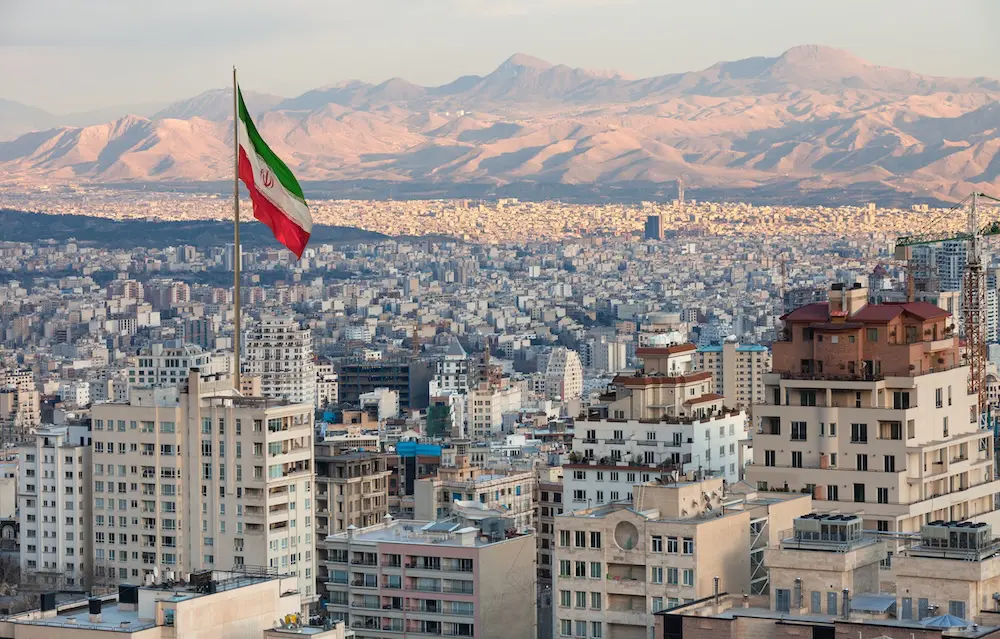
Following the new outbreak of hostilities, the Australian Government immediately issued fresh advice for travel to large parts of the Middle East, upping its travel alerts to several countries in the region to the highest level (four): “Do not travel”.
Among the nations now considered no-go zones are the UAE (Including Dubai and Abu Dhabi), Qatar, Bahrain, Lebanon, Kuwait, and Israel, joining Iran, Syria and Yemen.
“Due to the volatile security situation in the region and military strikes in the United Arab Emirates (UAE), we’ve raised our level of advice for the UAE to do not travel,” DFAT states in its advice for the UAE on the Smartraveller website.
“Retaliatory strikes are occurring following military strikes on Iran. Military conflict in the region may result in widespread movement restrictions, airspace closures, flight cancellations and other travel disruptions.”
Similar advice has been issued for most of the countries in the region.
“Australian officials and dependants are sheltering in place during strikes. Prioritise your safety, monitor events and follow local advice, including instructions to shelter in place,” it adds.
Elsewhere, DFAT has raised its advice for Jordan to level three, recommending that Aussies “reconsider your need to travel.”
Egypt, Oman and Saudi Arabia, meanwhile, remain at “Exercise a high degree of caution” (level two).
Earlier this week, the Australian Government raised the threat levels across five countries in the Middle East, foreshadowing the latest alerts.
When will airspace reopen in the Middle East?
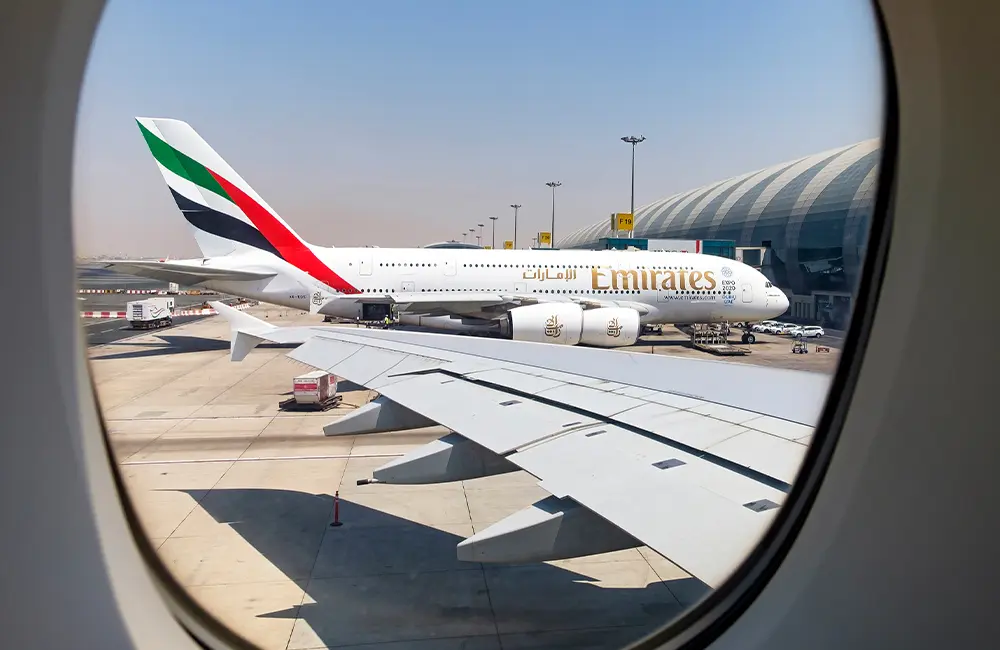
The situation remains dangerous and volatile, and timelines are shifting. Gulf airlines are targeting a cautious restart of operations after more than 24 hours of a near-total shutdown across the region.
At time of writing:
- Dubai Airports confirmed that all flight operations at Dubai International (DXB) and Dubai World Central – Al Maktoum International (DWC) are suspended until further notice.
- Emirates aims to resume flights from 3PM local time (11PM AEST, Sunday 1 March), though the airline warned further changes may occur at short notice.
- Etihad has set a 2AM Abu Dhabi time on Monday restart (9AM AEST, Monday 2 March).
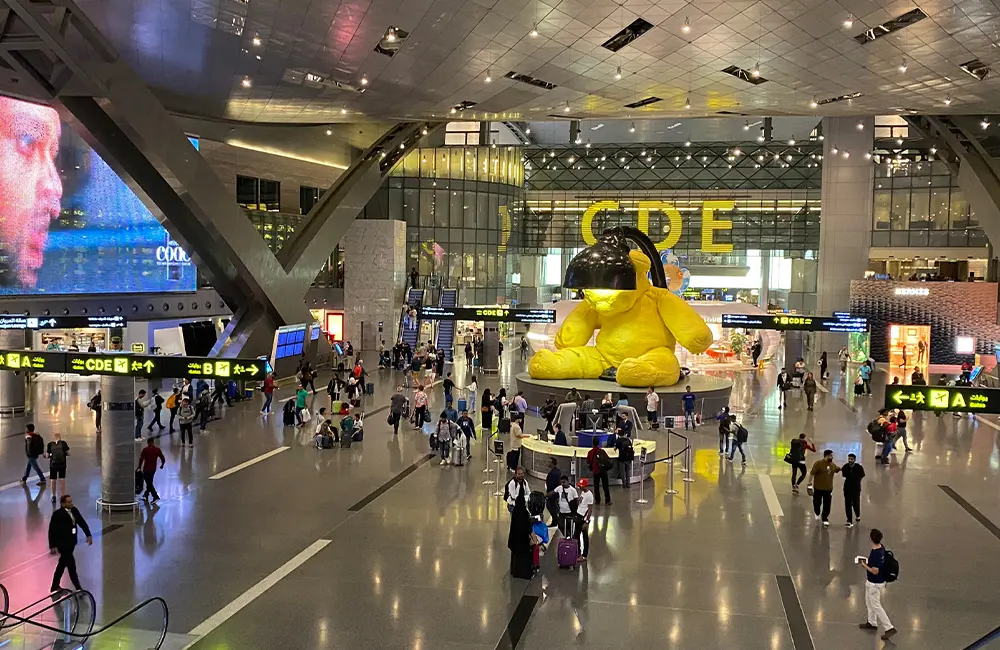
- Hamad International Airport in Doha, Qatar, has confirmed that all aircraft movements have been suspended due to the temporary closure of the Qatari airspace.
- Qatar Airways has postponed its planned 7PM Doha restart today and says the next operational update will come at 9AM Doha time, Monday, 2 March (4PM AEST).
All three carriers have stressed that these timelines depend on airspace remaining open.
UAE authorities confirmed that Dubai International Airport, the world’s busiest for international passengers, was struck during Iran’s retaliatory attacks. One concourse sustained what the airport operator described as “minor damage in an incident, which was quickly contained.” Four airport workers were injured.
Separately, drone debris caused a minor fire on the outer facade of the Burj Al Arab hotel, and a drone struck the Fairmont The Palm hotel on Palm Jumeirah, sparking a fire that injured four people before being brought under control.
How many travellers are stranded?
The numbers have climbed sharply since Saturday morning. More than 2,300 flights were cancelled across the region on Saturday alone, with a further 716 scrapped on Sunday. Global delays have topped 18,000.
An estimated 150,000 to 200,000 passengers globally were stranded or diverted in the first 24 hours, with thousands sleeping in terminals at Dubai, Abu Dhabi and Doha as hotel rooms near airports ran out.
The chaos also hit Australian airports within hours. Four Qatar Airways flights operating for Virgin Australia, departing Sydney, Brisbane, Melbourne and Perth for Doha, were forced to turn back mid-flight on Saturday night when Qatar’s airspace was shut down, the ABC reported. A total of 7 flights on the route were cancelled.
Across Sydney, Melbourne and Brisbane, 65 flights were cancelled, and more than 600 were delayed. Passengers at all three airports described long queues snaking through departure halls, with some forced to sleep in terminal seating overnight after late cancellations left nearby hotels booked out.
What is the Australian Government saying?
Foreign Minister Penny Wong warned of “difficult, difficult days ahead” for Australians caught up in the crisis. Speaking in Adelaide on Sunday, Wong said airspace closures are likely to limit the federal government’s ability to organise repatriation flights for stranded Australians. She could not confirm how many Australians are currently in the affected region.
The government opened a crisis register on Sunday morning for Australians in Iran and Israel seeking to leave, alongside a crisis communications line. Wong urged all Australians in those countries to register immediately.
What should Australian travellers do now?

Australian Travel Industry Association (ATIA) CEO Dean Long’s advice from earlier today holds: “Do not cancel arrangements without first seeking professional advice. Sitting still, waiting for the airline and the agency to contact you to support you through that moment is the most important aspect,” he said.
If you are not travelling within 48 hours, hold off calling your advisor so they can prioritise passengers who are stranded right now.
Emirates is offering rebooking up to 10 days out or a full refund for those who booked directly. Qatar Airways and Etihad have similar short-term flexibility in place, though the detail varies by fare class.
For travellers currently stranded in the Gulf, be aware that Gulf-based carriers have no legal obligation to provide hotels, meals or transfers. Unlike EU or UK carriers covered by EU261 passenger protection rules, any assistance from Emirates, Qatar Airways or Etihad is discretionary.
If you are stuck at a Gulf airport, document all expenses and keep receipts, but do not assume these costs will be reimbursed by the airline or your insurer. For a full breakdown of what your travel insurance does and does not cover, read our insurance explainer here.
Check Smartraveller’s Middle East conflict page for the latest DFAT advisories. If you are an Australian in Iran or Israel, register with the government’s crisis portal immediately.
The ACCC’s flight cancellation rights page outlines your consumer guarantee entitlements if your airline cancels your flight.
SUNDAY 1 MARCH: 0800 AEST
Following the two-way strikes, at least eight Middle Eastern nations – including Iran, Israel, Qatar and the United Arab Emirates – closed their airspace, Al Jazeera reported.
According to CNN, explosions from retaliatory attacks have been heard across the Gulf region, including in the UAE, Qatar, Jordan and Bahrain, all of which host US military bases.
Airline updates
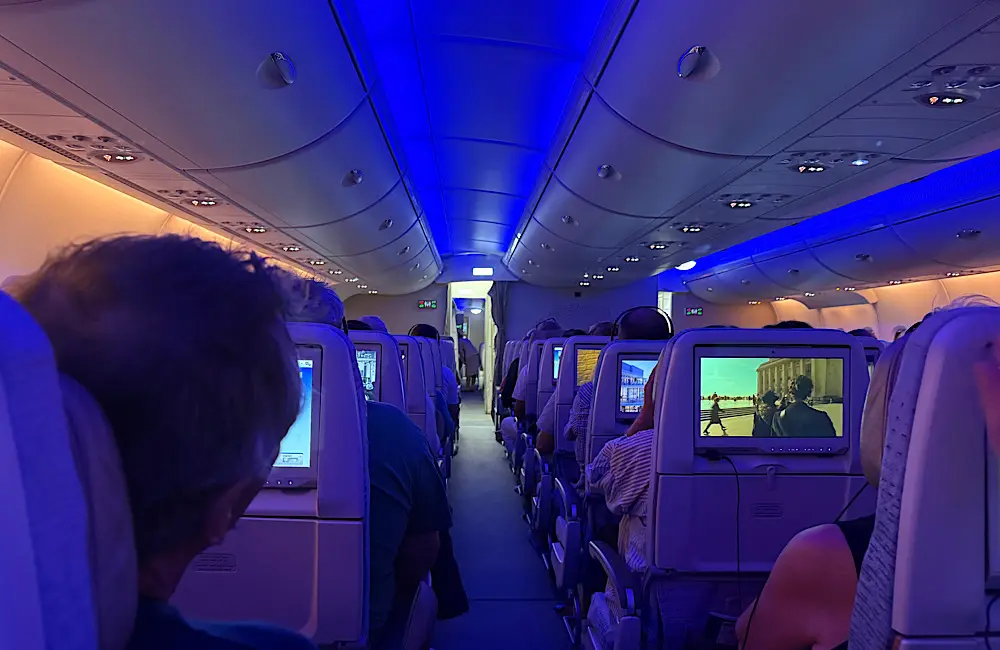
Emirates: With explosions heard on the beaches of Dubai, Emirates said it has “temporarily suspended operations” to and from its home base.
“Due to multiple regional airspace closures, Emirates has temporarily suspended operations to and from Dubai,” it stated in an update late Saturday.
“Emirates urges customers to check their flight status on emirates.com for the latest updates before proceeding to the airport.
“We are assisting them with rebooking, refunds, or alternative travel arrangements.”
Qatar Airways: With the closure of Qatari airspace, Qatar Airways has confirmed the “temporary suspension” of flights to and from Doha.
“The airline is working closely with government stakeholders and the relevant authorities to support impacted passengers and will resume operations when the airspace re-opens,” it added.
Even when flights resume, the carrier expects “delays to our flight schedule”.
“We have also deployed additional ground staff at Hamad International Airport and other key airports to assist affected passengers,” it noted.
Virgin Australia: Following the attacks, the carrier issued an alert stating that its flights between Australia and Doha (operated by Qatar Airways) have been impacted by the closure of Qatari airspace.
“Guests scheduled to travel between Australia and Doha in the coming days are advised to closely monitor their flight information,” it noted.
Etihad Airways: With regional airspace closures, Etihad Airways said it is “experiencing disruption to some of its flight services to and from Abu Dhabi”.
“Some flights have been cancelled and others are subject to delay,” it stated.
“This remains a highly dynamic situation and further changes may occur at short notice.”
The airline said that it would only fly in approved airspace “when it is safe to do so”.
It is also making special provisions for impacted customers.
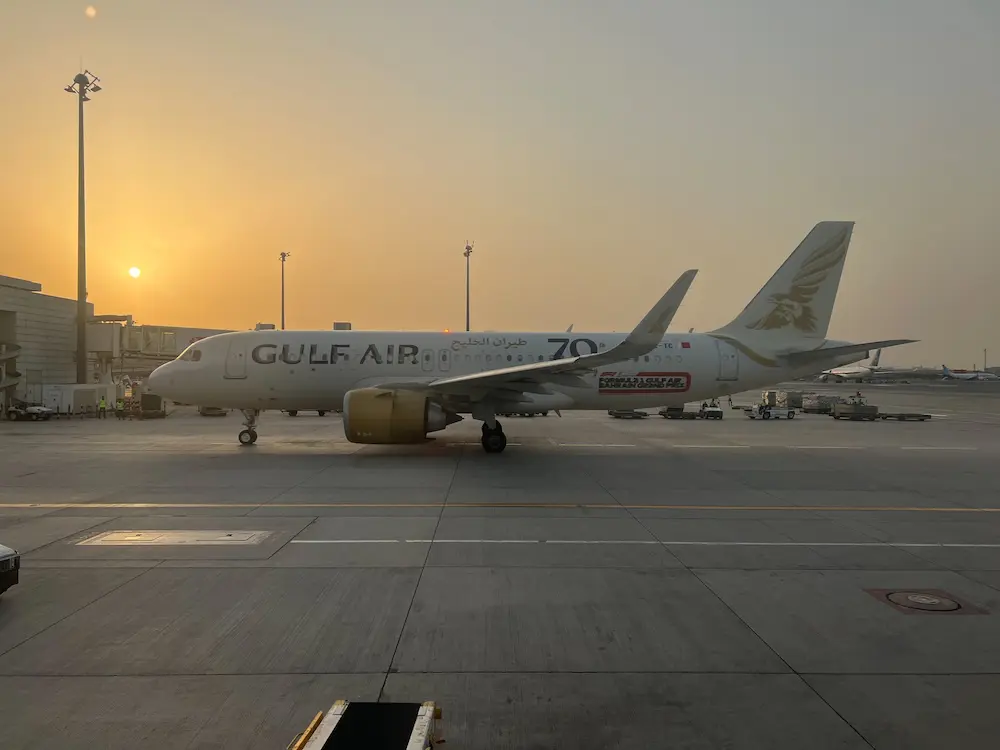
Gulf Air: Explosions have been heard and smoke has been seen in Bahrain. Its national carrier said it is “experiencing disruption” to flights in the capital, Manama.
“Some flights are subject to delay,” it stated.
“This remains a highly dynamic situation and further changes may occur at short notice.”
Royal Jordanian: With explosions and missile interceptions reported in Jordan, many Royal Jordanian flights have been cancelled.
But the carrier stated that “RJ operations will proceed normally as long as Jordanian airspace remains open”.
Oman Air: The Oneworld member airline said on X that flights to/from Amman (AMM), Khasab (KHS) and Moscow (SVO) are cancelled until further notice “due to the evolving regional situation”.
“Flights to/from Dubai (DXB), Bahrain (BAH), Doha (DOH), Dammam (DMM) and Kuwait (KWI) are temporarily suspended,” it added.
KARRYON UNPACKS: Gulf skies have shut down fast, with Emirates and Qatar among those grounding hubs, while DFAT has lifted multiple nations to “Do not travel”. For Australian travel advisors, this is crisis management territory – rebookings, risk conversations and heightened duty of care now front and centre.