



More Australians than ever are travelling overseas but closer to home. However, while shorter-haul travel has its perks – affordability, similar time zones, less environmental impact and just awesome places to visit – is it also riskier?
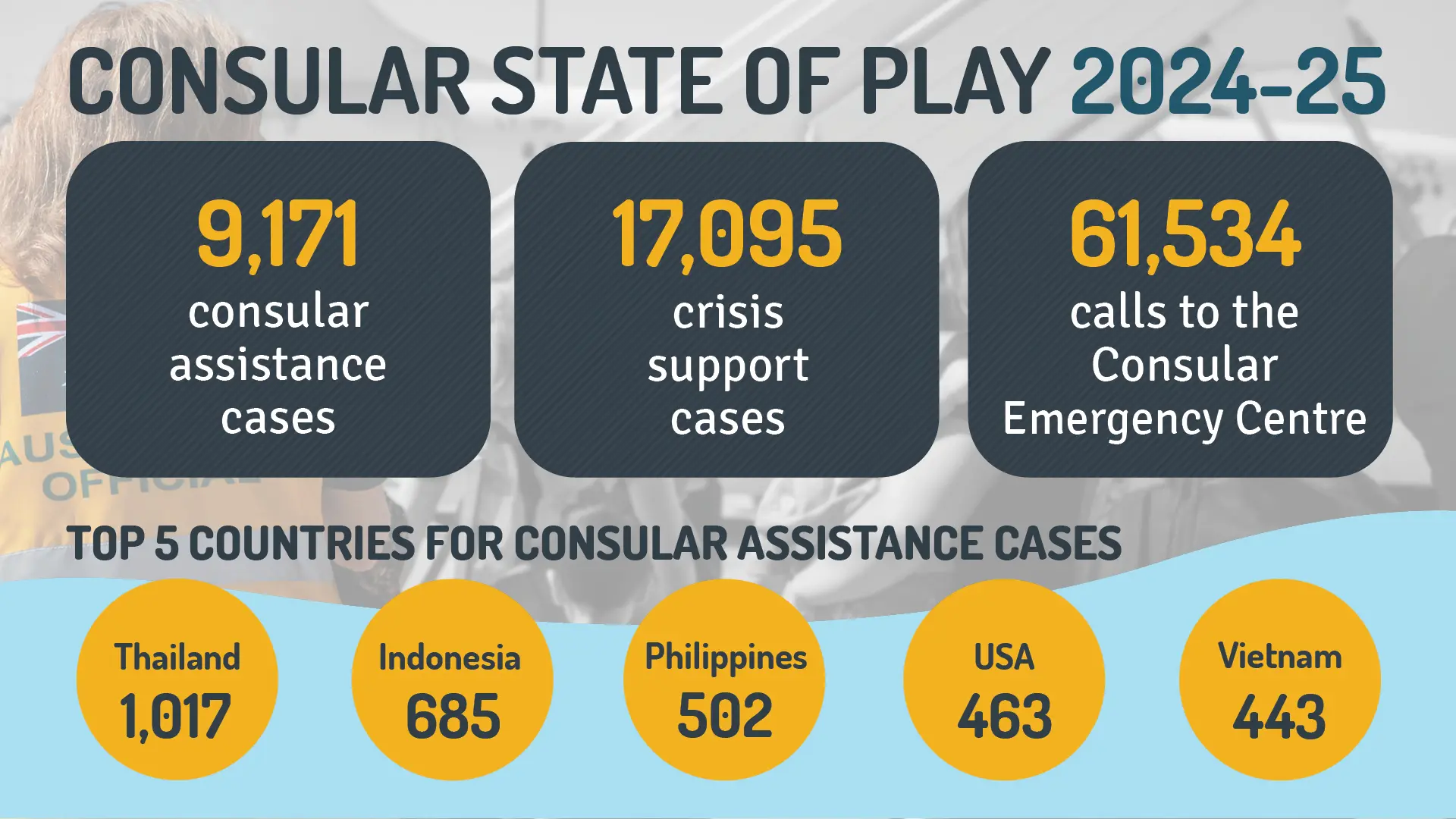
According to the Department of Foreign Affairs and Trade’s just-released Consular State of Play 2024-25 – a snapshot of DFAT’s consular assistance and support to Australians overseas – nearly one in three cases managed in the financial year were for Southeast Asian nations.
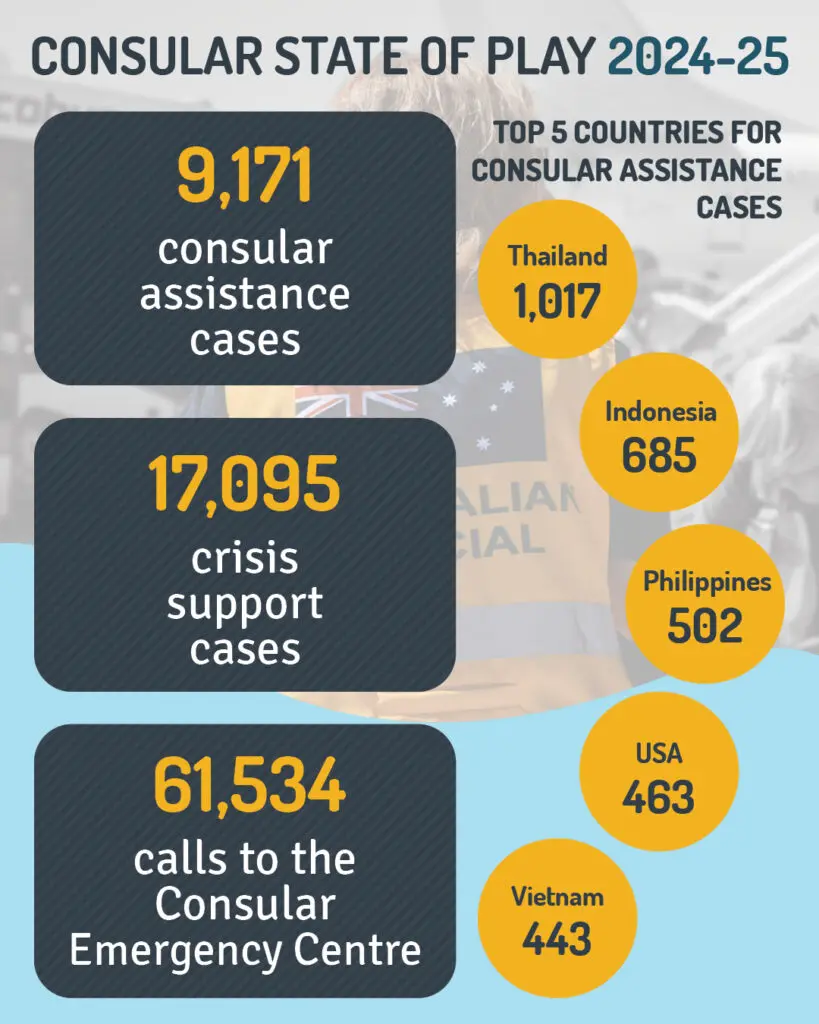
The country in which Australians required the most help during the year was Thailand, where DFAT worked on 1,017 cases (excluding crises). This equates to one in nine (11.1%) total cases. The latest Australian Bureau of Statistics (ABS) data also shows Thailand was the fifth most-visited country for Aussies in November 2025, suggesting the holiday hotspot may be overrepresented in terms of aid given.
Australia’s number one overseas destination, Indonesia, came in second, with DFAT handling 685 consular cases (7.5%).
The Philippines, which doesn’t appear among the top 10 most-visited nations, ranked third with 502 cases (5.5%), followed by the USA with 463 (5%) and Vietnam with 443 (4.8%).
Rounding out the top ten countries where Aussies saw the most strife were China (357 cases), Japan (315), India (229), Italy (221) and the United Arab Emirates (210).
In total, DFAT provided consular assistance in over 26,000 cases, including crisis support for more than 17,000 Australians and their families during conflicts in the Middle East and the December 2024 Vanuatu earthquake.
According to The Consular State of Play report, the department also answered more than 61,500 calls for help through the Consular Emergency Centre – averaging one call every 8.5 minutes – while handling some 1,500 active consular cases globally at any given time.
While the number of cases in 2024-25 was slightly higher year-on-year, the total number of Australians travelling abroad also rose. However, interestingly, the time spent on each case increased by 10%, which the government says reflects a growing complexity of cases.
Types of trouble
When it comes to the types of cases DFAT is helping with (excluding crises), ‘welfare/other serious matters’ ranked highest (2911 cases, +3% y-o-y), followed by ‘death’ (2054, +7%) and ‘illness/hospitalisation’ (1406, +4%).
Worryingly, ‘immigration detention’ (304 cases) saw the biggest yearly rise, with 28% more Aussies requiring assistance in these cases. This also reflects a global rise in border protection measures.
Another alarming stat was the increase in consular cases involving ‘arrests’, which grew by 12% to 968. This suggests more Aussies are misbehaving while overseas.
Elsewhere, ‘whereabouts enquiries’ rose to 358 (+9%), while ‘assault on clients’ cases grew to 226 (+6%).
More positively, cases involving ‘repatriation’ (-59%), ‘theft from client’ (-8%), and ‘child abduction/custody’, ’child parental responsibility’ and ‘Medical Evacuation’ (all -5%) saw drops.
In terms of crises, DFAT aided in the departure of 3,409 Aussies from the Israel-Lebanon war, 686 from Vanuatu (following the 2024 quake) and 256 from the Israel-Iran conflict.
KARRYON UNPACKS: Aussies are travelling closer, but DFAT’s data shows complexity, arrests and detention rising. For travel advisors, education, preparedness and smarter advice now matter more than ever before selling travel.