




There was a while there when some pundits claimed that group touring was on the verge of being written off. Larger departures felt out of step with how travellers wanted to move, plan and personalise their trips. The assumption was that travellers would increasingly build their own itineraries and bypass the group model altogether.
What changed was scale. As groups became smaller, touring began attracting travellers who had previously stayed outside the system altogether. People who wanted ease without rigidity, access without crowds, and guidance without being herded. Small-group formats are now driving growth and lifting the relevance of group travel more broadly.
And the travel companies leaning hardest into smaller groups are the ones now reporting sustained demand.
So what exactly shifted?
By cutting numbers, travel companies have been able to change how trips are built. Experiences deepen. Pacing slows. The product starts to resemble curated independent travel, with the planning burden stripped out.
Globus is one of the clearest examples of how deliberate that shift has become. The company has introduced more than 50 new Small Group Discovery tours in the past year across Europe, North America, Japan, Costa Rica and Kenya, and a hefty chuck of its portfolio now includes trip variations designed specifically for smaller groups.
“Demand for small-group touring is not just rising – it’s really booming for us right now,” Brett Simon, Head of Commercial Australasia at Globus tells Karryon.

He says the company has reached a point where small-group formats are no longer peripheral.
“We’re now at the position where nearly 75 per cent of our Globus portfolio includes trip variations catering to smaller groups,” he says.
That kind of portfolio shift rarely happens as an experiment.
Why smaller groups sell
The sales conversation has changed alongside the product. Smaller groups allow advisors to position touring as flexible and personalised, rather than fixed and formulaic.
“Advisors can now offer clients a more flexible, personalised experience – something travellers are increasingly looking for,” Simon says.
“These distinctive and exclusive experiences make it easier for advisors to position these tours as premium, high-value options.”

Crucially, Simon notes that these tours were designed explicitly for smaller cohorts.
“Our Small Group Discovery tours were specifically built for smaller groups from day one – and not adapted from itineraries with larger capacities,” he says.
That design choice unlocks access and accommodation that simply does not work at scale, and it also makes the product easier to sell as a premium option rather than a compromise.
Who is booking?
One of the clearest signals is the type of traveller now booking these trips. Many are not returning group tourists. They are people who previously travelled independently and managed every detail themselves.
Simon says small-group touring is proving particularly effective at converting those travellers.
“Many FIT travellers want independence without the stress of planning every detail,” he says.
“Small-group tours strike that balance – they offer curated experiences and insider access while still feeling personal and flexible.”
That conversion matters because it pulls new spend into the system rather than recycling the same group audience.
Collette is seeing a similar pattern. Managing Director Collette Australia Karen Deveson says small-group touring represents a fundamental shift in how people want to travel.

“Small group touring isn’t just a passing trend,” she tells Karryon.
“It’s considered to be a fundamental shift in how people want to experience travel.”
Collette’s Explorations product line, its purpose-built small-group touring range designed for deeper cultural immersion and slower pacing, has delivered consistent double-digit growth and is now one of the company’s fastest-growing segments, with average group sizes of around 19 travellers.
Built differently, not trimmed down
“These aren’t just our Classic tours with fewer people – they’re purpose-built for small groups,” Deveson says.
That difference changes how trips move on the ground. “With fewer travellers, we can slow down the pace – no one-night stays – and spend more time in each location,” she says. Smaller groups also unlock experiences that are not viable at scale, from family-hosted meals to artisan workshops and small village walking tours.
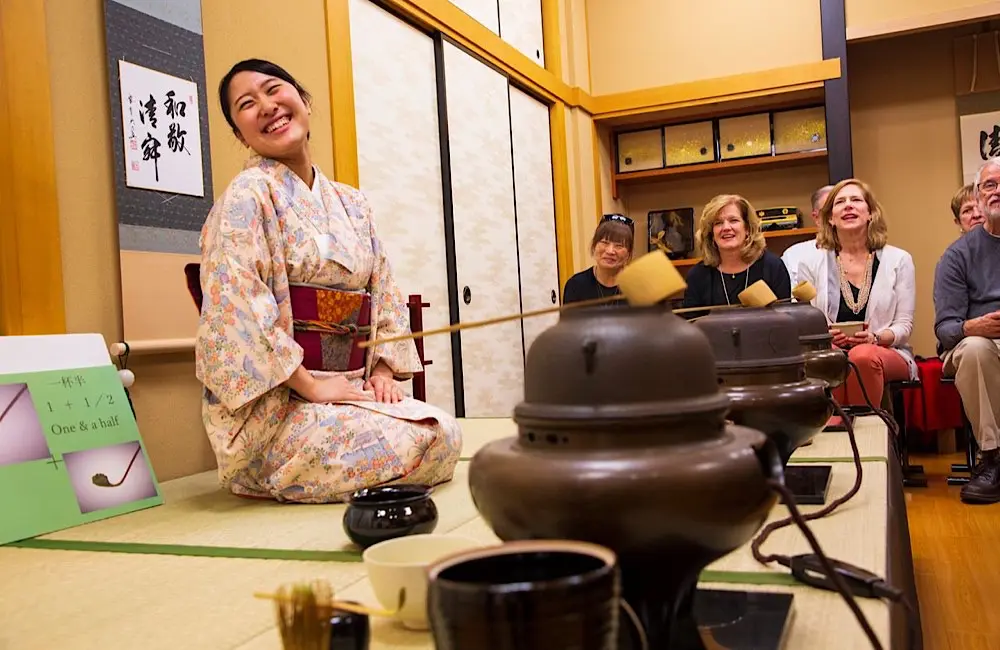
Deveson says changing guest behaviour has directly shaped how these programs are built.
“Travellers today want choice and authenticity,” she says.
“They’re asking for more hands-on experiences like cooking classes and craft workshops, as well as active options such as walking tours.”
She says smaller groups make it easier to move away from overcrowded highlights and towards more distinctive access.
“We are not afraid to remove the must-sees that are touristic or overcrowded to opt for more unique cultural experiences,” Deveson says.
“Free time is critical. Guests want structured experiences, but also the flexibility to explore on their own.”
That shift is also pushing stronger demand for sustainability and community-based experiences. “Increasingly, travellers are seeking responsible travel,” she says, adding that this is delivered through local partnerships and social enterprises built into itineraries.
Operationally, the shift is actually heavier. Deveson says designing for smaller groups requires greater flexibility in contracting and logistics, particularly when working with small properties and family-run businesses.
“It’s more complex,” she says, “but we know that travellers are going to have the experience they are craving by doing so.”
Is this a short-term bump?
The consistency of the growth suggests otherwise. Collette began shifting towards purpose-built small-group touring more than a decade ago, well before recent disruptions reshaped travel behaviour.
“We started this shift back in 2008,” Deveson says, adding that today’s itineraries are designed to take advantage of being culturally immersed and experiencing destinations as locals.
At Globus, the scale of portfolio change points to the same conclusion. Small-group touring is no longer an add-on. It is core.
What it means for advisors
For advisors, small-group touring solves several problems at once. It appeals to travellers who want guidance without surrendering control, offers differentiation in a crowded market, and supports higher-value bookings.
Simon says the opportunity lies in how advisors use the product. “Our Small Group Discovery tours are a premium product for travellers, which means higher revenue and commissions for advisors,” he says.
KARRYON UNPACKS: Small-group touring has reset group travel’s value proposition, turning reduced scale into higher yield and a broader buyer base.