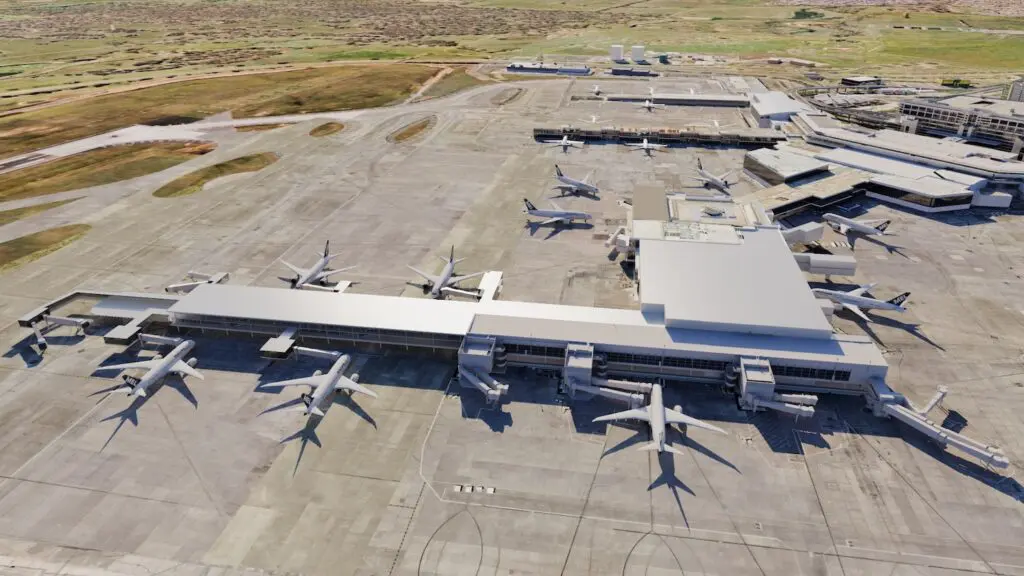



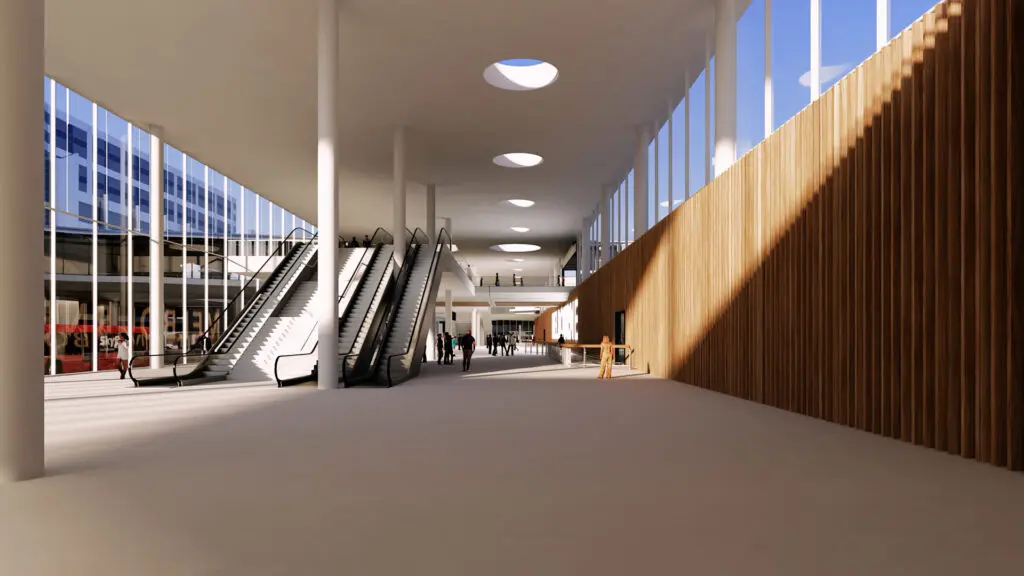
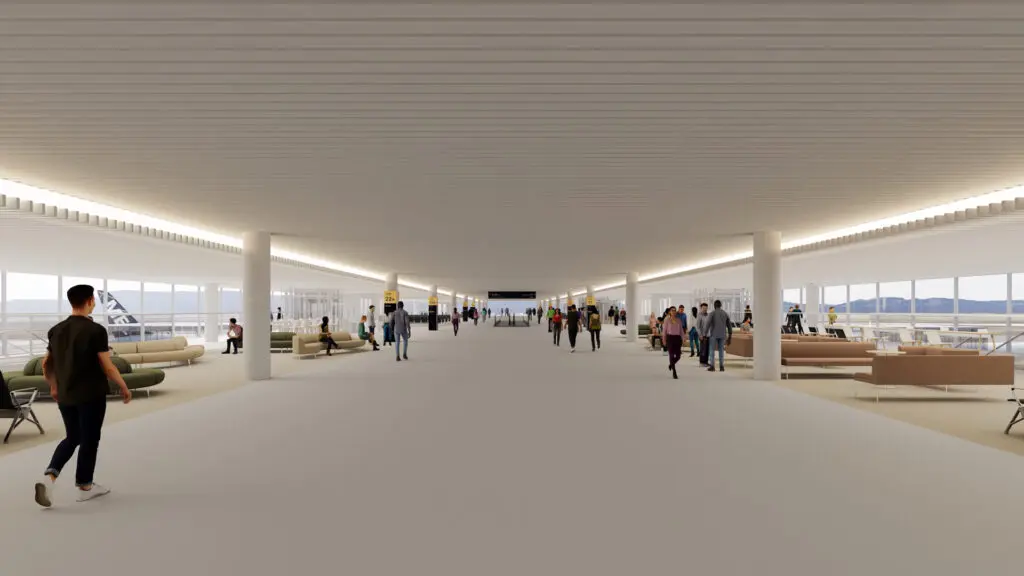
Melbourne Airport is getting a major facelift to enhance the overall traveller experience. So what can passengers and the public expect from the massive $4.5 billion expansion? Five new gates, larger check-in halls and an expanded baggage reclaim – and that’s just for starters.
A key part of the project is to simply provide more space for airlines and passengers as traveller numbers surge.
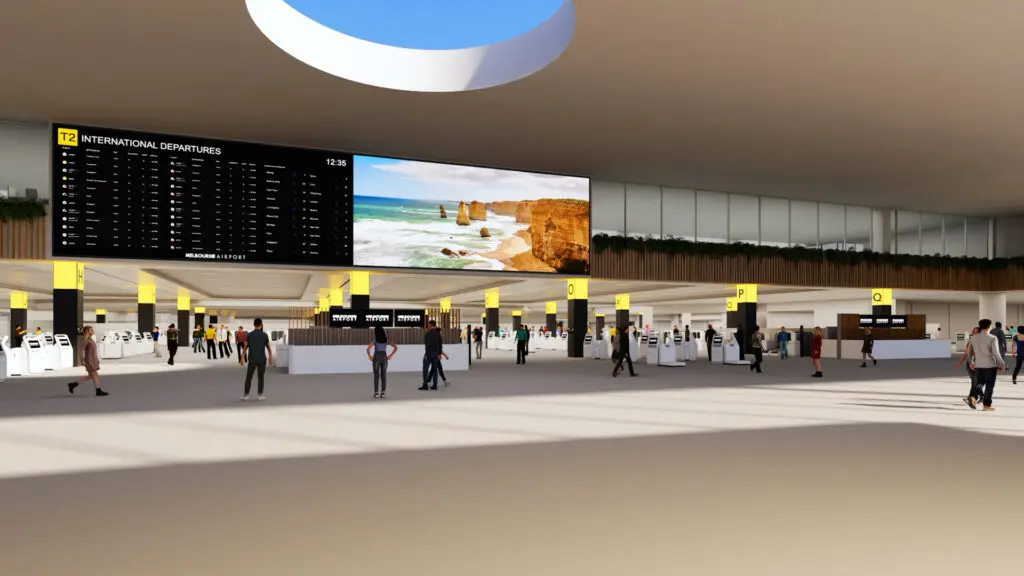
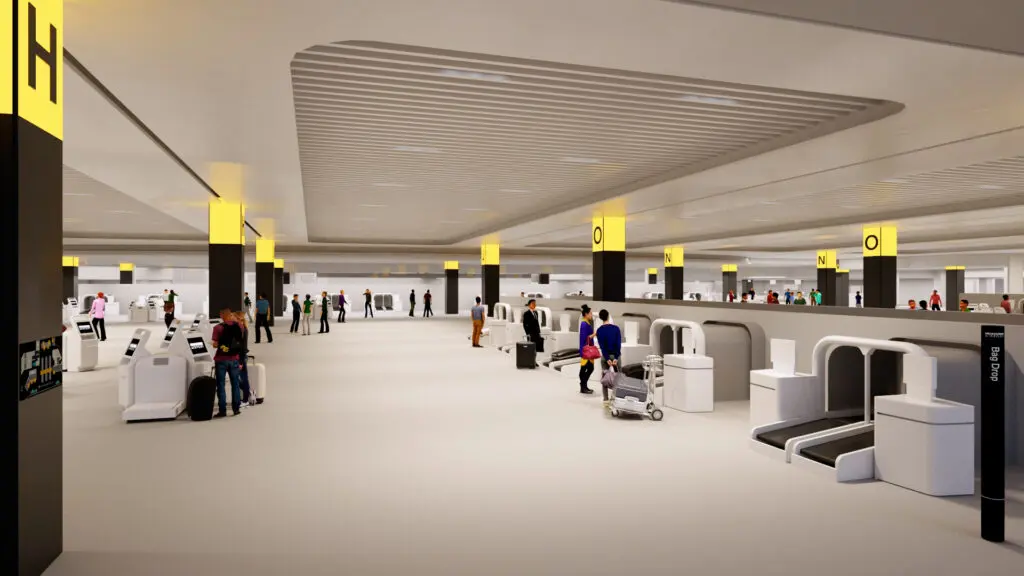
Upon arrival, passengers will be greeted by a larger check-in hall with more tech and common user baggage facilities.
The terminal upgrade will also see enhanced lounge facilities and retail offerings.
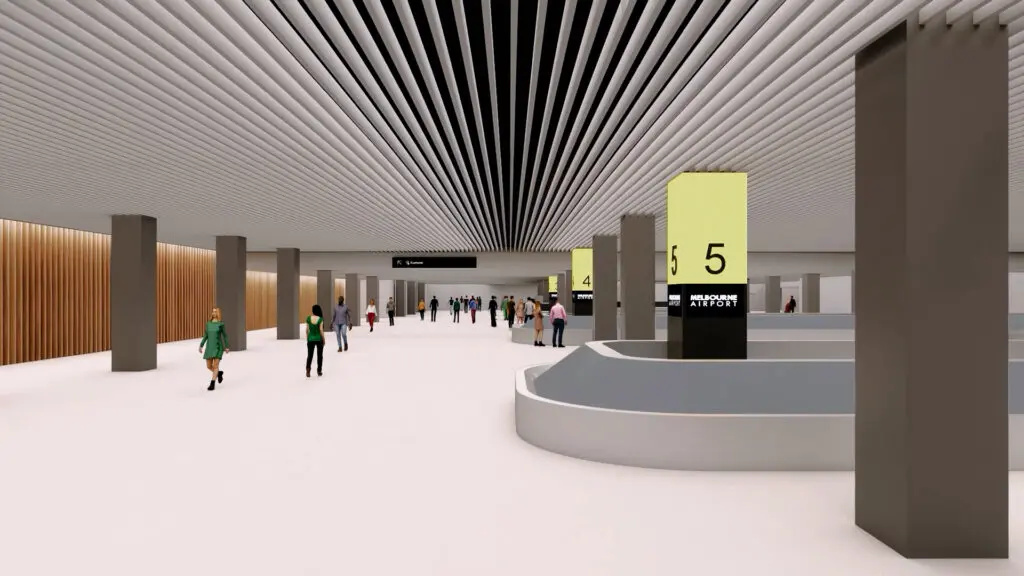
Elsewhere, the expansion will grow baggage reclaim with extra luggage carousels, up space for border control, and expand waiting areas for meeters and greeters.
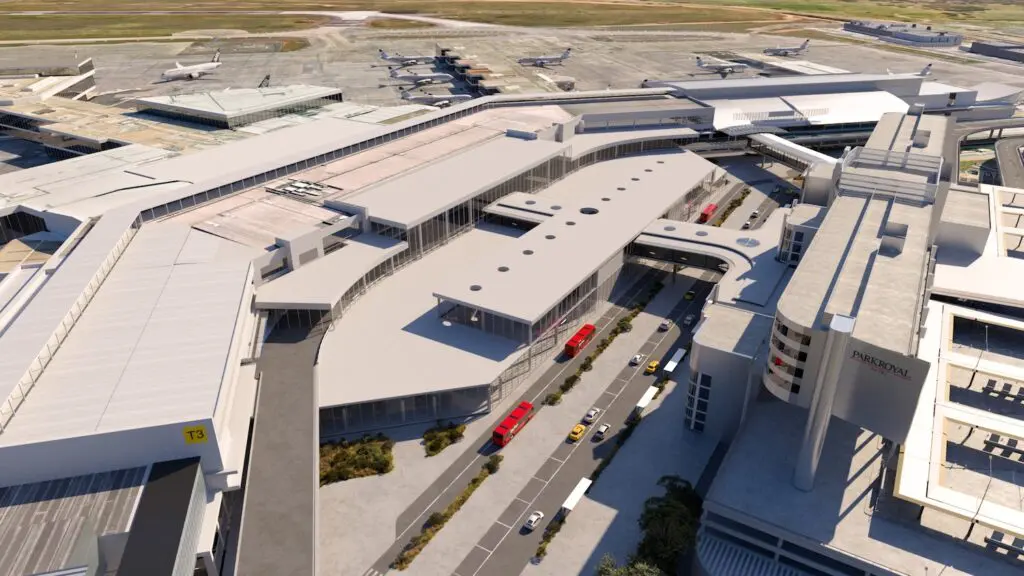
Significantly, the hub will also add five new aircraft gates capable of accommodating five widebody or eight single-aisle planes.
Privately funded, the project will link to a new road network and pick-up and drop-off zones due in 2026.

Growth spurt
Rolling out in stages over the coming years, Melbourne Airport’s expansion comes at a crucial time for the hub.
In January, more than 1.26 million international passengers passed through the airport, a record.
This followed its busiest-ever month for overall traffic in December 2025.
With a steady stream of new airlines, routes and added capacity, demand is clearly tracking up.
The airport’s third runway is also scheduled to open in 2031.
“Increased capacity on our airfield and terminals will allow airlines to schedule more flights to more places, which will give consumers and exporters more choice,” Melbourne Airport CEO Lorie Argus said.
“We’ve spent several months working collaboratively with the airlines to ensure these plans meet their needs, while also delivering an improved experience for our travellers in both arrivals and departures.”
More needed
While the upgrades should improve passengers’ journeys and numbers, Argus said they form only “part of the puzzle” in maximising the overall traveller experience.
“We’re keen to work with the federal government on upgrades to border processing technology and facilities to help further improve the arrivals experience for international travellers,” she added.
“With just one average daily international flight worth $190 million to the Victorian economy every year, these investments will help facilitate more services and secure thousands of jobs around the state.”
Assistant Minister for Citizenship, Customs and Multicultural Affairs, Julian Hill, is confident “Victorians and visitors alike will welcome these improvements, which can’t come too soon”.
“I welcome Melbourne Airport‘s work to streamline passenger movements across domestic and international terminals,” he added.
“Australian Border Force will continue working closely with industry partners to improve passenger experience and ensure Australia’s airports are fit-for-purpose over the coming decades.”
KARRYON UNPACKS: Capacity equals opportunity. For travel advisors, more gates and better processing should mean broader route options and smoother departures. Melbourne’s international growth story is only just beginning.