




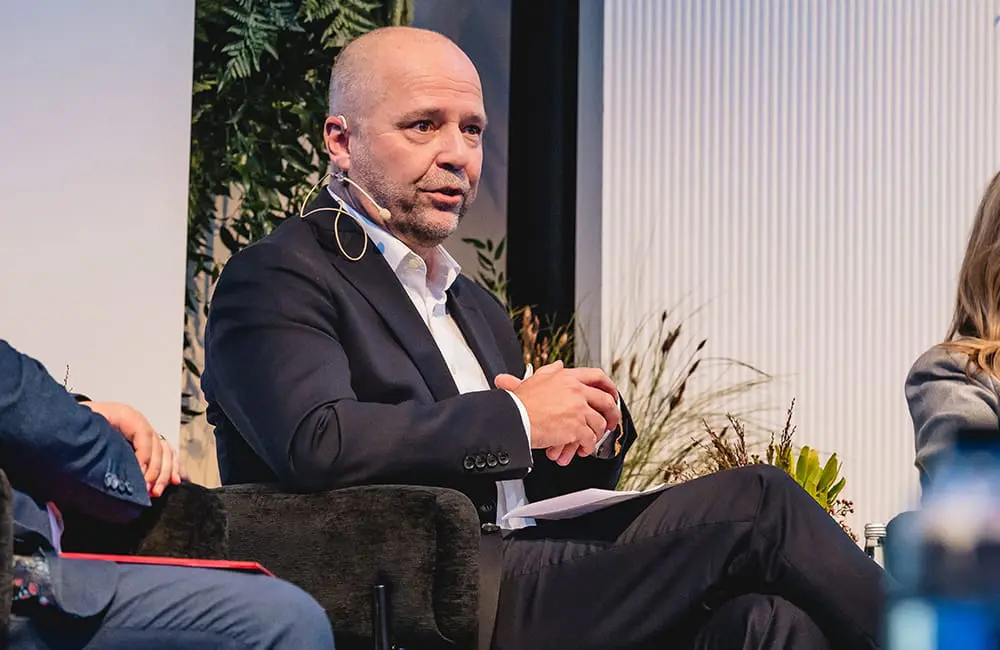
Does trans-Tasman tourism stand to benefit from the situation in the Middle East? Tourism New Zealand (TNZ) CEO René de Monchy took time out to chat with Karryon’s Matt Leedham at TRENZ26 in Tāmaki Makaurau, Auckland, on the outlook for winter, a strong Aussie dollar, and where brand New Zealand sits in a chaotic world.
It’s the last day of TRENZ26, and the New Zealand International Convention Centre (NZICC) showfloor is still buzzing as the clock ticks down to the conclusion of 16,000 meetings that have been held over three days.
New Zealand’s largest annual tourism business event, TRENZ, has returned to the City of Sails for the first time in nine years, with the impressive NZICC making its debut as host, and rolling out the welcome mat for more than 1,200 delegates, including 313 New Zealand operators and 379 international buyers from 27 countries.
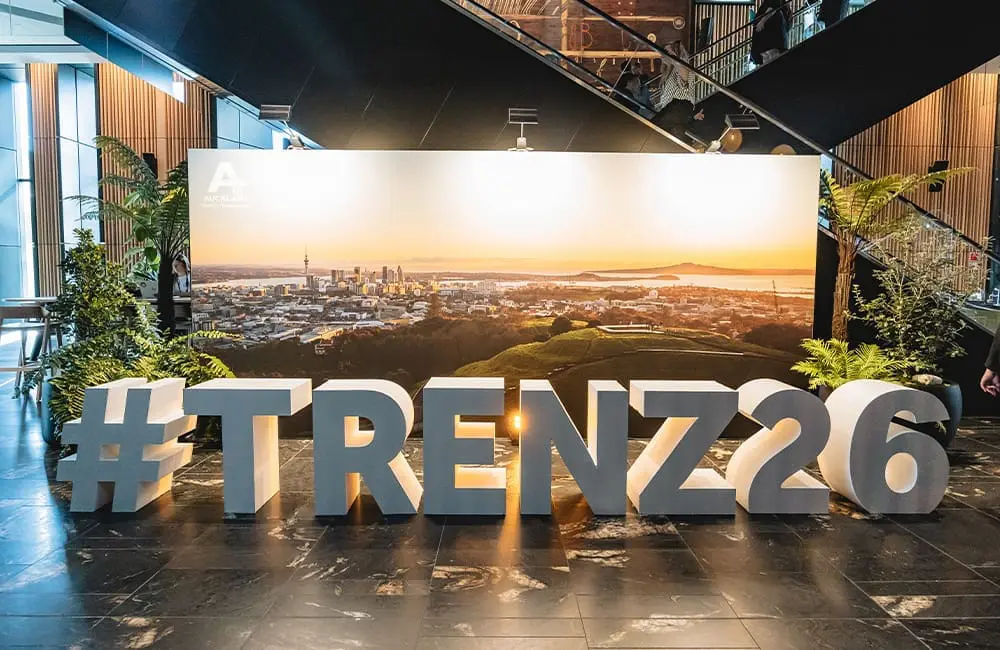
Despite ongoing instability in the Middle East, market uncertainty, and its impact on fuel surcharges and air capacity, the mood at TRENZ has remained optimistic, with the 32nd edition hailed as a universal success.
“There’s been a real positive energy on the show floor,” de Monchy says.
“People are reinvesting in their tourism businesses, they’re hiring more people, and they’ve come off a strong season.”
The war on Iran is the elephant in the room but not the conversation, parked as an uncontrollable while inbound positives, especially from Australia, stack up.
“The last few years have taught all businesses, but especially tourism businesses, the importance of resilience and adaptability,” de Monchy says.
“There hasn’t been a sense of wholesale panic. The industry is in a lot stronger place now.”
Significantly, and a pertinent reminder, the business of tourism is the country’s number-two export and number-one employer.
Aussies, urgency and a favourable wind
Australians make up more than 40 per cent of arrivals and remain the constant Tourism New Zealand is leaning into hardest in the coming period.
Every A$100 now buys around NZ$121, a thirteen-year high against the kiwi. A real value tailwind for Aussies weighing a winter ski trip, a wellness break or a long weekend in TRENZ host city Auckland.
“As we look to the disruptions in the world, maybe Australians will be looking a bit closer to home for the next little while, and there’s a real opportunity for New Zealand to capitalise on that,” de Monchy says.
Forward ski bookings are reportedly tracking strongly, and the TNZ winter campaign for Australia will be boosted, de Monchy says, with investment in media and trade joint ventures, to “get everything out of winter that we can”.
“Even if we do see a little bit of softness coming through the year, let’s make the most of winter,” de Monchy says.
“That feels like a no regrets kind of decision to do.”
With the Japan season still months away, and with longer flights becoming pricier, he sees an opening for an Aussie ski reintroduction.
Wellness, Rotorua and 100% Pure
Wellness sits as another strategic pillar, anchored by New Zealand’s 100% Pure positioning. For that reason, it feels like New Zealand has always owned that space, even if they are only realising its enhanced potential now as the US$1 trillion (A$1.5t) wellness sector booms.
“Who doesn’t want to be 100% pure?” I suggest.
“That’s right,” says de Monchy.
Beyond traditional spa and treatment offerings, wellness is framed through a cultural lens: Rotorua’s thermal heritage, nature-as-well-being, and experiences “ingrained and embedded with Māori culture” across the country.
Citing New Zealand’s wellness proposition as truly unique, de Monchy says, “It’s a fantastic blend of landscapes, culture, and people.”
Active, F and B, and the Michelin lever

Active holidays (cycling, hiking, running) are another focus for the year ahead. So too is food and beverage. The Michelin Guide’s first New Zealand edition, launching next month, gives Tourism New Zealand another storytelling vehicle to promote “world-class cuisine” and “food and beverage tourism right around the country”.
Air New Zealand’s TRENZ26 announcement of three relaunched Christchurch routes, including Perth, adds to the case.
“Being a long skinny country, it’s great to have visitors come into one airport and leave through another. It’s a great way to slow travel,” de Monchy says.
On the tourism panel the day before, de Monchy noted that in TNZ’s research, 61 per cent of travellers online like the look of New Zealand, and nearly half of those planning a trip say it’s their next destination.
Every region is showing growth in international visitor spend, says de Monchy with Tourism New Zealand, which is “tantalisingly close” to its 3.7 million arrivals target, having grown at twice the global rate.
The challenge now, he says, is converting that appeal into conversion: making brand New Zealand discoverable and machine-readable as consumers arrive with AI-built itineraries, then still turn to an advisor to book.
“Technology is going to be our friend,” de Monchy says.
“Because in an increasingly chaotic world, possibly New Zealand is even more desirable.”
Read our TRENZ26 coverage:
- TRENZ26: Nine years on, Auckland reclaims the trade’s biggest stage
- TRENZ26: Auckland has its mojo back as 1.5 million+ Aussies lift New Zealand tourism
- Perth-Christchurch comeback: Air New Zealand restarts three South Island routes
- TRENZ26: TIA Chief Rebecca Ingram on why Aussies are flocking to New Zealand
- TRENZ26: Farewell Auckland, Kia ora Christchurch in May 2027
TRENZ is New Zealand’s premier annual travel trade event, hosted by Tourism Industry Aotearoa (TIA). It brings together hundreds of international buyers, media, and partners with New Zealand tourism operators to showcase the country and grow inbound visitor business. Australia is consistently the largest source market. Visit trenz.co.nz
KARRYON UNPACKS: The trans-Tasman read isn’t recovery, it’s structural confidence. A strong Aussie dollar, a boosted winter campaign, 100% Pure, and Christchurch back to Perth align, with AI-discoverability the next challenge. Conditions for Aussie outbound haven’t looked this good in years.