




With Qantas Group and Virgin Australia already cutting flights and lifting fares, more airlines are trimming Aussie schedules as soaring fuel costs squeeze margins.
Among these are multiple Chinese airlines, which before the outbreak of the US-Iran war, had been significantly boosting capacity Down Under.
One of Asia’s largest carriers, China Eastern Airlines, has suspended its Sydney-Hangzhou and Sydney-Jinan routes from late April. A flight search on its website also reveals that the airline has slashed its Sydney-Wuhan (MU2022) and Sydney-Nanjing services (MU2022) by 66 per cent to one and two flights per week, respectively, from mid-May, and its Melbourne-Nanjing service (MU852) by a third to two flights per week from 14 May.
Sydney Airport told Karryon the schedule changes are expected to be “primarily seasonal” and that “operational adjustments are short-term”.

Elsewhere, China Southern, Asia’s largest airline, has decreased flights between its base in Guangzhou and Australia by around 10 per cent, AFR reports, while Air China has also reduced flights. Karryon has reached out to Air China for clarification.
There are also accounts of a quadrupling of airfares to China.
In addition, Hong-Kong-based Cathay Pacific has reportedly reduced capacity to Australia, albeit by less than 4 per cent on average, with Sydney, Melbourne, Brisbane and Perth affected.
Malaysia Airlines, meanwhile, has reportedly cut Aussie capacity by around 4 per cent until 30 June 2026, with Sydney and Melbourne flights impacted. Karryon has contacted the carrier for more details.
On the plus side, Malaysia’s national carrier recently announced an increase in its Brisbane operation to six flights per week from 16 August, before lifting to a daily service from 25 October. Last week, the Kuala Lumpur-based carrier also debuted its A330neo jet in Adelaide.
Low-cost lowdown
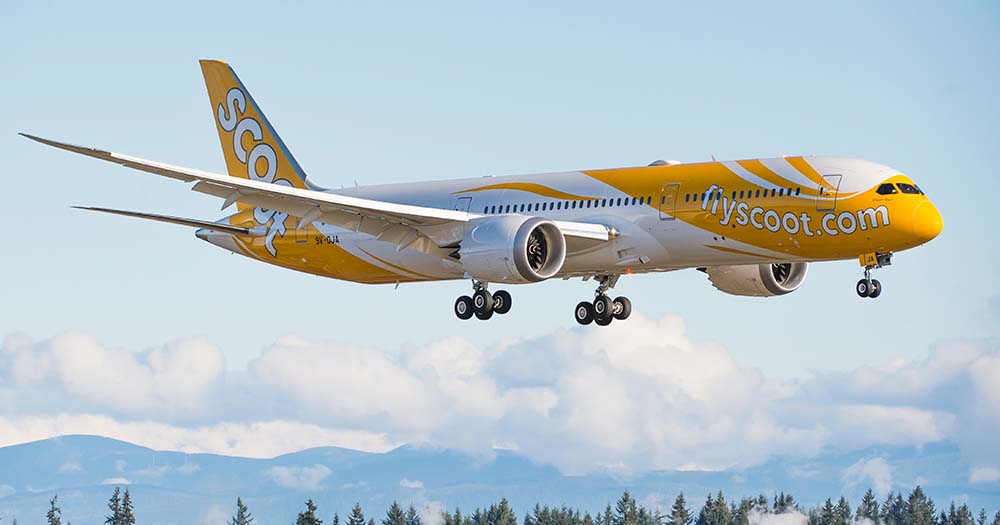
Among low-cost carriers, Scoot and Vietjet have also cut back flights. Singapore-based Scoot, which just topped a global airline emission efficiency rankings, says it has “moderated” Melbourne and Perth capacity “to align with network and operational requirements”.
“The decision reflects industry-wide pressures including fuel-price volatility due to external factors beyond our control,” the carrier told Karryon in a statement.
Despite a reduction, Scoot will still operate 37 flights (four fewer) to Melbourne per month and 47 flights (six fewer) to Perth per month from May.
“Australian passengers are incredibly important to Scoot, so we are normally growing capacity as per the last few years,” Scoot General Manager Australia Adam Kelly told Karryon.
“I am proud that we are within the top 10 international airlines by passengers carried for Australia and want to keep giving Australians as much choice and value as possible.”
Vietjet, which entered the Australian market in 2023 and whose rapid rise dovetailed with the growing popularity of Vietnam as a holiday hotspot, is also changing flight frequencies on some of its local routes, with Melbourne (from 7 to 5 weekly flights), Brisbane (5 to 4 flights) and Perth (4 to 3 flights) impacted until late May and early June.
The Vietnamese budget airline, which sometimes offers 100 per cent off base fare sales, told Karryon that this is a “temporary schedule adjustment for a specific period”, but further changes could occur depending on performance.
Pacific picture

Meanwhile, Fiji Airways has announced “temporary schedule adjustments on selected routes”.
In a customer update, the carrier said the changes reflect rising fuel costs and global tensions, helping the airline maintain “reliable, efficient and sustainable” operations.
While the majority of the network remains unchanged, the carrier will cut one of its eight-weekly Brisbane flights (FJ922/FJ923). However a daily operation will still operate between the ports.
Elsewhere, Fiji’s national airline will reduce its Dallas services (FJ891/FJ890) from 5 May to 16 June, but will still operate two weekly flights.
Air New Zealand has also updated its schedule due to “significantly elevated” jet fuel prices between May and June 2026 to “support better operational efficiencies”, it said in a message to the travel trade earlier this month. The changes have been added to the GDS.
The Kiwi carrier also flagged ongoing flexibility for customers, like full refunds – regardless of the fare rules – for customers with affected flights who no longer wish to travel.
According to RNZ, the airline said the adjustments affect around 4 per cent of flights, with about 1 per cent of total passengers due to travel in the period.
While the airline didn’t specify how many flights would be impacted, it said the changes are “relatively small compared to others in the New Zealand market, where some airlines are reducing capacity by more than 10 per cent”.
KARRYON UNPACKS: Capacity cuts are spreading, but not collapsing. For travel advisors, it’s about managing expectations – fewer flights, higher fares and shifting schedules – while still finding value as airlines juggle fuel costs and demand.