



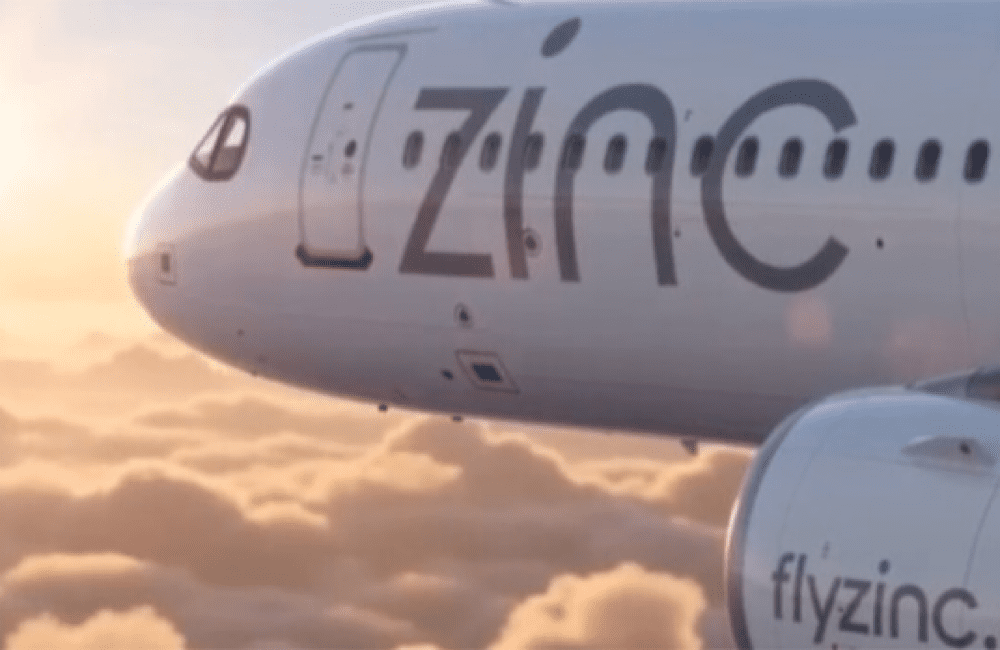
Australia’s domestic airline market has a new would-be disruptor, and this one is coming straight for the cheap seats. Proposed ultra-low-cost carrier Zinc is raising $100 million, eyeing Western Sydney International Airport as its launchpad and taking aim at Qantas, Virgin Australia and Jetstar with fares it says will sit below the current low-cost benchmark.
Australia’s answer to Ryanair?
Zinc is a proposed Australian domestic ultra-low-cost carrier founded by Peter Kelly, a senior aviation executive with experience at Ansett and Qantas, who was also involved in the group that established Jetstar.
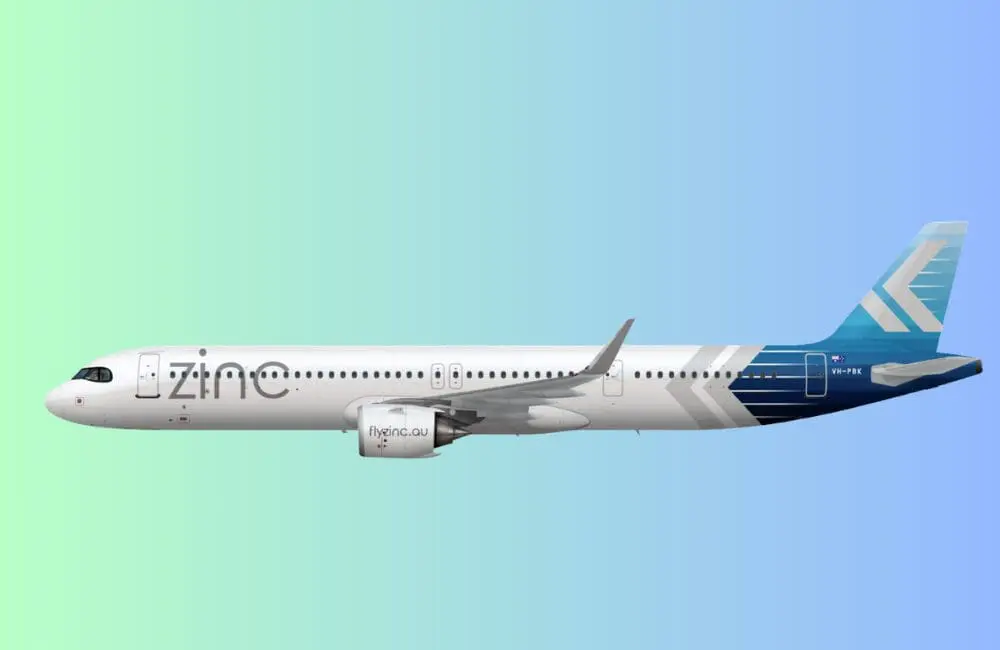
The airline plans to operate new leased Airbus A321neo aircraft in a 232-seat, all-economy configuration, using a single-type fleet and unbundled low-cost model designed to strip out complexity and push fares down.
Commercial operations remain subject to Zinc completing its $100 million equity capital raise and securing Air Operator’s Certificate approval from the Civil Aviation Safety Authority.
“For the first time, a new airline can enter the Sydney market without the restrictions that stopped every earlier attempt. WSI fundamentally changes how competition works in Australian aviation,” Kelly said.

Why won’t Zinc go the way of Bonza?
Australia’s aviation market has claimed plenty of challengers. Compass. Impulse. Tigerair Australia. Bonza. Rex, when it pushed further into major-city flying.
Zinc’s argument is that those failures were not random. Kelly says previous entrants were hit by the same hard problems: Sydney’s slot and gate constraints, higher operating costs, undercapitalisation, unsuitable aircraft, the wrong routes, or the wrong timing.
Zinc says it has been built to avoid those traps. The airline is planning a single aircraft type, a tighter network, high-volume routes and a Western Sydney base that gives it access to Australia’s largest aviation market without the same curfew and slot constraints at Sydney Kingsford Smith.
Rather than chasing a broad regional footprint, Zinc plans to start with Western Sydney, Melbourne and Brisbane, then add Gold Coast and Adelaide later.
The airline says it does not expect a gentle reception from Qantas, Virgin Australia or Jetstar, but Kelly argues the model has been shaped by the lessons of the carriers that came before it.
“Bonza was undone by capital structure. Rex by specific strategic and operational issues. Neither failed for want of demand for an independent domestic carrier. Zinc is being built to be capital-disciplined, single-fleet, focused, efficient, and to deliver consistent value to passengers and returns to investors,” Kelly said.
Why Western Sydney Airport is key
Zinc says it would not be pursuing market entry without Western Sydney International Airport.
The new airport is scheduled to open to passenger services in October 2026 and will operate without a curfew or slot controls, removing two of the biggest barriers that have made Sydney such a hard market for new airlines to crack.
“Every previous new entrant to the Sydney market hit the same wall: slot scarcity, peak congestion at Kingsford Smith, and a curfew that wrecks aircraft utilisation. WSI removes all three. That changes what is structurally possible,” Kelly said.
Zinc is pitching Western Sydney as more than a second Sydney airport. The airline says WSI serves a catchment of nearly three million people, comparable in scale to the Greater Brisbane market, within Australia’s largest aviation market.
The broader WSI precinct has also attracted around $25 billion in government investment, including the airport, the new M12 motorway, Sydney Metro Western Sydney Airport line and related infrastructure.
How cheap are we talking?
Zinc intends to compete directly with Qantas, Virgin Australia and Jetstar, with a stated aim to offer fares below all three.
Its cost case rests on new Airbus A321neo aircraft, a dense 232-seat cabin, a single-type fleet, high aircraft utilisation and a base-assigned model where aircraft and crew return home each night.
So, fewer moving parts, fewer expensive headaches and, Zinc hopes, enough cost advantage to make lower fares commercially sustainable rather than a launch-week stunt.
Year-one bases are planned for Western Sydney, Melbourne and Brisbane, with Gold Coast and Adelaide to be added later. By year four, Zinc plans to operate across five airports and seven route pairs.
What happens next?
Zinc still has two major gates to clear before anyone starts booking flights: money and regulatory approval.
The airline is raising $100 million in equity capital to fund pre-operational costs and aircraft deposits. It also needs to complete the Air Operator’s Certificate approval process with the Civil Aviation Safety Authority before it can begin commercial operations.
If those pieces fall into place, Zinc’s first focus will be Western Sydney, Melbourne and Brisbane, with Gold Coast and Adelaide planned to follow. Western Sydney International Airport is scheduled to open to passenger services in October 2026.