


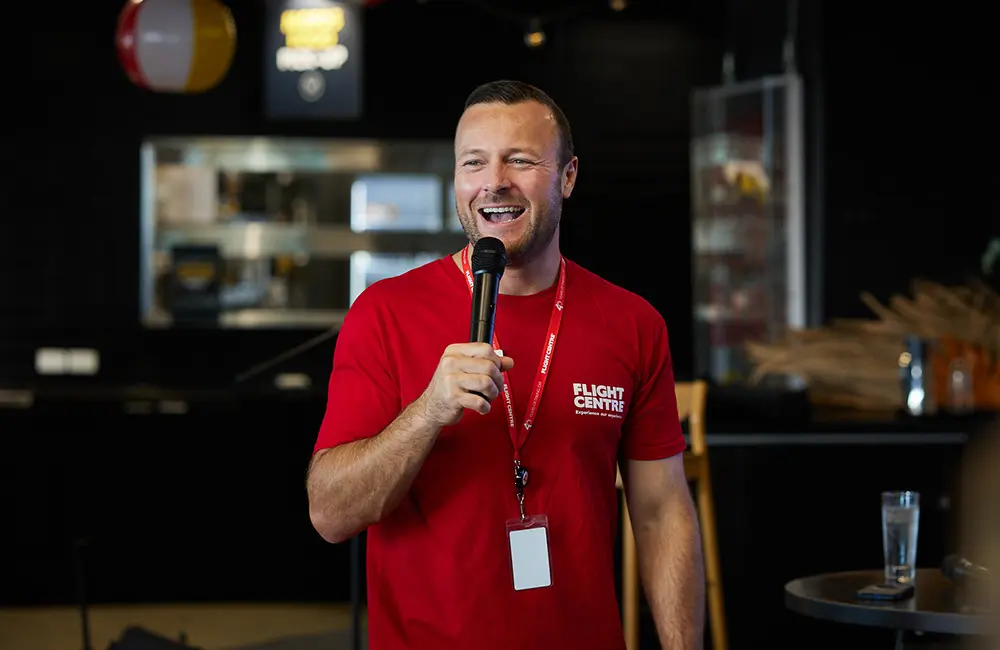
Ask Flight Centre Global Managing Director Andrew Stark about how AI has impacted the travel agency giant, and he’ll point to productivity gains and revenue wins, not the doom-and-gloom headlines.
“If anything, it’s increasing productivity for us,” he tells Karryon in an interview.
“The key metric is that, pre-pandemic, our total turnover average per consultant (TAC), was around $85,000. Today, our average turnover per consultant is sitting at $165,000.
“So we’re far more productive than we ever were pre-pandemic.”
What’s more, Flight Centre – the flagship brand of Flight Centre Travel Group (FCTG), which earlier this month revealed a largely positive trading update – believes AI will help grow that figure even more.
“Our ambition is to move that number up – 165 to 175, 185, 195 and ultimately the North Star $200K TAC,” Stark says.
“And I certainly think through the speed and adoption of AI, that $200K turnover average per consultant, $200,000 per person per month is a very doable number – when you start to power your human expertise with AI.
“Our brand is high volume turnover and wafer-thin net margins. We love what we do. We’re in the travel game. We’re high volume, but every customer that we win, we have to make sure that we get the economies of scale.
“Hence, we started this globalised journey in Jan of 2022, when we looked to globalise the Flight Centre brand. We’re in our fifth year. We’ve certainly seen the fruits of our labour come through.”
So if you’re in the business of travel, ignore the growing influence of AI at your own peril. Especially if you want to bring young blood into your ranks, as Flight Centre does.
“We embrace it, and obviously with our travel experts – a much younger cohort – that’s the world they live in. They want more of it,” Stark says.
“They want to speed up functionality. They want us to mirror where the world’s moving towards.”
Despite this, don’t go thinking that AI will, or even can, replace Flight Centre’s “superpower”: its consultants.
“AI will need to be an enabler to provide them with the technology and interfaces they need in order to speed up the overall sales process… to service their customers quicker,” Andrew says.
“We’re embracing AI across all our channels and all our pillars. But for us, we’ll always be a brand that has human expertise, but powered by AI – and we’ll never be the other way around.”
Bricks AND clicks
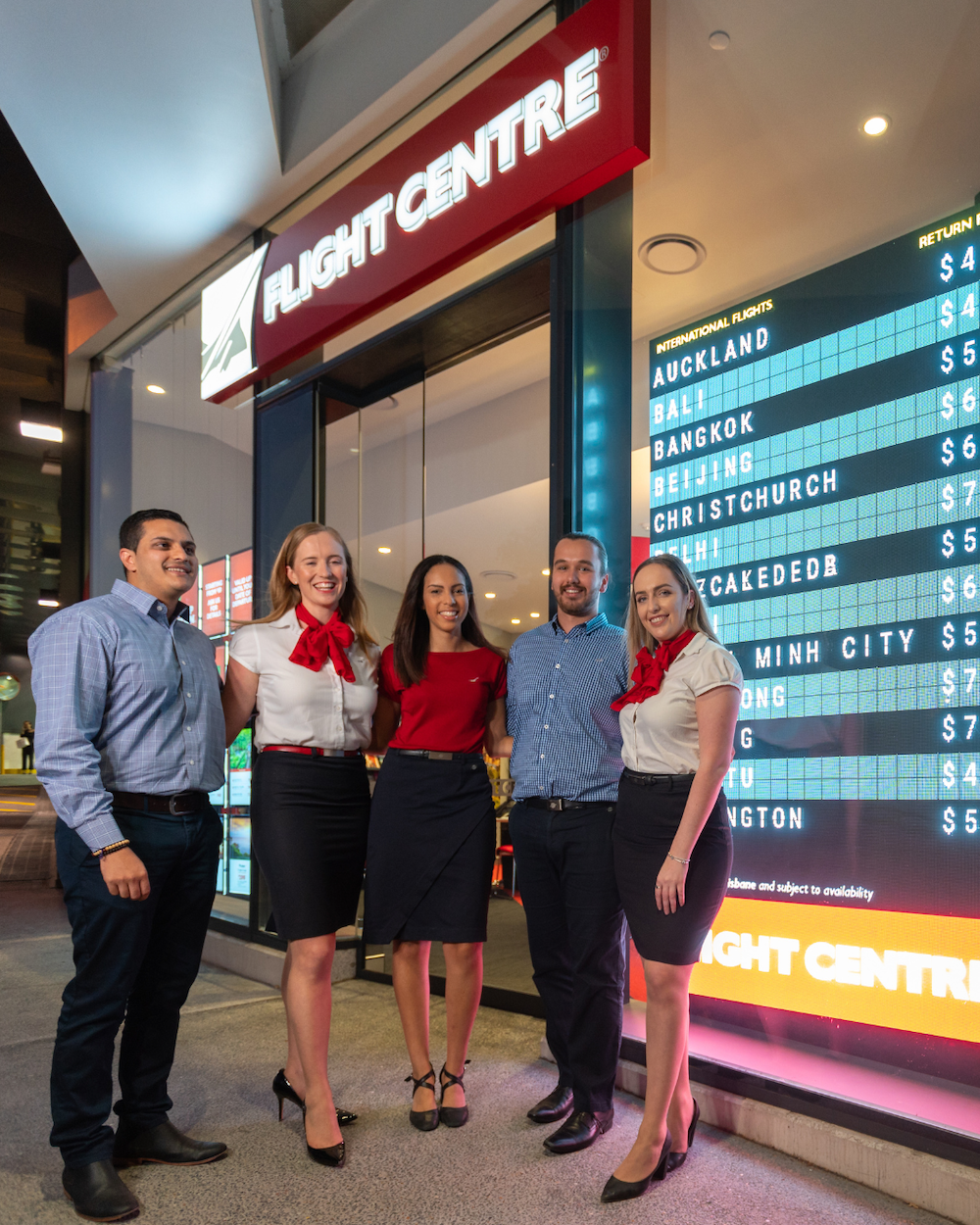
Key to keeping its people front and centre in customer interactions is the continued focus on physical shopfronts.
“Our $6.3 billion worth of sales…65-70% of that volume is still coming through bricks and mortar – and customers wanting to deal with human beings,” the Flight Centre boss explains.
“Yes, the online channel is growing – pre-pandemic, we were at 4%; today, we’re getting a lot nearer to 20%. But our specialist teams are prospering at this time.”
And unsurprisingly, consumers making major purchases still value the reassurance of a face-to-face experience, even after doing their research.
“Customers, when they’re spending $6,500 – on an in-store or over the phone purchase – they want to deal with a human being, and they want to know that what they see or what they have researched is validated by a trusted human expert. And obviously, the backing of the Flight Centre brand is really powerful as well,” Stark says.
In the 2025/26 financial year, the brand opened 12 stores across Australia, a testament to the power of bricks-and-mortar. That also gives it an advantage over online travel agents (OTAs), who have had their own struggles of late.
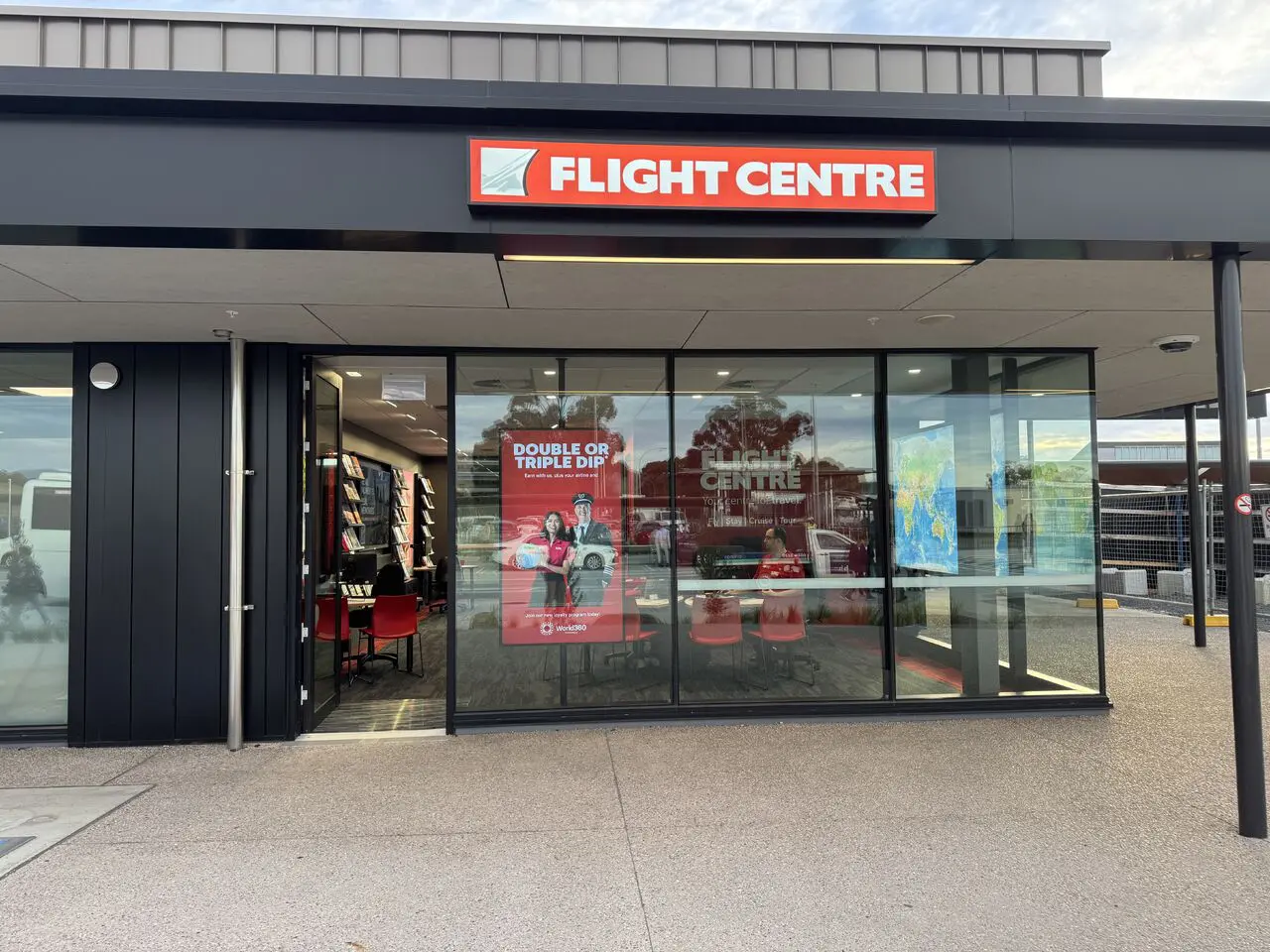
“That’s a real moment for us. I don’t see any competitor, particularly an OTA competitor, looking to grow any shops,” Stark remarks.
“The reason for the growth in those shops was obviously still recovering from a pandemic where we cut very close to the bone in most regions. [But] we’ve been very purposeful in growing back key locations in key areas where our customers have asked us to grow back.”
Along with around 100 FTE (full-time equivalent) staff recruited in H1 FY26, the new shopfronts have “certainly positioned us for growth”, Andrew says. Given that Flight Centre owns its shops, customers can also expect “standardisation and a consistent customer experience across all our channels”.
And that comes in handy when things go wrong – and between geo-political tensions, natural events and viruses, things invariably do.
“When you’re trying to get hold of a technology company or a supplier directly after hours, [like] 9pm, in order to change a flight or change a hotel booking, it’s really difficult,” Stark says.
“That human expertise with Flight Centre is where that personable brand comes through; we’re easily contactable. You can always contact a human being.”