


Air travel in and through the Middle East continues to operate as usual, by and large, despite the resumption of hostilities between the US and Iran this week.
While normal scheduling – or at least the schedules airlines had established over the past few months – continues, carriers will no doubt be keeping a close eye on how the conflict evolves, especially as the renewed hostilities come during the peak northern summer travel period, and at a time when airlines continue to roll out capacity to meet demand.
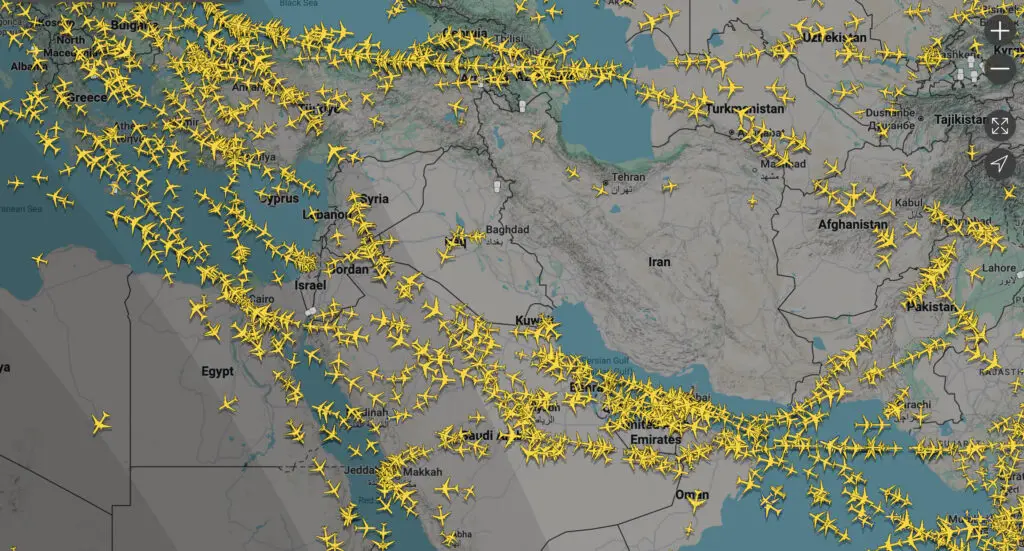
A live look at the airspace over the Middle East region on FlightRadar24 also shows hundreds of flights operating normally, albeit still avoiding Iranian and Iraqi airspace.
The largest transit hubs for Europe-bound Australians are Dubai and Doha, served by Emirates and Qatar Airways (which also operates flights for Virgin Australia), respectively. According to the carriers’ websites, schedules are operating normally for both airlines.
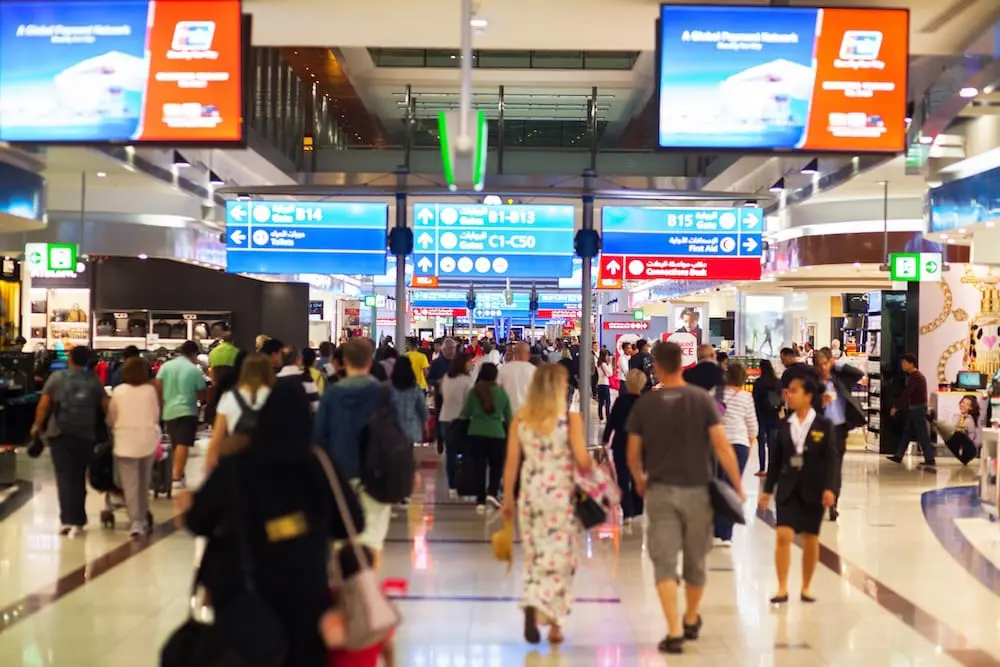
Overall, arrivals and departures at Dubai International Airport and Doha’s Hamad International Airport appear to be unimpacted by the renewed tensions, per their websites.
Another major hub, Abu Dhabi’s Zayed International Airport, is likewise not reporting any major impact on its operations, as is the United Arab Emirates’ (UAE) national airline, Etihad.
Karryon has reached out to the three major carriers for the latest updates.
In addition, other airlines in the Persian Gulf region are operating normally for now, including Gulf Air, Saudia Airlines, Kuwait Airways and Royal Jordanian.
It also appears to be business as usual for those carriers’ main hubs: Bahrain International Airport, King Khalid International Airport, Kuwait International Airport and Queen Alia International Airport.
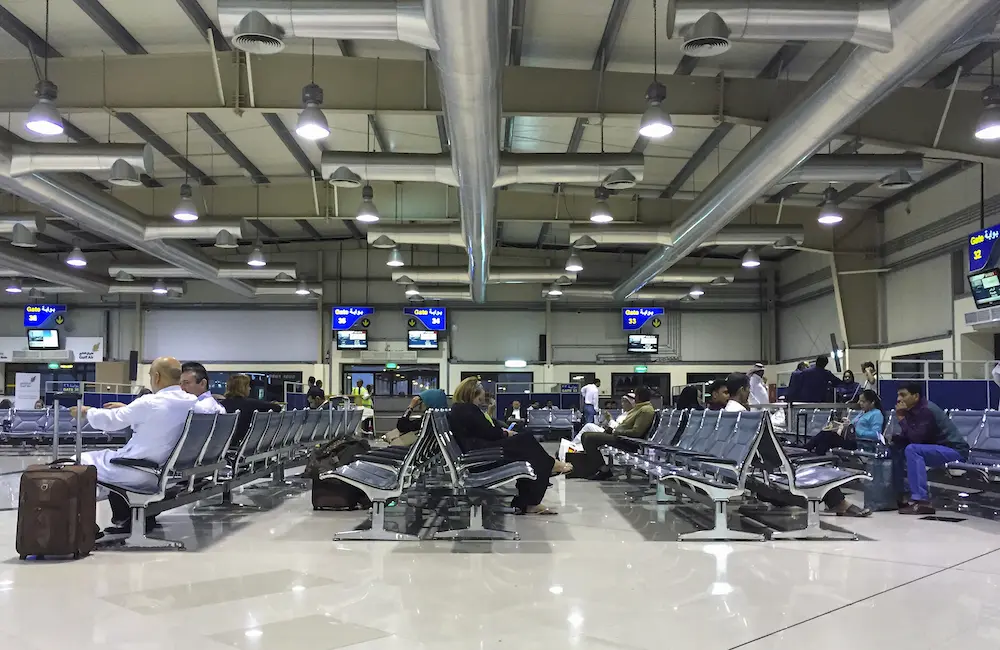
Airspace update
On 8 July, the day US President Donald Trump declared the ceasefire over, the European Union Aviation Safety Agency (EASA) advised airlines to avoid airspace over Iran, Iraq and Lebanon until at least 31 August.
“Unpredictable military developments, combined with the presence and possible use of a wide range of weapons and air defence systems, create a high risk to civil flights at all altitudes and flight levels,” it states.
“EASA, together with the Commission and Member States, will continue to closely monitor the situation, with a view to assess whether there is an increase or decrease of the risk for EU aircraft operators due to the evolution of the threat and risk situation.”
The agency has lifted its earlier caution covering several other Middle Eastern countries, including Qatar, UAE, Bahrain, Saudi Arabia and Kuwait.
DFAT advice
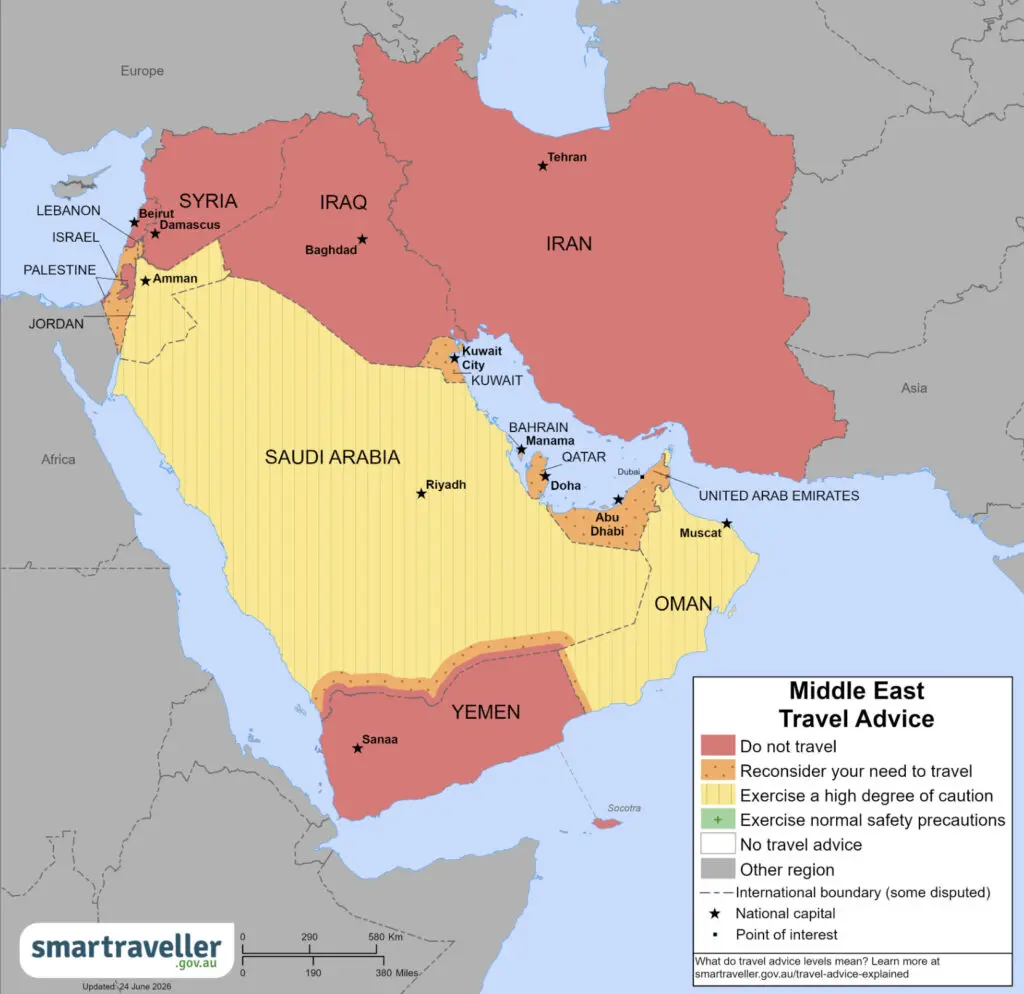
Over the past 24 hours, the Department of Foreign Affairs and Trade (DFAT) has issued fresh travel advice for several countries in the Middle East, including Jordan, Oman, Bahrain, Saudi Arabia, Israel, Qatar, the UAE and Kuwait.
However, it has not raised its travel alert level for any of these nations in response to the renewed conflict.
“Military conflict in the region may cause travel disruptions,” DFAT states on the Smartraveller website in its UAE update.
“UAE airspace may open or close at short notice, impacting flights at Abu Dhabi and Dubai International Airports. Check the status of any border crossing before you travel by air, land or sea.”
Smartraveller advice (as of 1pm, 10 July 2026)
| Jordan | Middle East | Exercise a high degree of caution | 10 Jul 2026 |
| Oman | Middle East | Exercise a high degree of caution | 09 Jul 2026 |
| Bahrain | Middle East | Reconsider your need to travel | 09 Jul 2026 |
| Saudi Arabia | Middle East | Exercise a high degree of caution | 09 Jul 2026 |
| Israel | Middle East | Reconsider your need to travel | 09 Jul 2026 |
| Kuwait | Middle East | Reconsider your need to travel | 09 Jul 2026 |
| Qatar | Middle East | Reconsider your need to travel | 09 Jul 2026 |
| United Arab Emirates | Middle East | Reconsider your need to travel | 09 Jul 2026 |
The Australian Travel Industry Association (ATIA) has declined to comment on the current situation in the Middle East.
While air travel holds firm in the Middle East, some hotels are reporting renewed confidence in travel to the region, based on massive increases in bookings. One such group is Minor Hotels, which this week reported a 143 per cent increase in room-night bookings in the last full week of June. Read more about that here.
KARRYON UNPACKS: The continuation of flights is reassuring, but maintaining traveller confidence could be the biggest challenge. For travel advisors, clear, factual communication now matters just as much as finding the right airfare.