





Premium-class passengers flying first and business hit 109.7 million passengers in 2025, up 4.5 per cent year-on-year and accounting for 5.5 per cent of all international travellers globally, according to new International Air Transport Association (IATA) data on this and wider aviation trends.
Business and first-class flyers now account for one in 18 of all international travellers with Europe still the biggest premium market by volume at 39.7 million passengers.
Latin America posted the sharpest rise in premium-class passengers, up 22.1 per cent to four million. North America (10.4%) and the Middle East (9.5%) recorded the highest premium shares as a proportion of total passengers.
IATA’s newly released World Air Transport Statistics (WATS) report draws on data from 1,315 airlines, including more than 250 international carriers, and covers demand, capacity, fleets, top routes, employment and airline financials through to 2025.
Top passenger markets for Aussies showing strong growth

Among the top outbound markets for Australians, according to the Australian Bureau of Statistics (ABS), IATA’s data highlights several trending destinations for overall travel, not just at the pointy end.
Japan, a perennial favourite that recently overtook Indonesia as Australians’ top Asian destination, saw its passenger market grow 9.2 per cent to 223.5 million, one of the strongest results among the world’s largest markets.

Vietnam continued its climb as a rising outbound favourite, recording 80.9 million passengers in 2025, up 14.8 per cent YOY, one of the fastest growth rates globally outside Central Asia.
China remained the world’s second-biggest passenger market at 776.1 million, up 4.8 per cent, behind the US at 890.1 million, which grew just 1.6 per cent, the slowest of the top 10 markets.
The UK (269.7 million), which, along with the US led a recent decline in Australian international travel, Spain, India, Italy, Germany, France and Türkiye rounded out the largest markets.
Kazakhstan led the fastest-growing markets with a 40 per cent surge to 18.1 million passengers, while Uzbekistan rose 16.9 per cent to 12.5 million.
Which routes are the world’s busiest
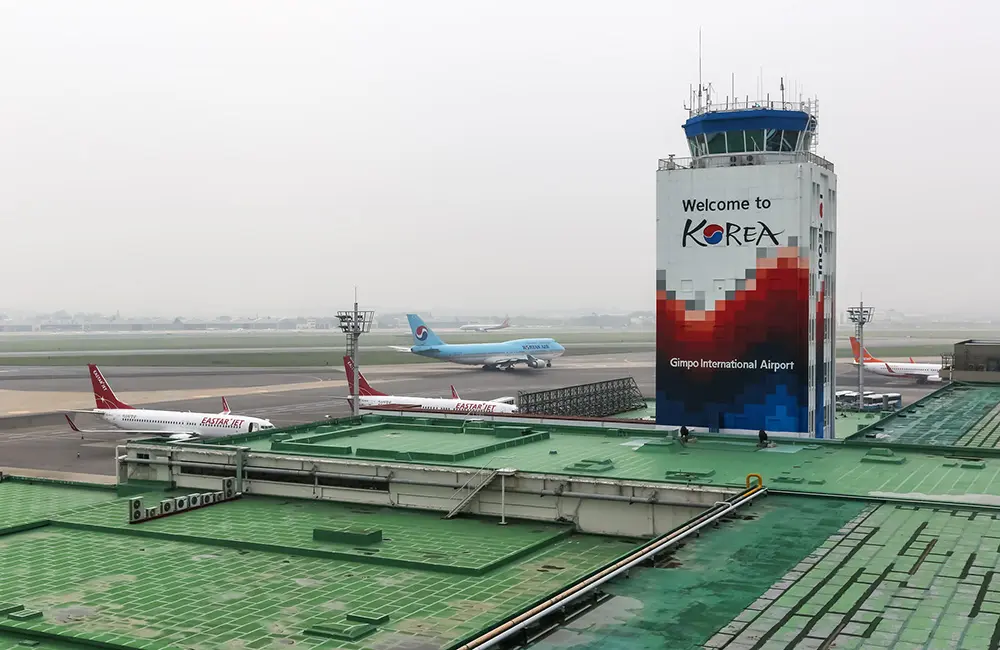
The IATA data shows Asia Pacific dominated the ranking of the world’s busiest airports, and all of the top 10 were domestic connections. The Jeju-Seoul Gimpo route (CJU-GMP) held its place as the busiest globally with 13.3 million passengers.
Only one top-10 pair sat outside Asia Pacific: Jeddah to Riyadh (JED-RUH). In North America, New York JFK to Los Angeles (2.2 million) was the busiest domestic pair, while JFK to London Heathrow (2.1 million) was the busiest international pair from the region.
Europe’s busiest pair remained Barcelona to Palma de Mallorca (2.1 million), while Stockholm Arlanda to Malmö was the continent’s fastest-growing, up 85 per cent to 271,031 passengers.
How newer aircraft impacts flights
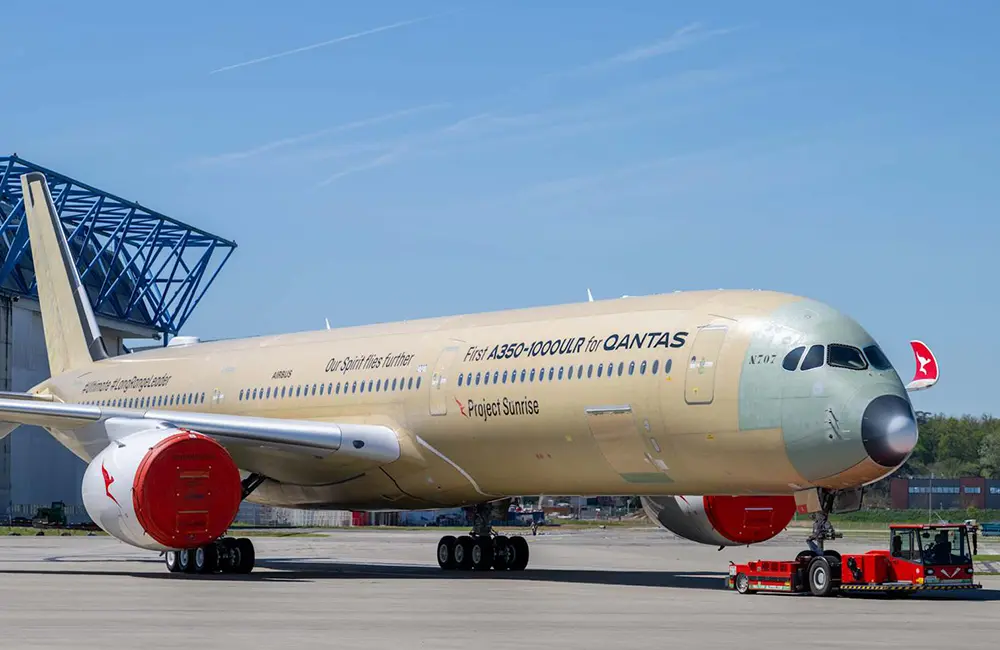
Newer, more fuel-efficient widebodies are increasingly common on long-haul, the kind of routes Australians rely on. Boeing 787s flew 40.8 per cent more flights in 2025 than in 2019, while Airbus A350s rose 117.4 per cent over the same period.
The Airbus A380 continued its decline, operating 24.4 per cent fewer flights than in 2019, though the superjumbo remains a drawcard on select premium-heavy routes.
Narrowbodies still rule the skies overall. The IATA data found the Boeing 737 family operated 10.8 million flights in 2025, up 12 per cent on 2024, followed by the Airbus A320 (8.7 million) and A321 (4.2 million).
KARRYON UNPACKS: The premium surge tracks with what advisors are already seeing at the pointy end of the cabin, and with Japan and Vietnam both posting double-digit growth, two markets Australians love are proving popular. The steady shift to B787s and A350s on long-haul also gives advisors a snapshot of IATA aviation trends to share with clients.