



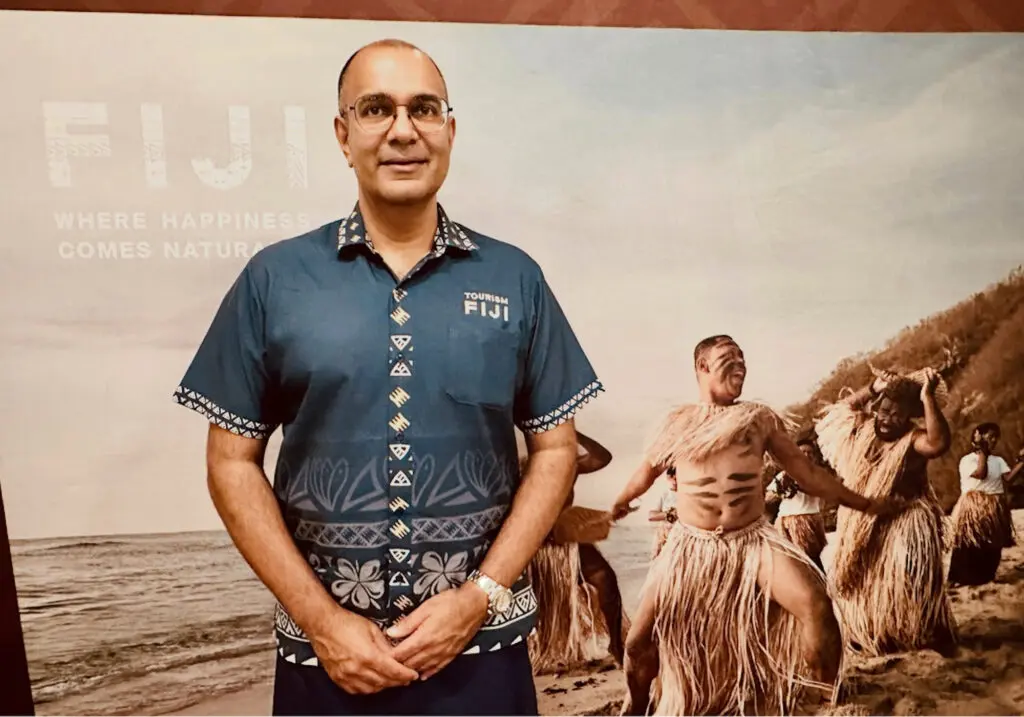
As chief executive of Tourism Fiji, the body responsible for driving growth in Fijian tourism – an industry that accounts for 40% of Fiji’s GDP – Dr Paresh Pant arguably has the most important job in the country – at least in its private sector. But if Dr Pant is looking fazed by the task ahead of him (he was appointed CEO in September 2025), it isn’t showing.
Indeed, Pant seems naturally happy, apt for the country’s ‘Where Happiness Comes Naturally’ tourism tagline.
The tourism boss has every reason to feel cheerful, and optimistic. In 2025, Fiji tourism broke its arrivals record for the third straight year, welcoming just short of 1 million (987,000) visitors. And Paresh is confident there’s more room for growth, especially from its biggest source market, Australia. He knows the Aussie market well too, having previously held the Regional Director role.
Last year, 452,422 Aussies landed on Fijian shores, accounting for nearly one in every two (46%) visitors to the country. However, that figure was slightly down on the previous year. The Australian market is also being beaten on spend.

“Australia, by visitor numbers, is the largest market, but by spend, it’s around the second or third highest,” Dr Pant tells Karryon in an interview in Denarau, Fiji.
But there’s an explanation for this, and a benefit to Aussie visitation.
According to Paresh, long-haul markets like the US or Asia often see Fiji as a “once in a lifetime, or maybe twice in a lifetime opportunity”. As such, they spend accordingly – i.e. more liberally.
That looks great on paper. And it is. But Australians “can take short breaks frequently to Fiji”. And this repeat visitation often enables them to explore more of the country.
“On average, they move around a fair bit, which is important, because then you disperse the benefits of tourism around as well,” Paresh says, highlighting the Aussie market’s “resilience” and loyalty to Fijian travel.
“They bring in extended families across, too. So that’s something that’s unique to the Australian market, and it’s something that obviously contributes very well in terms of visitor occupancy and visitor nights.”
More markets

There’s also a solution to boost spend. While Fiji’s top markets from Australia remain couples and then families, authorities feel there’s room to grow in the corporate, and meetings, incentives, conferences and exhibitions (MICE) spaces.
“Our focus has almost always been on the leisure side, but Australia also presents great opportunities… to look at markets such as the MICE market, as well as the weddings and honeymoon market,” Pant explains.
“Australians are outspent by visitors from Asia or the United States – I’m just talking about the per-day expenditure – [but] I reckon that by spreading our key focus of leisure [to] MICE plus weddings and honeymoon, there is an opportunity to increase the average per diem expenditure by the Aussie traveller.”
So does that mean an increased focus, as many destinations have, on higher quality visitors – in other words, those who spend more?
“We have to be selective in choosing the visitor type that visits Fiji, and we have to look at things such as ‘what does our destination offer?” the Tourism Fiji boss says.
“Among Australians, who are the ones who want to genuinely switch off, genuinely come back [and] come to Fiji to really revitalise themselves? Fiji offers that… and so we are deliberate in our digital strategy, which speaks to the wider funnel. It talks about instead of a holiday – it’s why this holiday, [why these] meaningful experiences – and it’s been working for us.”
On top of this, having “fantastic connectivity” helps, he says, referring to Fiji Airways’ seven nonstop links to Australia. So does its proposition as a year-round destination.
But perhaps most importantly, there’s a renewed focus on extending tourism beyond the country’s usual hotspots (Mamanuca Islands, Denarau/Nadi and the Coral Coast) and eventually, ideally, on to all 14 provinces. It’s an ambitious target, but one Pant believes can and must be achieved for the prosperity of communities as much as the sustainability of the sector itself.
“We need to ensure that things like pressure on infrastructure… that they’re all distributed,” he explains.
“If you give opportunities to locals in other regions of Fiji, it helps them stay back in those regions and helps them grow the economic livelihood around that region, of which tourism is a huge, huge part.”
$280M investment
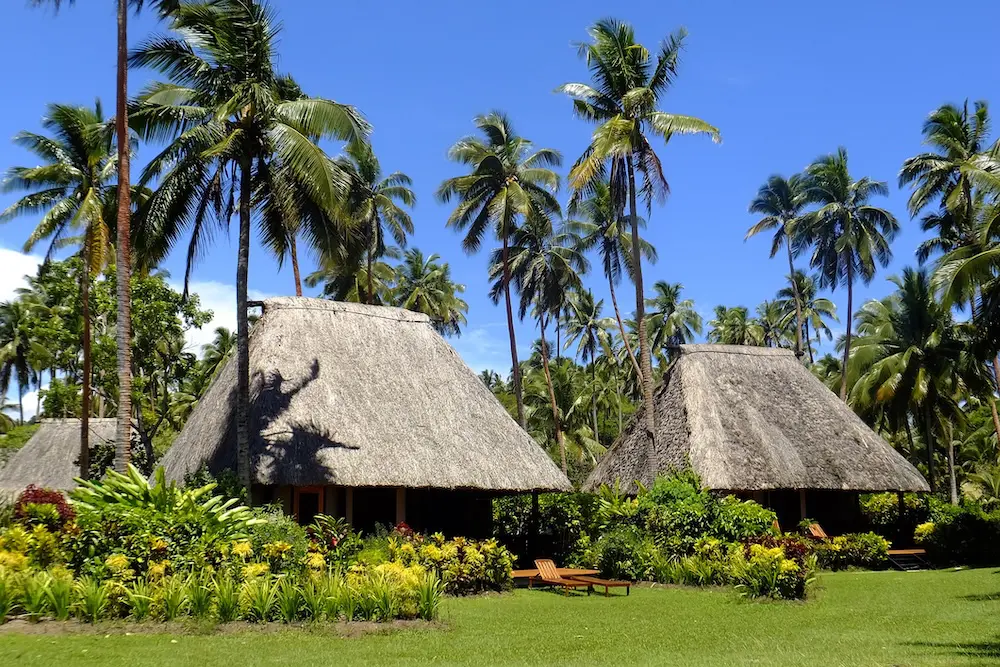
To this end, authorities have earmarked a whopping US$200 million (around AU$280M) over 10 years to develop Fiji’s second-largest island, Vanua Levu, along with Taveuni island.
Financed by the World Bank, the Na Vualiku Project will focus on improving infrastructure, growing local enterprise, and preserving natural and cultural assets in the regions – all with an eye on developing tourism.
“Those islands currently have a plethora of products that range from your average traveller right up to this serious 5, 6, 7-star luxury as well,” Dr Pant says.
“And what’s unique is that the people over there… they band together, and you have a microcosm of very passionate providers who may not necessarily be in tourism, but that complement the tourism product.”
Paresh gives an example of a German couple who make unique sorbets and dried fruit products. Then, there’s a coffee plantation.
“We talk about the farm-to-fork concept… you can literally walk around the farm, pick your fruits, and here’s your product made for you,” he says.
“So those sort of experiences in that part of the world really bring tangible economic benefits.” They’re just not at the stage of “ultra-commercialisation”… yet.
So if you’re looking to go beyond the current bounds of tourism in Fiji, watch this space.
Hotels headlining
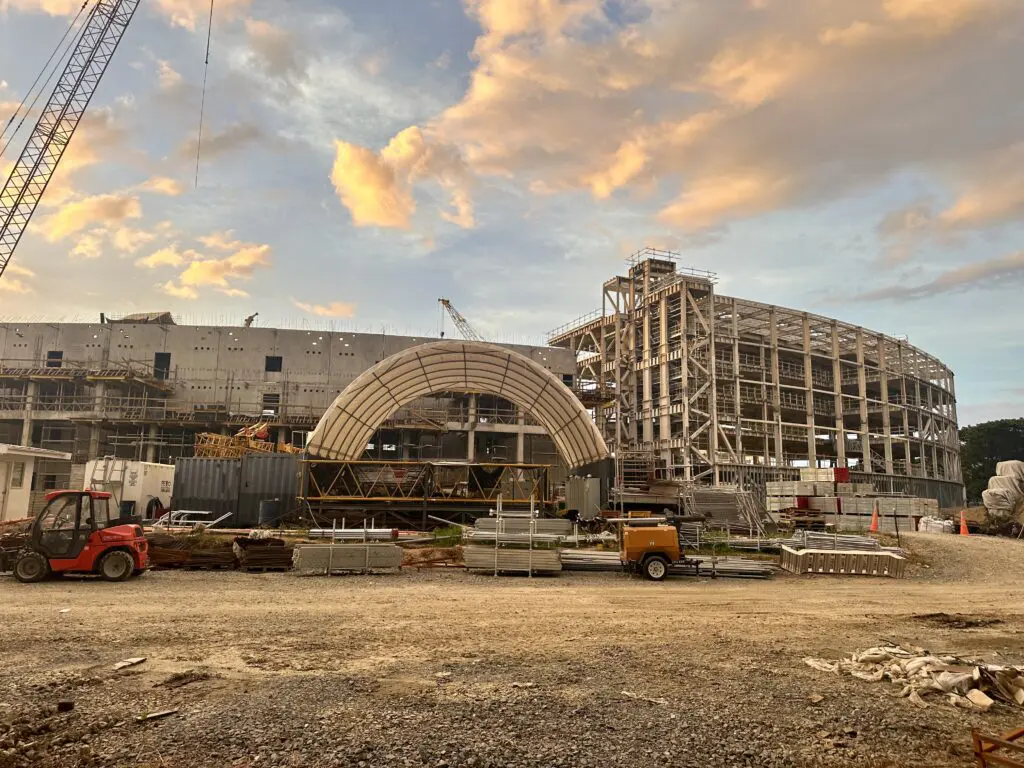
In the meantime, work will continue to address a shortfall of around 5,000 rooms in the accommodation space, especially in the Nadi region, the gateway to tourism in the country.
This will be led by major new openings in Denarau over the next 12 months, including the highly anticipated Westin Fiji Golf Resort & Spa, the four-star Na Tomba resort, and the massive Vatu Talei property.
With the latter standing at an imposing five stories, is this the future of accommodation in Fiji?
“There’s definitely a need for the current… density-style accommodation in closer proximity to the airport, but the government is actively encouraging investment in other provinces of Fiji, and very likely, that scale of investment would be commensurate with the carrying capacity [of the airlines],” Paresh says. And that is currently just “a maximum of 72 seats”, domestically.
“So you can’t suddenly put in a 500 hotel room [in an outer province], because then how quickly do you service that need?”
This, according to Pant, is a “huge positive for the Australian traveller” as the provincial areas will continue to offer a more boutique experience.
“It gives them [Australian travellers] an opportunity to find their slice of Fiji in terms of which region they want to go: do they want to go to the rainforest in lush parks? Do they want to go to small island resorts? Or do they want to stay in close proximity to the nightlife and entertainment zone, the shopping zones that places like Denarau and the Coral Coast facilitate?”
The writer was in Fiji as a guest of Tourism Fiji.