




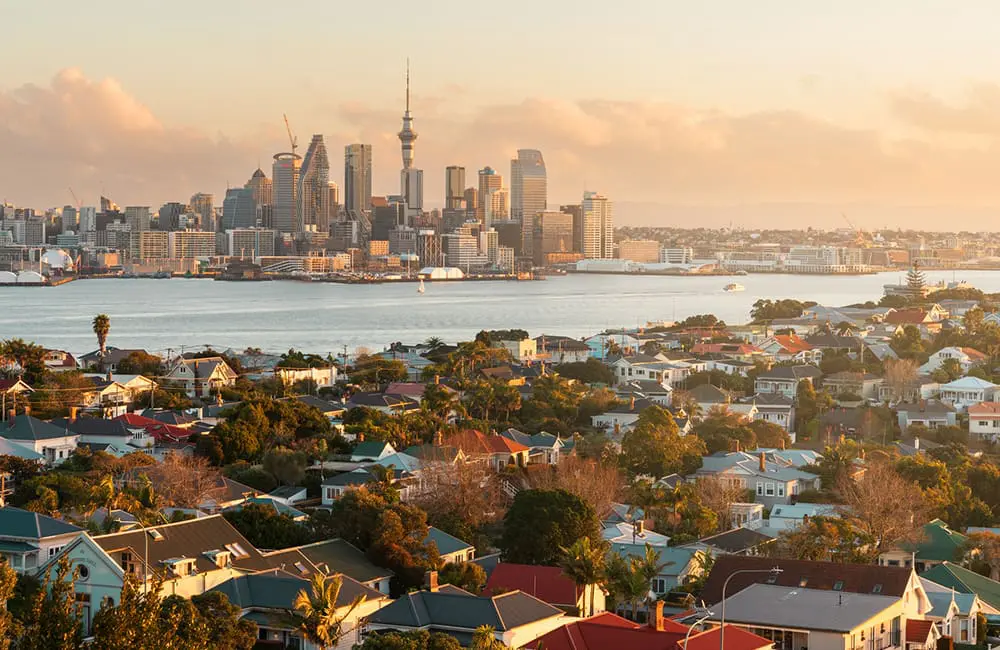
With New Zealand international arrivals back at 93 per cent of pre-COVID, the tourism sector growing at 9 per cent year on year (more than twice the global rate), trans-Tasman capacity up 8 per cent and the Australian dollar at a 13-year high against the Kiwi, the sentiment at TRENZ26 in Tāmaki Makaurau, Auckland this week has shifted from recovery to ambition. Matt Leedham reports.
Despite the ongoing economic fallout from the war in the Middle East, here at the 32nd TRENZ this week, everyone is just getting on with it.
“It” being the business of selling New Zealand’s evolving and highly desirable tourism story.
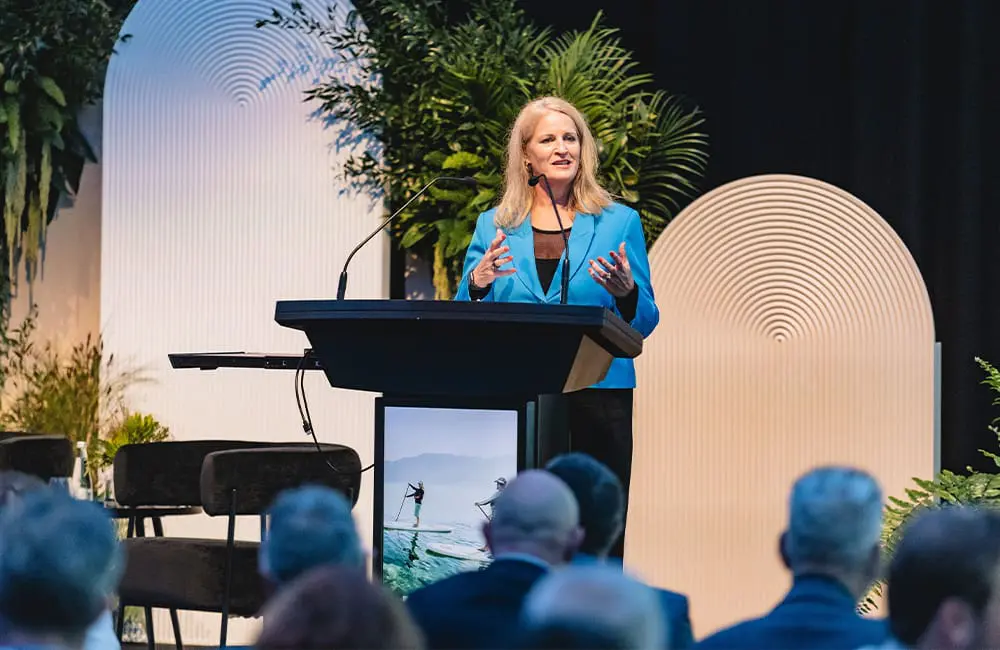
Addressing the Tourism Industry Aotearoa (TIA) industry partner and media briefing on day two of the show, Tourism and Hospitality Minister Louise Upston noted the shifting sentiment.
“It’s fantastic to see, even in a year, the difference in the mood on the floor of TRENZ,” she said.
“Last year [at TRENZ in Rotorua], it felt really positive. This year it just kind of feels as if it’s unleashed.”
Twelve months and a record summer later, this isn’t last year’s recovery story. More than 1.5 million Australians travelled to New Zealand in 2025, up 10 per cent year-on-year, with the Aussie share of inbound now 44 per cent and climbing.
And the momentum has carried into 2026. Tourism New Zealand chief executive René de Monchy told the morning panel that international arrivals for March were up 15 per cent year-on-year, with April provisional data holding firm. New Zealand’s rolling 12-month total hit 3.52 million in the year to January 2026.

TIA chief executive Rebecca Ingram framed the strategic case. “New Zealand has something the world needs more of right now,” she said.
“But our advantage is not automatic. It has to be understood, protected, designed for, and very well promoted.”
Auckland steps into the spotlight
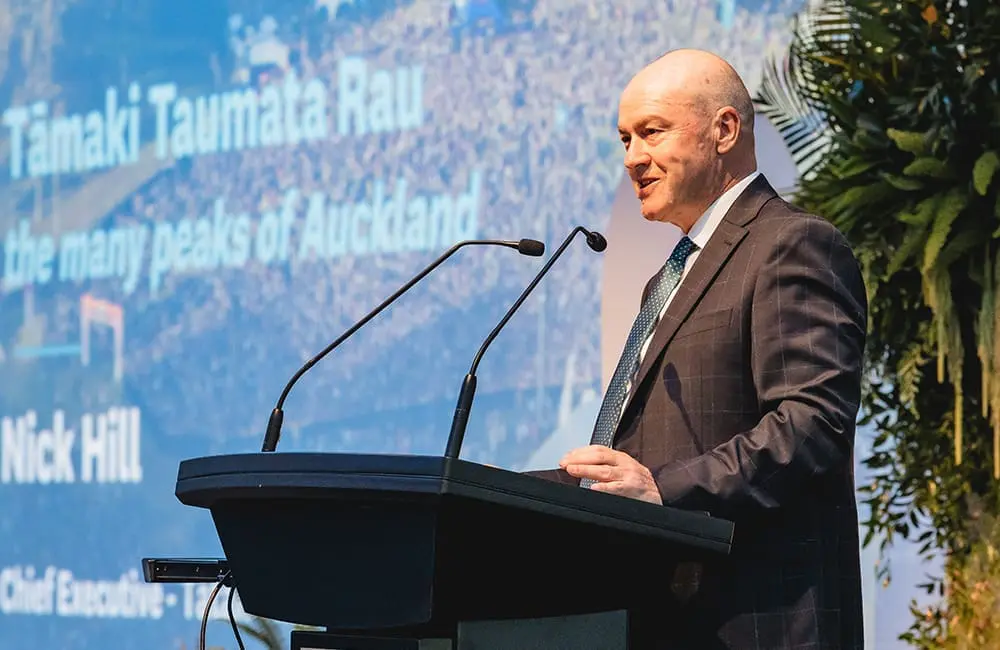
Tātaki Auckland Unlimited chief executive Nick Hill used his welcome address to make a deliberate pitch. Auckland is no longer just the gateway. It’s a destination in its own right.
“We have rediscovered our mojo,” Hill told the briefing. “And the numbers are showing that, with hotel occupancy over the summer up nearly 10 per cent on last year.”
For Australian travel sellers, Hill’s pitch was direct.
He positioned TRENZ26 host city Auckland as “an easy, high-value weekend break for our Australian friends”, with premium offerings, golf, events, and a thriving and eclectic restaurant scene, cementing the city as a solid 3-4 night option.
The first-ever State of Origin fixture to be held in New Zealand next year is expected to welcome 10,000 Australian visitors to the city, while the 126-year-old Michelin Guide arrives in New Zealand next month, marking the guide’s first expansion in Oceania and underscoring the city’s food offerings.
Notably, it’s also arriving before Australia’s Michelin Guide, which won’t hit the road until later this year, and will be for South Australia only.
“It’s awesome that we will have Michelin here in New Zealand, and they don’t have it yet in Australia,” Prime Minister Christopher Luxon quipped during his address at TRENZ.
“Not that we’re competitive, but it’s fantastic that we do have it, because we know how good our food scene actually is.”
Acknowledging the noise, but refusing to be defined by it

The Middle East conflict and the resulting fuel price shock naturally got airtime from every speaker, a;beit briefly. Luxon confirmed New Zealand remains in phase one of its National Fuel Plan, the “watchful” level where supply is stable, stocks are sufficient, and there are no restrictions on fuel purchases.
For travellers and the trade, that’s the signal worth hearing: this is a cost story, not a fuel shortage story.
Upston, given a chance to dwell on it, declined. “I’m going to skip right over that,” she told the briefing. “We’re dealing with it.”
Air New Zealand puts growth on the board

The clearest proof that the collective effort is paying off came during the same briefing, when Air New Zealand chief executive Nikhil Ravishankar announced the return of three international widebody routes from Christchurch to Perth, Tokyo and Singapore. Karryon has the details here.
The announcement landed against a tough backdrop. Last week, the carrier guided to a full-year pre-tax loss of NZ$340–390 million for FY26, hit by surging jet fuel costs.
“It feels goddamn good to be announcing growth again,” Ravishankar said.
What it means for the Australian trade

For the Australian travel trade, TRENZ26 is a timely reminder of what New Zealand offers that we sometimes take for granted. A destination three hours from Sydney that millions of Australians have never properly explored. An Auckland quietly reinventing itself while we weren’t looking.
And right now, the maths too is on the Aussie traveller’s side. The Australian dollar is at a 13-year high against the Kiwi, currently buying NZD$1.21 per AU dollar and up nearly 5 per cent year to date.
Trans-Tasman capacity is up around 8 per cent year on year in the first half of 2026, with Air New Zealand adding 63,000 seats across the ditch and Qantas Group putting on close to 210,000 more across Brisbane, Sydney and Melbourne routes.
Wellness, culture and nature await. A stacked 2026/27 event calendar is on sale, and the food and wine offering, from Central Otago pinot to Marlborough sauvignon to Auckland’s restaurant scene, is at a level worth flying for.
For Australian travel sellers, the dollar is right. The seats are there. The product is on.
Time to sell.
TRENZ is New Zealand’s premier annual travel trade event, hosted by Tourism Industry Aotearoa (TIA). It brings together hundreds of international buyers, media, and partners with New Zealand tourism operators to showcase the country and grow inbound visitor business. Australia is consistently the largest source market. Visit trenz.co.nz
KARRYON UNPACKS: TRENZ26 marked the moment New Zealand stopped looking back to 2019 and started looking past it. For Australian advisors, a sector hustling this hard is one worth selling into.