



Travel has found a very profitable word for other people’s lives: authentic. The family kitchen. The Indigenous experience. Photograph it. Put it in the brochure. Build an itinerary around it. Tell travellers this is the moment that will change them. The travel industry understands the value of local people and culture extremely well. It sells them every day. The far more uncomfortable question is how much of that value reaches the people being sold as the reason to go.
Planeterra president Jamie Sweeting has been thinking about that gap, too.
“I love the travel industry… but one of the issues I keep coming back to is this,” he wrote as Planeterra released its 2025 Impact Report. “Tourism is a multi-trillion-dollar industry, yet many of the communities that make travel possible still do not fully benefit from it. Planeterra is working to change that.”
In 2025, travel and tourism pumped US$11.6 trillion (around AU$17.4 trillion) into the global economy, according to WTTC. Community Tourism Enterprises linked to Planeterra’s Travel Partners generated CAD$3.32 million, or about AU$3.4 million, directly for communities. That translated into income for 15,704 people. Its network spanned 568 organisations, connected 276 community-run enterprises to travel companies and brought 124,717 travellers face-to-face with the people behind the experience.
“Community tourism is not a side story to travel,” Sweeting says.
“It is one of the ways communities are creating livelihoods, protecting culture and biodiversity, and shaping tourism in ways that reflect what matters most to them.”

Perhaps the more confronting point is this: local communities were never a side story to travel.
They have always been part of the product.
We put their faces in the campaign. Are they in the business model?
Travel marketing is full of people.
Not CEOs. Not shareholders. Not the executives of multinational hotel groups.
The people selling a destination are the fisherman on the water at sunrise. The woman cooking a recipe handed down through generations. The artisan at a workbench. The guide whose knowledge of a forest, street or culture cannot be downloaded from an app.
We call these encounters immersive.
We call them meaningful.
We call them transformative.
And we know travellers will pay for them.
The problem is not that travel fails to value local culture. Travel values local culture enormously.
It photographs it, packages it, puts it on Instagram and sells it as an antidote to mass tourism.
But economic leakage, where tourism revenue leaves a destination rather than circulating through its local economy, is sufficiently entrenched that UN Tourism specifically tracks the economic benefits of tourism for local communities and destinations. In some regions, the imbalance is extreme. A UN Tourism report has previously estimated tourism leakage at 80 per cent of tourist spending in the Caribbean. So perhaps it is time the industry stopped treating “giving back” as the only language available for community tourism.
The people creating the experience are not necessarily asking for charity.
They need access to the business.
Authenticity is a product. Someone should be on the invoice
Planeterra’s model is built around a problem most travellers will never see.
A community can have an extraordinary tourism experience to offer and still have no meaningful path into international tourism distribution.
Planeterra connects Community Tourism Enterprises with travel companies while supporting enterprises with training, funding and longer-term market access. Its own community tourism development work describes marketplace connection as a core specialisation. It is considerably less romantic than “travel that gives back”.
It is also more radical.
Because a donation leaves the existing tourism economy largely intact. Market access asks who gets to participate in it.
A one-off group turning up, taking photographs and buying a bracelet is not economic inclusion.
A community-owned enterprise with repeat departures, paying customers and a reliable connection to the travel supply chain is a business.
Travel knows the difference when it talks about every other supplier.
Why should the standards change when the supplier is a community?
In Rwanda, the ‘local experience’ pays for health coverage
The numbers become harder to dismiss when they stop being numbers.
In Rwanda, Nyamirambo Women’s Center uses Community Tourism to support women’s income generation, skills development and access to health coverage.
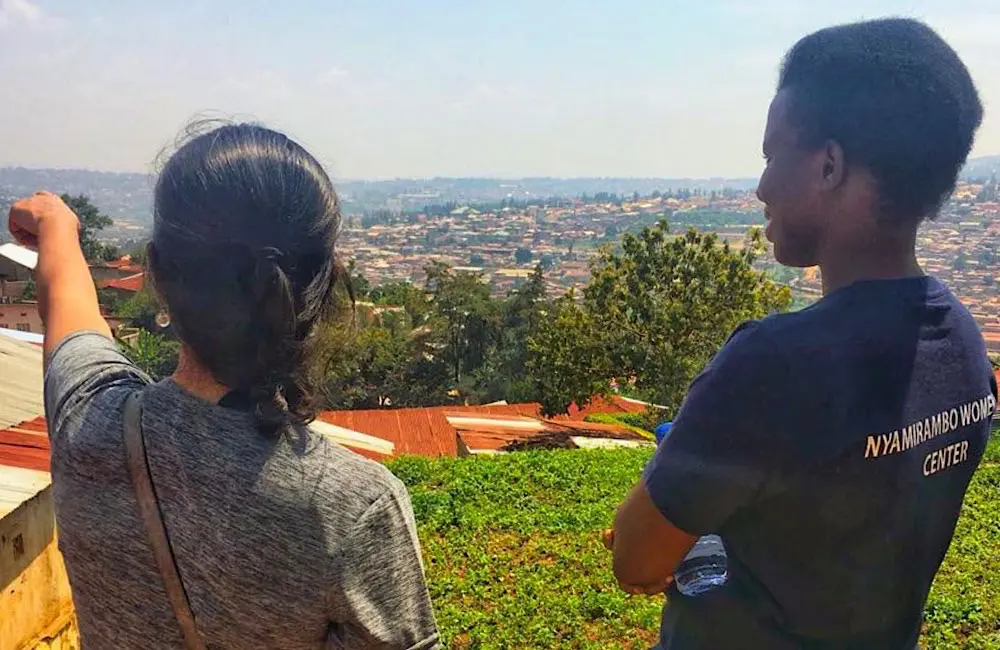
The centre began using Kigali’s tourism economy to offer community tours, cooking classes and craft workshops. Planeterra’s longer-running work with the organisation connected its tourism program with travellers, helping bring customers to experiences operated in the Nyamirambo community. So when a traveller walks through Nyamirambo and gets the “local insight” so often promised in travel copy, the commercial transaction does not end with a nice story to tell at home.
In Vietnam, single mothers are not the attraction. They are the tourism operators
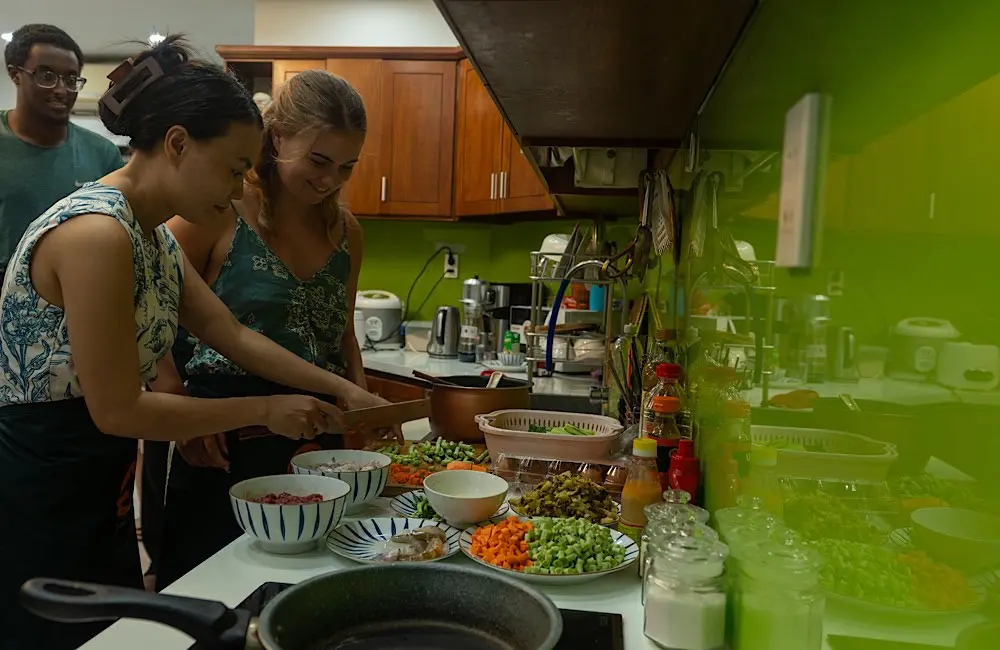
In Vietnam, Catalyst for Change’s Her Kitchen: Wellness Culinary Journeys is creating tourism opportunities for single mothers through culinary training, entrepreneurship and business skills.
Women develop food experiences drawing on traditional health knowledge and local food heritage. They guide visitors through markets, cook and lead immersive experiences for travellers. Planeterra’s support has included equipment, uniforms and expanded service offerings. ge trap here that travel should be very careful of.
These are not “disadvantaged women” tourists are taken to meet so they can feel something.
They are women developing a tourism product.
A photo op is not market access
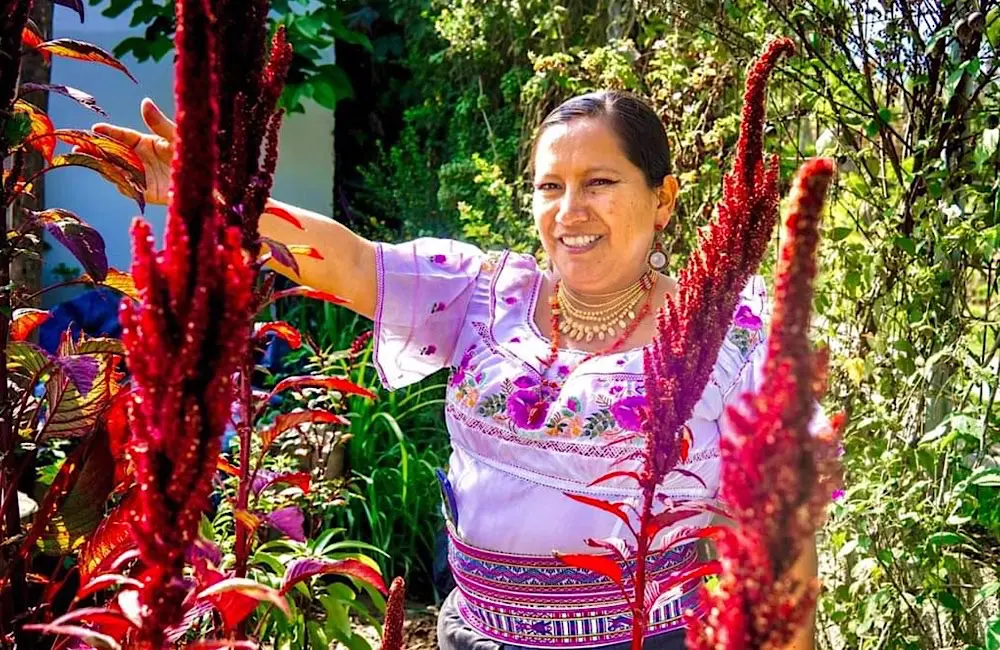
In Ecuador, Quichua Native Travel supports Kichwa communities through locally led cultural experiences, with tourism income supporting women-led businesses, household income, school supplies and community infrastructure.
On the Greek island of Naxos, traveller engagement with Naxos Wildlife Protection helps support sea turtle rescue, rehabilitation and environmental education.
Across Planeterra-supported climate and biodiversity initiatives, more than 2.06 million trees were planted and growing in 2025. It is tempting to bundle all of this under “travel for good”, congratulate everyone involved and move on.
But that lets the broader industry off rather easily.
Because community tourism should not depend entirely on the traveller being unusually ethical, the advisor being unusually passionate or a tour operator having a particularly enthusiastic sustainability team.
If local people are central to the experience being sold, why is their economic participation still framed as the virtuous version of tourism rather than an ordinary expectation of how tourism should work?
Planeterra’s 2025 Impact Report shows what can happen when communities get access to tourism’s customers, too. Perhaps the scandal is that we still call that impact. Maybe it should just be business.
KARRYON UNPACKS: Responsible tourism is one of the fastest-growing conversations at the point of sale, and Planeterra’s numbers give advisors something concrete to point to. When a client asks whether their trip actually helps the places they visit, a reported $3.4 million reaching local enterprises is a better answer than a brochure line.