




HX Expeditions has developed a free online pre-departure course on Svalbard with the University of Tasmania. The HX x UTAS Svalbard Course launch coincides with 130 years since the line’s first voyage to the Arctic archipelago in 1896.
The new HX x UTAS Svalbard Course is available free for guests booked on Svalbard sailings and features a series of expert-led modules covering the archipelago’s wildlife, ecosystems, history and the principles of responsible exploration.
The HX x UTAS Svalbard Course is designed to be completed before travel, so guests arrive with a deeper understanding of one of the Arctic’s most remote destinations. Participants who complete the program receive a UTAS x HX Certificate of Attendance.

It’s the third destination added to a pre-departure learning program built with the University of Tasmania, following HX’s award-winning Antarctica course and its more recent Arctic-specific modules.
The University of Tasmania’s Institute for Marine and Antarctic Studies (IMAS) is an internationally recognised centre for marine and Antarctic research based at the gateway to the Southern Ocean.
The program gives an Australian university a lead role in a globally sold expedition product and for advisors, a useful selling point positioning the trips to science-minded and educationally curious clients.
Why Svalbard – and why now

Svalbard holds particular significance for HX: it was the destination of the company’s first guest voyage in 1896, the journey widely credited with establishing expedition travel in the Arctic.
HX describes itself as the world’s first and longest-running expedition cruise company and the largest provider of cruises to Antarctica, a region where the growth in expedition ship numbers has raised its own environmental questions.
It operates a fleet of five ships sailing to more than 250 destinations across more than 30 countries, and was the first expedition line to eliminate heavy fuel oil and introduce hybrid-powered expedition ships.
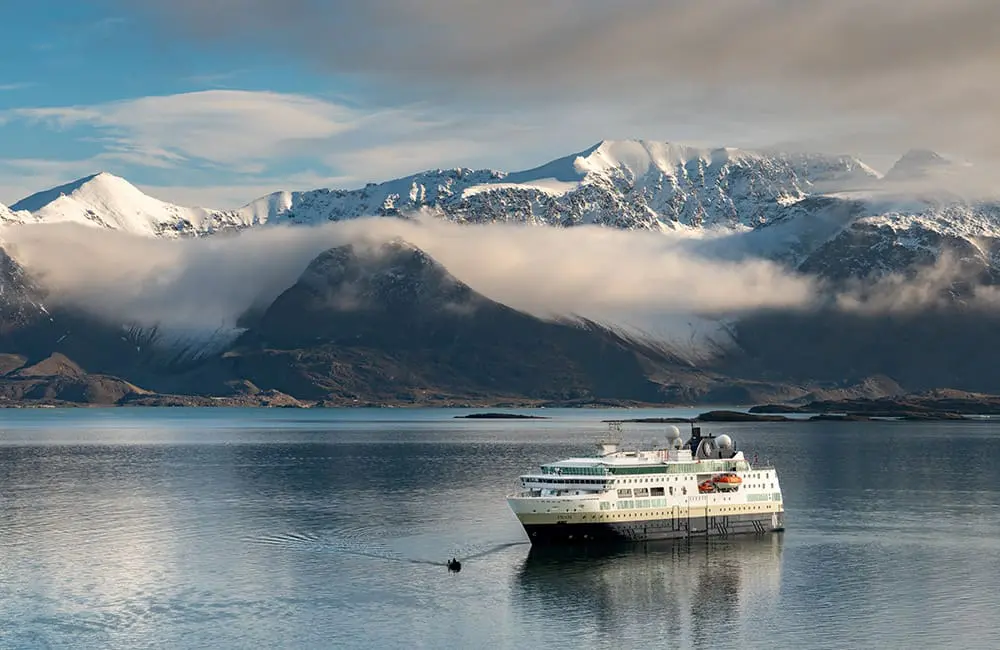
HX Chief Scientist Verena Meraldi said the timing of the HX x UTAS Svalbard Course launch carried extra weight in the 130th anniversary year.
“The timing of the Svalbard course launch is particularly significant. This week, HX commemorates 130 years since its first guest voyage to Svalbard in 1896 – a pioneering journey that helped establish expedition travel in the Arctic,” she said.

“That first voyage was also attended by scientists, biologists and guests who wanted to learn more, so it feels fitting to launch the educational program this week.
“More than a century later, we continue to evolve that legacy by pairing exploration with science, learning and responsible travel.”
KARRYON UNPACKS: A free, HX x UTAS Svalbard Course gives advisors a tangible hook when pitching a big-ticket polar expedition to curious, science-minded clients, and the value starts before the ship even sails. That an Australian university is leading the content is an easy local angle for the conversation.