




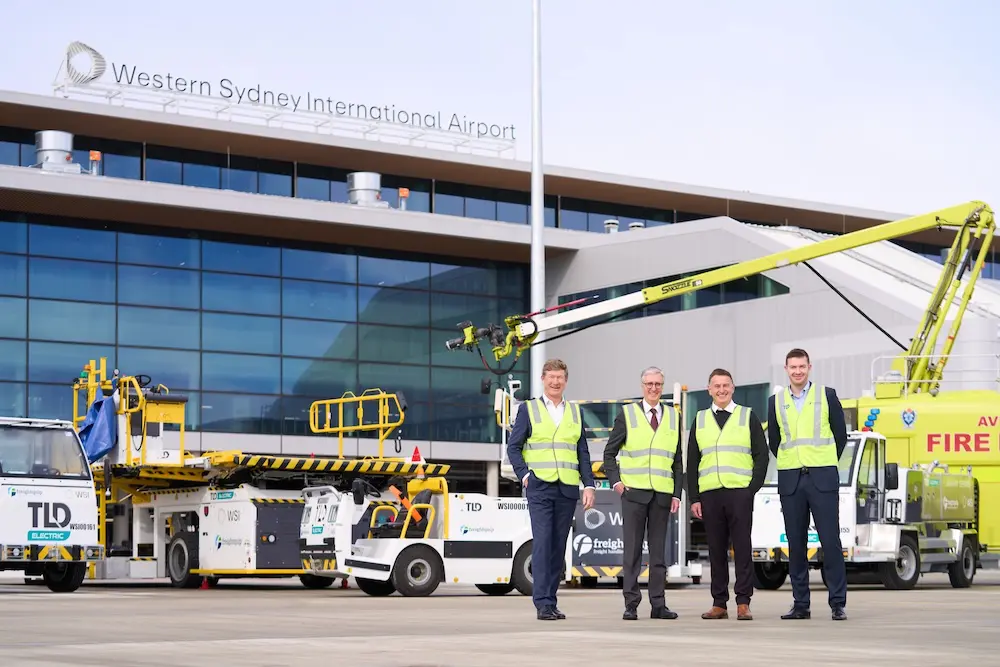
Western Sydney International (Nancy-Bird Walton) Airport will run its precinct on 100 per cent renewable electricity from the moment passenger operations begin, under two new energy and ground-handling partnerships detailed in its first Sustainability Strategy.
Australia’s first greenfield international airport in more than 50 years has signed CleanPeak Energy to deliver 100 per cent renewable electricity across the site, and Freightquip to run an almost entirely electrified ground support equipment (GSE) fleet, both timed to be in place when the 24-hour gateway opens to passengers.
The commitments underpin WSI’s target of net zero scope 1 and 2 carbon emissions, and mark a rare chance to build sustainability into an airport from the ground up rather than retrofit it.
The airport is also being built Sustainable Aviation Fuel ready, with facilities in place so aircraft can be refuelled with locally produced biofuels.
How the airport will be powered
Under the CleanPeak Energy partnership, WSI’s existing rooftop solar has the capacity to produce 4.5 megawatts of electricity, enough to power roughly 40 per cent of the terminal.
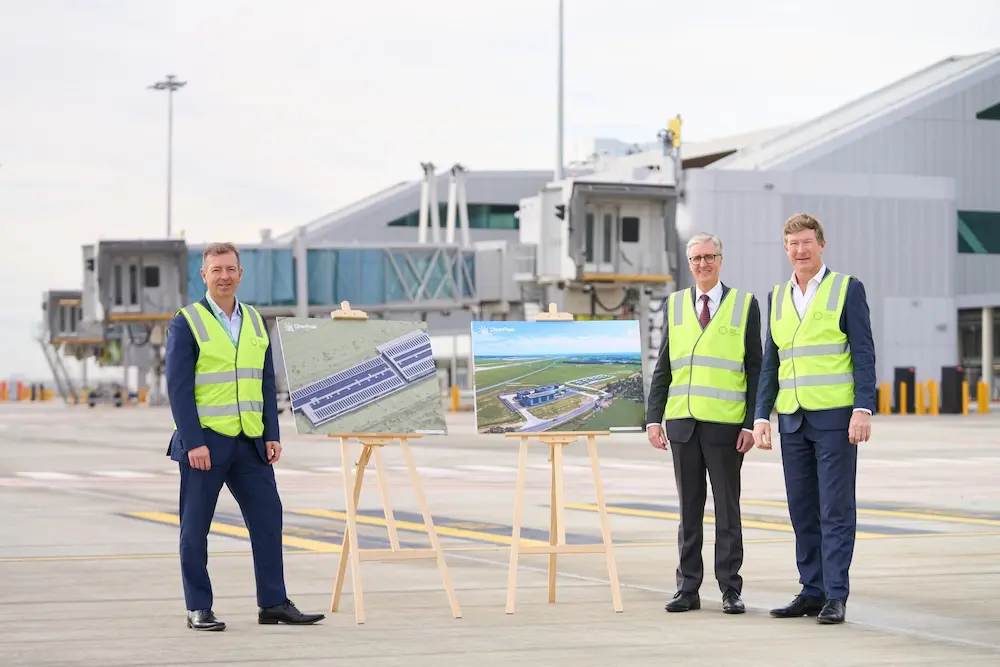
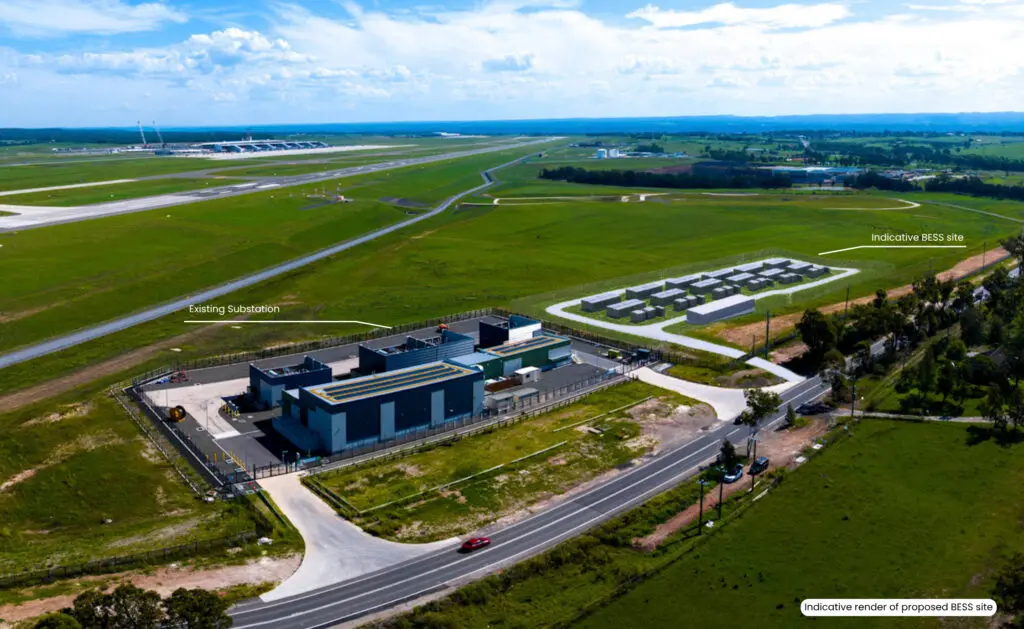
An additional 9 megawatt rooftop solar system will be built at the airport’s cargo precinct over time, alongside a 120 megawatt hour Battery Energy Storage System (BESS) planned for delivery in late 2027 to support peak demand and grid stability.
CleanPeak will also manage the renewable electricity WSI buys from the grid and operate the embedded network distributing energy across the precinct and its tenants.
“We are delighted to be working with Australian-owned business CleanPeak to support WSI’s net zero ambitions,” says WSI CEO Simon Hickey.
“The energy system they will manage represents a landmark commitment to achieving net zero scope 1 and 2 carbon emissions for WSI, showcasing the low carbon future airports can champion as pivotal pieces of major infrastructure.”
What is changing on the ground
When passenger services begin, WSI says it will become the first major Australian airport to run an airport-wide GSE pooling program, and will carry the highest proportion of electric ground equipment of any major Australian airport.
The Freightquip fleet covers the full scope of aircraft turnaround: belt loaders, cargo loaders, baggage tractors and pushback equipment, shared across all ground handlers through a single digital platform linked to WSI’s Flight Information System. A specialist team will handle on-site maintenance.
“We’ve already installed 34 electric chargers supporting sustainable ground operations,” says Hickey.
“By combining GSE pooling with a predominantly electric fleet, WSI is modernising ground operations, improving fleet utilisation, safety and ultimately reducing the environmental impact of our operations.”
Freightquip chief operating officer and head of aviation operations Andrew Steel says the airport is a chance to reset industry norms.
“To provide an advanced GSE pooling operation at a brand-new airport is something our team is incredibly proud to be part of,” he says.
“We see WSI as the beginning of a much bigger shift in how the industry approaches ground operations globally.”
Why it matters for the Sydney basin
Federal Minister for Infrastructure, Transport, Regional Development and Local Government Catherine King said the airport was designed with future proofing in mind.
“As you step into the beautiful, air-conditioned terminal, watch your bags roll away at check-in, and scan into your first flight at Western Sydney International Airport, each of those steps will be powered by 100% renewable electricity,” she said.
As a 24-hour operation without a curfew, WSI is set to give travel sellers a second Sydney gateway with round-the-clock departure options, particularly relevant for the late-night and early-morning long-haul services that dominate demand to top outbound markets such as Bali, Japan and the UK.
The gateway will get off the ground with Jetstar operating the airport’s first-ever passenger flight in October 2026, with Jetstar and Qantas flying launch routes to Melbourne, Brisbane and the Gold Coast.
KARRYON UNPACKS: WSI is still building towards its passenger launch, but the sustainability credentials give sellers a genuine selling point for the growing cohort of clients who weigh a trip’s carbon footprint, and the no-curfew, 24-hour model quietly widens the schedule options for Western Sydney travellers who currently default to Kingsford Smith.