




Infrastructure spending at Australia’s four major airports jumped 43.6 per cent in 2024-25, but the ACCC says $20 billion in planned projects could push airfares and travel-related expenses higher.
Sydney, Melbourne, Brisbane and Perth airports collectively handled about 120 million passengers during the period, according to the ACCC’s latest Airport Monitoring Report, with international numbers climbing 9.5 per cent to 40.4 million and domestic traffic rising 2.2 per cent to nearly 80 million.
The $1.5 billion spent on runways, terminals and airside facilities in 2024-25 marks a sharp reversal from the subdued investment levels that followed the pandemic. With airports now proposing close to $20 billion in major projects over the coming decade, the consumer watchdog is flagging where that money will ultimately come from.
Why could Australian airfares rise?
“Large capital programs are likely to place upward pressure on airport charges paid by airlines, which may result in higher airfares for passengers as these costs are recouped,” ACCC Commissioner Anna Brakey said.
Airport charges in Australia are not regulated, and the ACCC has consistently raised concerns about airport market power, arguing that the current monitoring framework is an ineffective constraint on major airports. Brakey said it was important that airport charges “reflect sensible and timely investment decisions, efficient costs and a rate of return that matches the risks involved.”
In plain terms, if airports’ gold-plate projects earn returns that exceed what their risk profile justifies, passengers pay more than they should. That matters at a time when flights are fuller than they have ever been and airfares have already risen since 2019.
How profitable are Australia’s major airports?
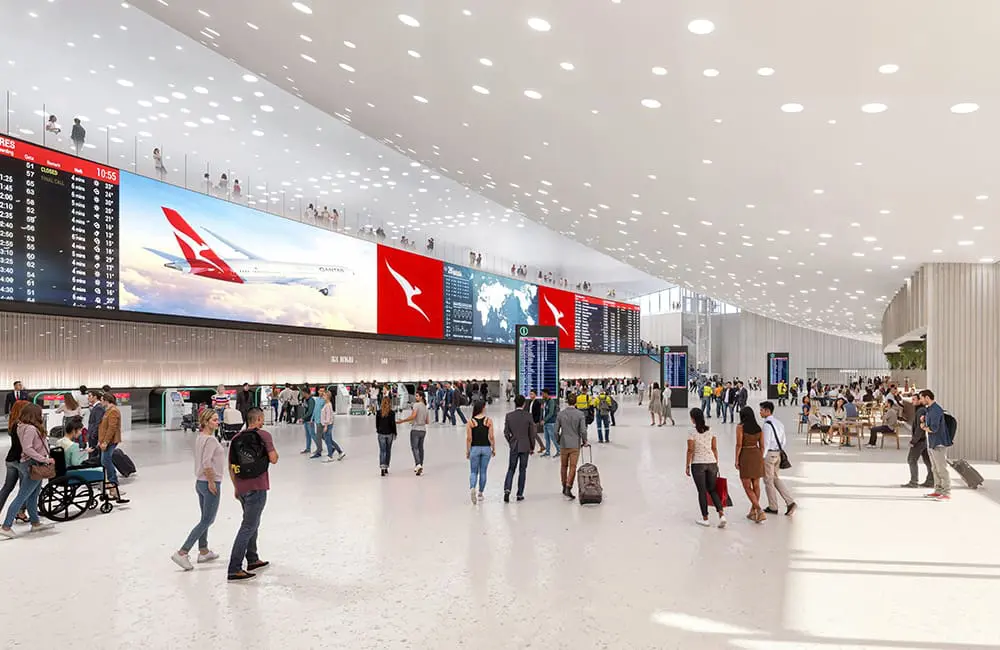
SYD continues to dominate. The ACCC reports its operating profit from airline services hit $584.3 million in 2024-25, with a return on aviation assets of 20.8 per cent, the highest level the ACCC has observed in more than two decades of monitoring. That is not a typo. More than 20 years. The airport also broke multiple passenger records across 2025, handling more than 17 million international travellers.
Brakey noted that SYD’s airline-related profits “eclipsed all of the other airports combined, more than double Melbourne as the next most profitable.”
PER recorded the strongest year-on-year improvement, with aviation operating profit surging 73.7 per cent to $130.6 million. International passenger numbers at PER grew 17.8 per cent, with BNE not far behind at 16.3 per cent.
Combined revenue from airline operations across the four airports reached $2.9 billion in 2024-25, according to the ACCC airport monitoring report.
Overall passenger growth of 4.6 per cent was solid, though well below the 13.7 per cent rebound recorded in 2023-24 as post-pandemic catch-up demand normalised.
What about airport car parking profits?
If you have ever grumbled about paying $40 to park at the airport for a few hours, the numbers explain why those prices are not coming down anytime soon. Car parking remains a cash machine for Australia’s major airports, with combined operating profits hitting $402.1 million in 2023-24 and profit margins above 60 per cent at BNE, PER and SYD.
BNE led the pack at $125.3 million (up 7.9 per cent), followed by SYD at $108.7 million (up 11.1 per cent). MEL and PER both saw parking profits dip around 8 per cent, to $101.3 million and $66.7 million respectively.
“Car parking continues to be a lucrative business with operating profit margins above 60 per cent at Brisbane, Perth and Sydney airports,” Brakey said.
What airport infrastructure is being built?

The pipeline is significant. MEL’s new 3,000-metre runway, to be built 1.3 kilometres west of the existing north-south runway, is designed to allow simultaneous take-offs and landings and reduce delays. It sits alongside a broader $4.5 billion expansion that includes larger check-in, baggage reclaim and waiting areas, plus five new gates.
BNE received government approval in September 2024 for a $2.37 billion third runway and, in January 2025, announced plans to expand its international terminal.
On service quality, SYD, MEL and PER were rated ‘good’ overall by the ACCC, while BNE was rated ‘satisfactory.’ However, airline ratings fell at three of the four airports, prompting carriers to raise concerns about airside congestion and inadequate baggage processing. Anyone who has stood at a carousel watching the same unclaimed suitcase orbit for the fourth time will not be surprised.
For context, MEL ranked as Australia’s top airport in Skytrax’s 2025 awards, though those ratings reflect passenger experience rather than airline operations.
KARRYON UNPACKS: For travel advisors, the ACCC’s warning is worth flagging with clients booking well ahead: airport infrastructure investment is necessary, but the cost recovery model means airfares are likely to face upward pressure in the years ahead, particularly on routes through SYD, where returns already far exceed those at other major airports.